

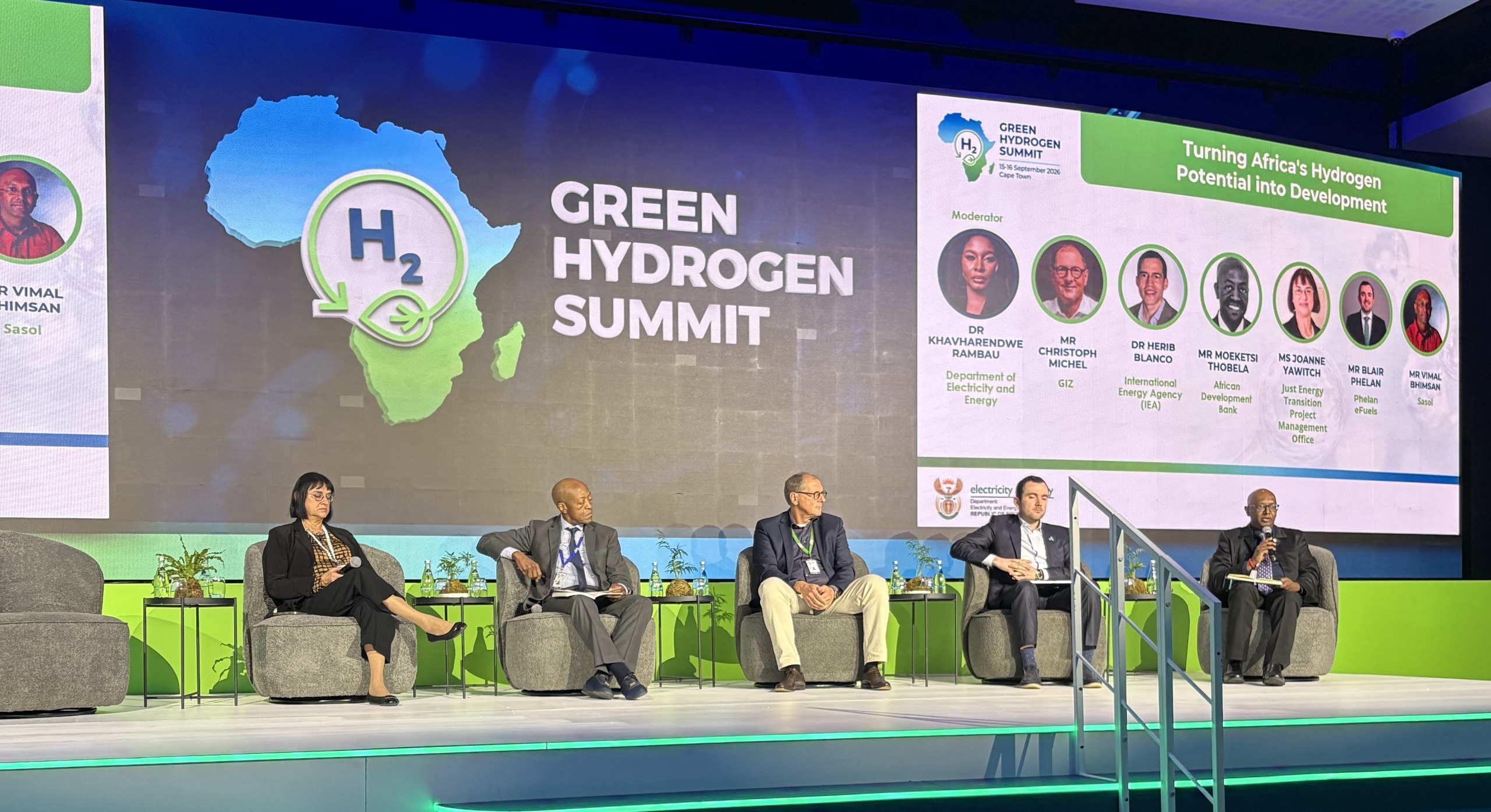
HOPEFIELD – A R12 billion green hydrogen and aviation fuel development has reached a final investment decision, though significant regulatory and financing hurdles remain before construction can begin.
The Phelan Green Group announced that its family board has underwritten R2 billion in equity for the project’s first phase, which was named among six developments in the Department of Electricity and Energy‘s (DEE) inaugural Green Hydrogen Deal Book in September. The DEE was established on 1 April 2025 to address South Africa’s energy challenges and provide dedicated oversight and coordination of electricity and energy security.
While the company describes the milestone as a critical step forward, spokesperson Anthea Abrahams confirmed that the full R12 billion has not yet been committed. “The next step is to finalise the project finance from development finance institutions and commercial banks ahead of construction, which is expected to start in early 2027,” she said.
Before construction can commence, the project still requires environmental authorisation for the green hydrogen and electro-sustainable aviation fuel facility, a water use licence from the Department of Water and Sanitation, an atmospheric emissions licence from the West Coast District Municipality, and completion of financial close.
All approvals are targeted for the first quarter of 2027, an ambitious timeline given the complexity of the regulatory processes involved.
The project has attracted concern from environmental organisations, community groups and political parties about potential impacts on water resources, land use and the sensitive Fynbos ecosystem. Environmental impact assessment processes for both the eSAF processing facility and solar components are still progressing through statutory public participation phases.
More than 20 specialist studies have been commissioned to evaluate terrestrial biodiversity, sensitive Fynbos species, avian impacts, air quality, noise and heritage assets, though final reports have not yet been made available for public review.
A key challenge for the development is water availability. Phase One requires 2 megalitres per day, subject to availability and currently under assessment by the Saldanha Bay Municipality. The water use licence application has been submitted to the Department of Water and Sanitation and is under review.
Abrahams said the plant would be designed as a zero-liquid-discharge facility and that desalination is being considered for later phases. She claimed the combined effect of desalination, clearing invasive alien vegetation, and recycling process water “could result in a net-positive for the municipality’s water position.” However, no independent verification of these claims has been provided.
The company says it has secured binding offtake commitments from airlines and fuel majors, which Abrahams described as “a critical prerequisite for reaching FID.” However, commercial sensitivity prevents disclosure of details, making it difficult to verify the strength of these commitments.
The eSAF produced is designed to meet European Union RED III renewable fuel of non-biological origin criteria, positioning the project for export markets in Europe and the United Kingdom.
The broader three-phase roadmap involves a total investment of R47 billion, with Phase One targeting first production in early 2029. Subsequent phases would expand capacity as global demand for synthetic fuels increases, though timelines for these remain unspecified.
Abrahams defended the project against environmental concerns, arguing that impacts should be “framed against the ongoing environmental cost of fossil fuels, and the Cape West Coast region’s reliance on a fishing industry facing collapsing quotas and high unemployment, including youth unemployment above 50 per cent.”
The company plans to open a Hopefield office by early October and has committed to ongoing stakeholder engagement through public participation rounds and collaboration with local municipalities on skills training and supplier development.
Whether the ambitious first-quarter 2027 construction timeline can be met will depend on successfully navigating multiple regulatory processes and securing the remaining R10 billion in project financing over the coming months.

You must be logged in to post a comment.