


South Africa’s Constitutional Court has reopened the Phala Phala impeachment process, creating renewed political uncertainty around President Cyril Ramaphosa and the GNU. While markets remain stable for now, concerns include weaker investor confidence, delayed reforms, and pressure on the Rand if political tensions escalate. At the same time, the ruling reinforces the strength of South Africa’s democratic institutions, showing that the Constitution and judiciary remain strong checks on political power.
The South African political landscape has been shaken by a landmark Constitutional Court ruling that effectively reopens the Phala Phala impeachment inquiry. For investors, business leaders, and “SA Inc” observers, the decision creates a delicate balancing act: on one hand, it reinforces the strength of our democracy; on the other, it introduces a fresh wave of uncertainty just as the Government of National Unity (GNU) was beginning to find its feet.
The legal turning point
Last week, the Constitutional Court struck down National Assembly Rule 129I, ruling that a simple parliamentary majority cannot be used to block an impeachment inquiry. This effectively nullified the December 2022 vote that buried the Section 89 panel report.
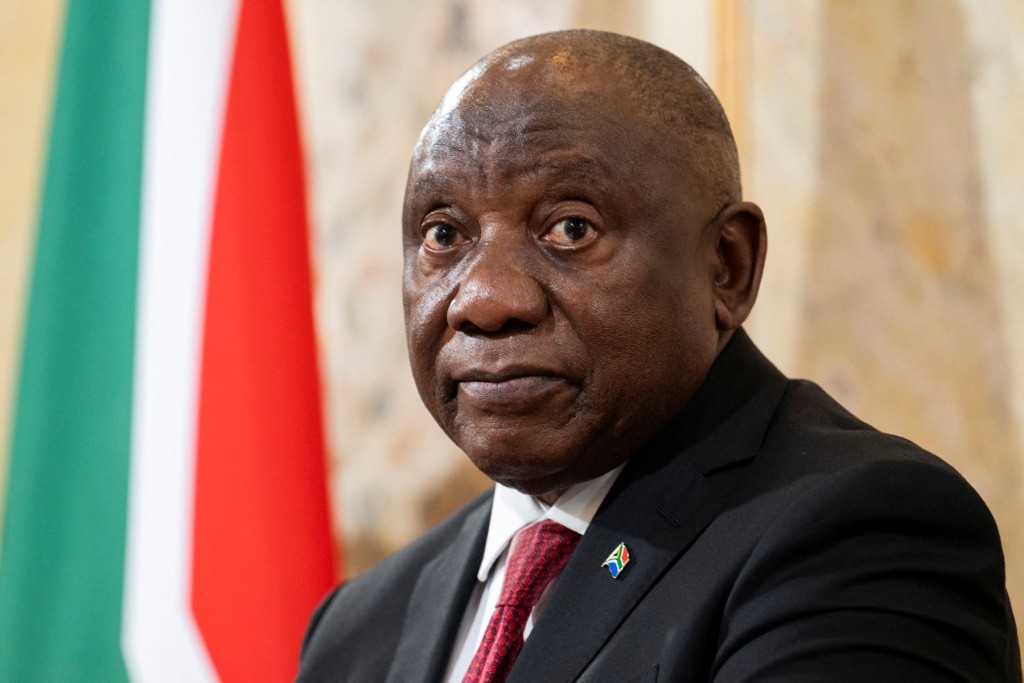
While President Cyril Ramaphosa remains firm, stating he will not resign and will instead launch an expedited judicial review of the “gravely flawed” report, the legislative machinery is already moving. Speaker Thoko Didiza has initiated the formation of a multi-party Impeachment Committee, signalling that the process of executive accountability is back on the table.
The “Ramaphosa Premium” and the Rand
Markets have long priced in a “Ramaphosa Premium.” To international investors, the President represents the primary anchor of the GNU and the face of structural reform. Any credible threat to his position tends to see the Rand come under immediate pressure.
Currently, the Rand has remained relatively steady near R16.48 to the US Dollar, largely because the market views a judicial review as an “orderly” process rather than a chaotic exit. However, the fear of a “Mashatile Discount” looms in the background. Should the President be impeached, Deputy President Paul Mashatile would step into the role. For many in the business community, Mashatile is still viewed through the lens of the “Radical Economic Transformation” (RET) faction, a perception that could trigger capital flight and a sharp sell-off in banking and retail stocks.
Hidden economic risks
Beyond the immediate currency volatility, the reopening of this inquiry poses three significant risks to the real economy:
- Policy Paralysis: The technical execution of critical reforms, specifically Operation Vulindlela’s work on Transnet and energy unbundling, requires political air cover. A protracted impeachment battle could cause a “decision-making freeze” within the civil service.
- Credit Rating Stagnation: Rating agencies like S&P and Moody’s have been eyeing a move from “Stable” to “Positive” for South Africa. Political instability is the fastest way to put those upgrades on ice, keeping our borrowing costs high.
- The Coalition Math: The ultimate fear for the JSE is not just a change in leadership, but a collapse of the GNU. If a leadership change leads to an ANC-EFF-MK realignment, markets would likely price in a radical shift in fiscal discipline and a potential challenge to the South African Reserve Bank’s independence.
ALSO READ: Parliament sets impeachment process in motion as Ramaphosa refuses to resign
The silver lining: Institutional resilience
While the headlines focus on the “scandal,” a more profound narrative is at play. In many emerging markets, a sitting President can simply make a phone call to end an investigation. In South Africa, the judiciary has once again proven that the “rules of the game” apply to everyone, regardless of their office.
This institutional guardrail is a long-term credit positive. It suggests that while the political players may change, the stadium, our Constitution, remains robust. For the discerning investor, this “stress test” of our democracy is proof that South Africa remains a rules-based environment, even during its most uncertain hours.
ALSO READ: ‘I will not resign’: Ramaphosa addresses nation after Phala Phala judgment


You must be logged in to post a comment.