

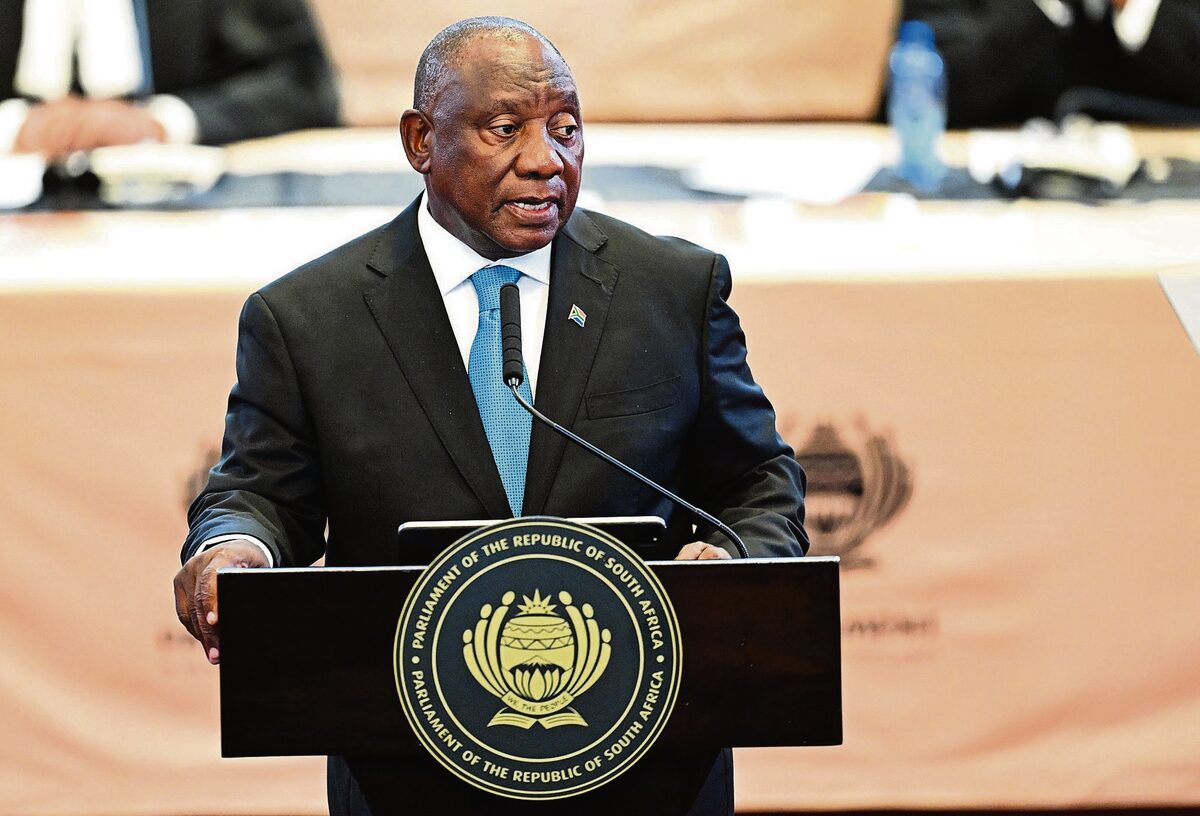
National Assembly Speaker Thoko Didiza has outlined the process Parliament will follow after the Constitutional Court’s landmark ruling on the Section 89 impeachment process linked to the Phala Phala matter, while President Cyril Ramaphosa has insisted he will not resign.
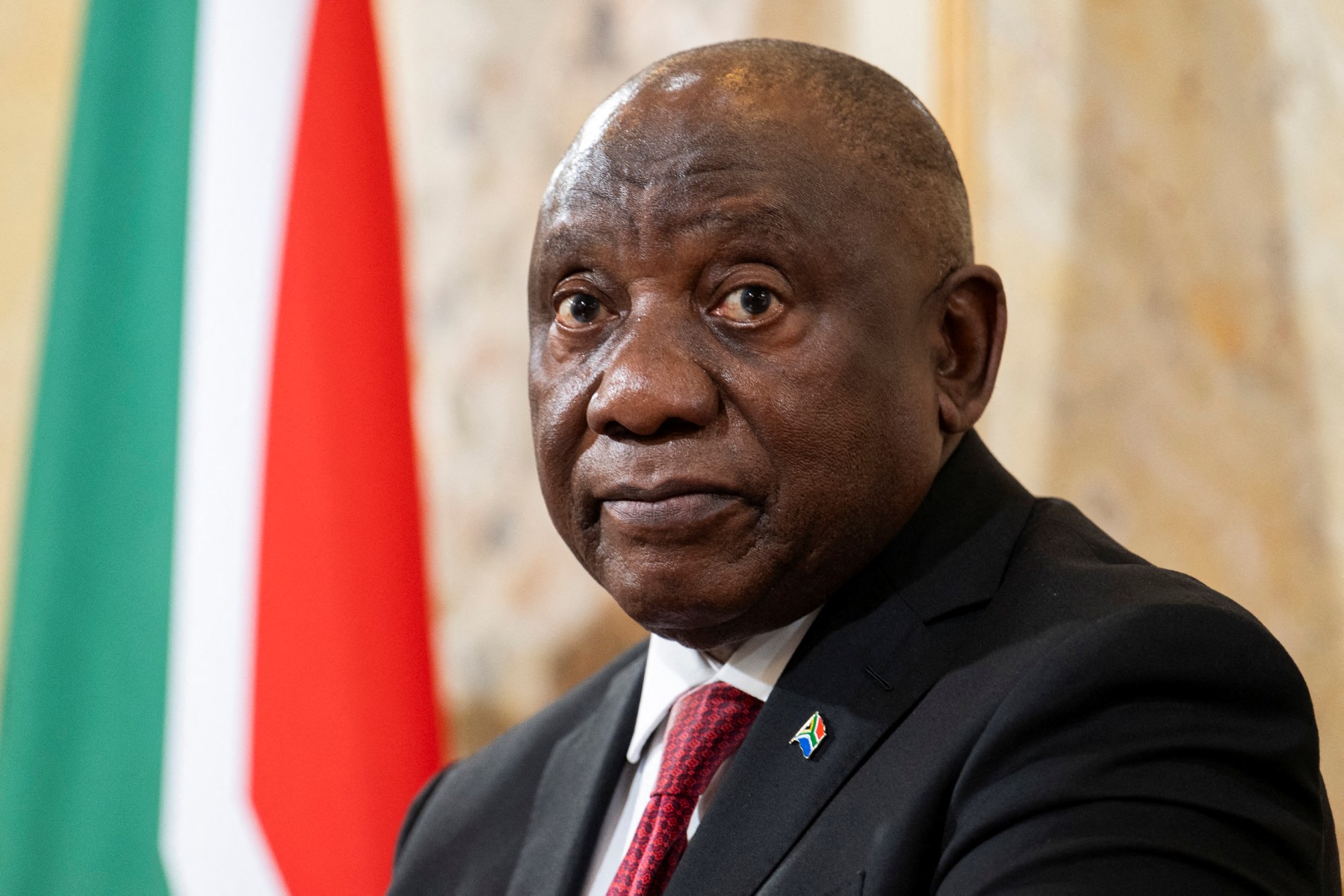
Addressing the nation from the Union Buildings in Tshwane on Monday evening (11 May), Ramaphosa said he accepted and respected the Constitutional Court’s ruling, but maintained that nothing in the judgment compelled him to step down from office.
The address follows the Constitutional Court’s ruling handed down on 8 May in a matter brought by the Economic Freedom Fighters (EFF) and the African Transformation Movement (ATM) in 2024, challenging the National Assembly’s handling of Section 89 impeachment proceedings against the President.
Section 89 of the Constitution provides for the impeachment of a president should they be found to have seriously violated the Constitution or the law, committed serious misconduct, or become unable to perform the functions of office.
The ruling clears the way for the matter to be referred to an impeachment committee and reconsidered through constitutionally compliant parliamentary processes, marking a significant development in the ongoing Phala Phala saga.
The matter stems from a February 2020 robbery at Ramaphosa’s Phala Phala farm in Limpopo, during which approximately $580 000 in cash, allegedly concealed in furniture, was stolen.
The independent panel appointed in terms of Section 89 was not tasked with determining guilt, but rather with assessing whether sufficient evidence existed for Parliament to initiate a formal impeachment inquiry.
In its findings, the panel concluded that Ramaphosa “may have committed” serious violations of the Constitution and the law, and may have engaged in serious misconduct.
The report further raised concerns relating to possible money laundering, corruption and the handling of the robbery investigation.
Following the release of the report in December 2022, the National Assembly voted on whether to adopt its findings and proceed with an impeachment inquiry.
The ANC used its parliamentary majority to vote against adopting the report, effectively halting impeachment proceedings against Ramaphosa.
However, the Constitutional Court has now ruled that flaws in the National Assembly’s rules rendered that parliamentary vote invalid and unconstitutional.
The court ordered that the independent panel’s report be referred to Parliament’s impeachment committee.
In a statement issued on Monday, Parliament confirmed that the Constitutional Court had found Rule 129I of the Rules of the National Assembly unconstitutional and invalid and had set the rule aside.
“The Court further directed an interim reading-in and amendment of Rule 129I to govern the processing of section 89 matters,” Parliament said.
The Constitutional Court further declared Parliament’s 13 December 2022 decision not to refer the Independent Panel Report to an impeachment committee unconstitutional and invalid.
“The Constitutional Court consequently ordered that the Report of the Independent Panel be referred to the Impeachment Committee established in terms of the Rules of the National Assembly,” the statement read.
Parliament said it “reaffirms its respect for the judgment of the Constitutional Court and will act in full compliance with the order and directions of the Court”.
Didiza outlined several procedural steps that will now follow in line with the judgment.
These include formally informing the National Assembly of the Independent Panel Report by tabling it through Parliament’s official journals, as well as providing Ramaphosa with a copy of the report “forthwith, as directed by the Constitutional Court”.
The Speaker will also begin the process of establishing an impeachment committee in terms of Rules 129J to 129O of the National Assembly Rules.
“In compliance with the judgment of the Court, the Speaker will initiate the process to constitute the Impeachment Committee in terms of Rules 129J to 129O of the Rules of the National Assembly to consider the section 89 inquiry process contemplated in the Constitution and the Rules of the Assembly,” Parliament said.
The Independent Panel Report will then formally be referred to the impeachment committee as ordered by the Constitutional Court.
In addition, the Speaker will refer the Constitutional Court judgment to the National Assembly Subcommittee on the Review of Rules to process the amendments required to the Rules of the National Assembly following the court’s findings and directions.
“The Subcommittee will report on its work to the Rules Committee, which will in turn submit its recommendations to the National Assembly for consideration,” the statement read.
Didiza will also determine “the appropriate programme, procedural arrangements, timeframes and institutional support measures necessary to enable the Impeachment Committee to undertake and finalise its work effectively, fairly and within the framework of the Constitution and the Rules of the National Assembly”.
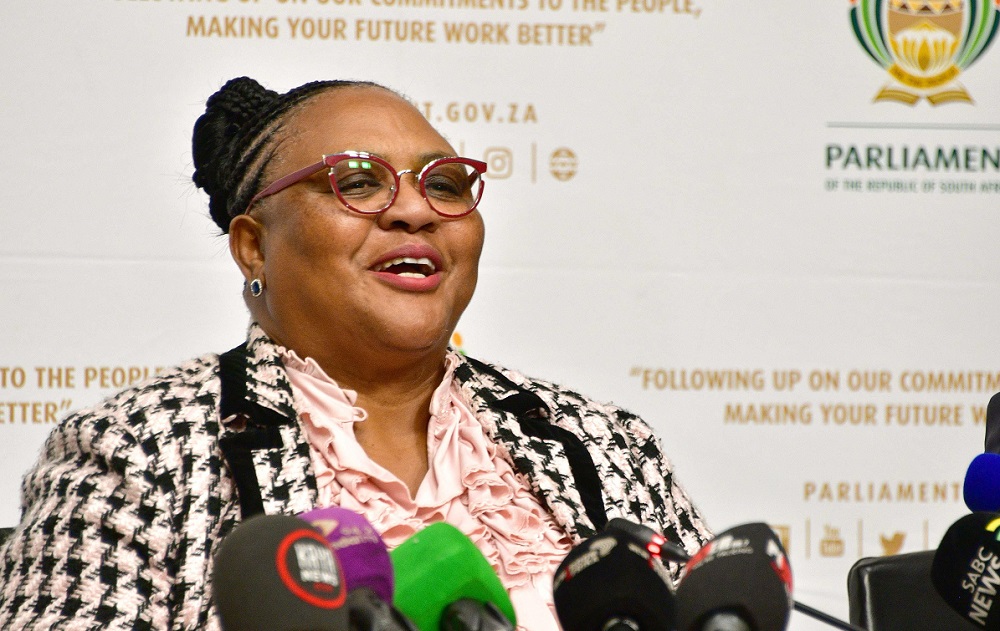
Parliament said the Constitutional Court judgment reaffirmed the constitutional obligations of the National Assembly regarding accountability, oversight and the constitutional mechanisms established under Section 89 of the Constitution.
“Parliament remains committed to discharging these constitutional responsibilities with due regard to constitutionalism, legality, fairness, institutional integrity and the rule of law,” the statement said.
Ramaphosa said the judgment had created “much commentary, debate and speculation” and acknowledged growing uncertainty in the country following the ruling.
“There have been calls from certain quarters calling on me to resign. At the same time, there have also been calls for me not to resign,” he said.
“I therefore respectfully want to make it clear that I will not resign.”
Ramaphosa emphasised that the Constitutional Court had made no findings regarding his alleged conduct and had not ruled on whether there was sufficient evidence to justify impeachment.
“The Constitutional Court made no finding on whether there was prima facie evidence of misconduct, nor if the alleged conduct, if established, justifies impeachment and the removal of the President,” he said.
The President reiterated that he had consistently denied wrongdoing since criminal complaints were first laid against him in June 2022.
“I have not stolen public money, committed any crime nor violated my oath of office,” he said.
The President said he had cooperated with all investigations and inquiries relating to the matter and would continue to do so.

He also announced that he would proceed with a legal review application against the independent panel’s report.
According to Ramaphosa, he had initially intended to challenge the report in court after its release in 2022, but did not proceed after Parliament voted against adopting it, effectively rendering the report without legal consequence at the time.
The Constitutional Court judgment now changes that position because the report is set to be placed before Parliament’s impeachment committee.
Ramaphosa said his legal team advised him that the report was reviewable on several grounds, including what he described as a misconception of the panel’s mandate, errors of law and “unfounded conclusions of fact”.
“I have therefore decided to proceed to take the independent panel’s report on review on an expeditious basis,” he said.
He insisted the move was not an act of disrespect toward Parliament, but rather an effort to ensure that findings informing parliamentary processes are legally and factually sound.
Ramaphosa further argued that resigning at this stage would amount to pre-empting a constitutional process that is still unfolding.
“To resign now would be to give in to those who seek to reverse the renewal of our society, the rebuilding of our institutions and the prosecution of corruption,” he said.
With the matter now heading to an impeachment committee, speculation has mounted over whether Ramaphosa could ultimately step down from office. Political observers have also questioned whether Deputy President Paul Mashatile could assume the presidency should such a scenario arise.
The impeachment committee will now be tasked with conducting a comprehensive investigation in line with the constitutional procedures outlined by the court. The process is expected to take several weeks, if not months, to conclude.
The Democratic Alliance (DA) has meanwhile warned that Ramaphosa’s legal review application should not delay parliamentary accountability processes.
In a statement issued on Monday, DA leader Geordin Hill-Lewis said: “President Cyril Ramaphosa’s decision to take the Section 89 Panel report on review must not be used to delay the work of Parliament.”
Hill-Lewis said while it was Ramaphosa’s legal right to approach the High Court, the process should proceed urgently.
“President Ramaphosa should bring any review application with due haste and on an expedited basis, so that the legal position is clarified quickly and this matter is not delayed unnecessarily,” he said.
The DA further called on Parliament to urgently obtain legal advice regarding the implications of Ramaphosa’s planned review application and whether it would affect the establishment and work of the impeachment committee.
“Given the serious constitutional consequences of this matter, and the massive public interest in it, Parliament must take the South African people into its confidence by sharing that legal advice once it receives it,” Hill-Lewis said.
“This matter must be handled lawfully, transparently and with the constitutional seriousness it deserves.”
Hill-Lewis added that the DA would continue to be guided by “the Constitution, the rule of law, and the legal position before Parliament”.
ALSO READ: ‘I will not resign’: Ramaphosa addresses nation after Phala Phala judgment
He further described the situation as “an ANC-made crisis, rooted in serious unanswered questions about the President’s conduct and the ANC’s long record of shielding its own leaders from accountability”.
The Phala Phala matter has remained a source of political controversy since the allegations first surfaced, with opposition parties repeatedly calling for accountability and transparency.
The Constitutional Court’s intervention now ensures that the matter will undergo the constitutional scrutiny required by law.
Parliament confirmed that further details regarding the establishment, programming and operational arrangements of the impeachment committee would be communicated through parliamentary processes and announcements.
Ramaphosa used Monday evening’s address to defend his administration’s record, citing efforts to rebuild institutions damaged by State Capture, recover stolen funds, prosecute alleged perpetrators and combat organised crime and corruption.
He said government remained focused on economic recovery, job creation and strengthening democratic institutions.
“Guided by the rule of law and the principle of accountability, I intend to fulfil and complete the mandate that you, the people, have given me,” Ramaphosa said.



You must be logged in to post a comment.