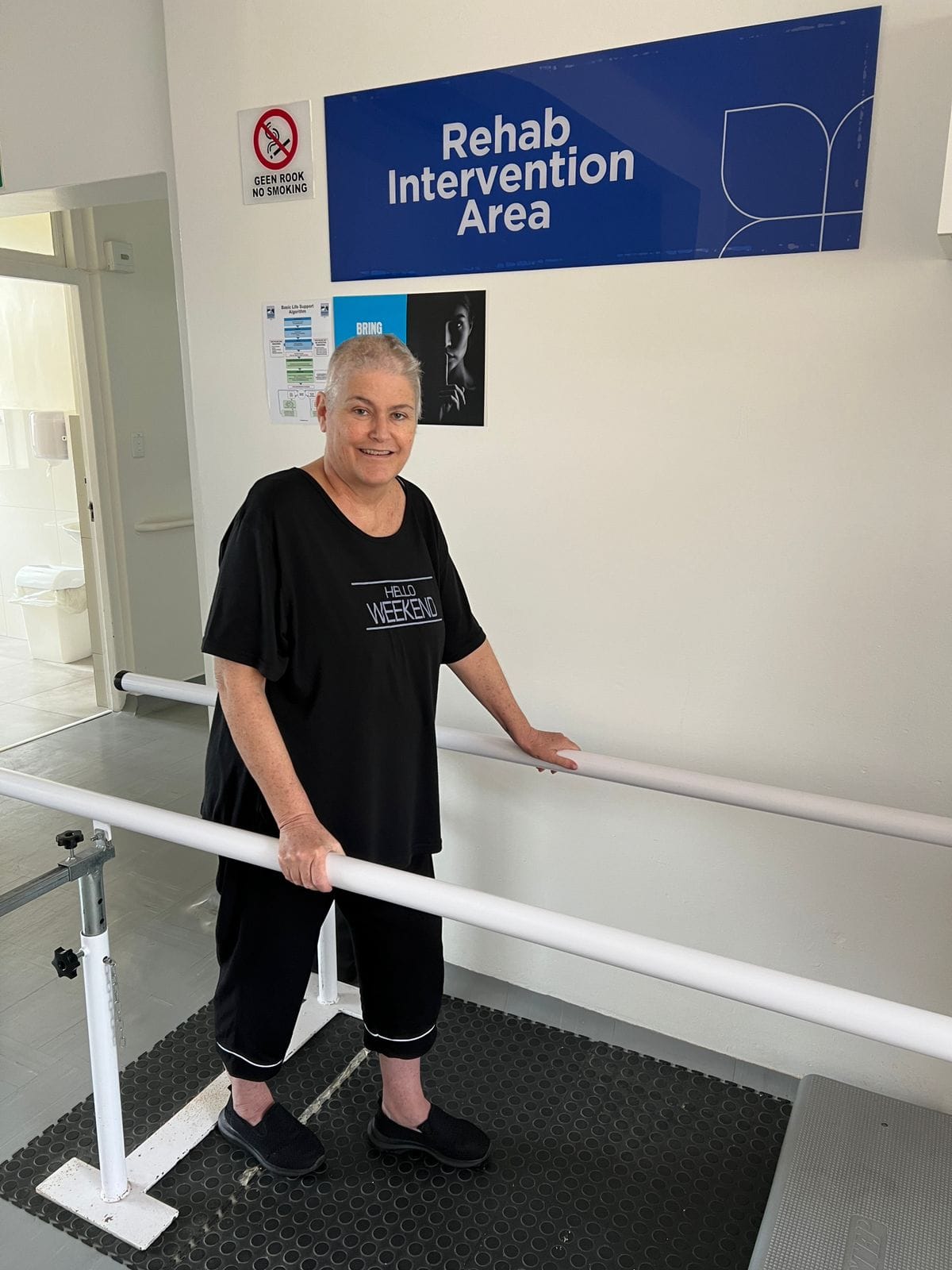

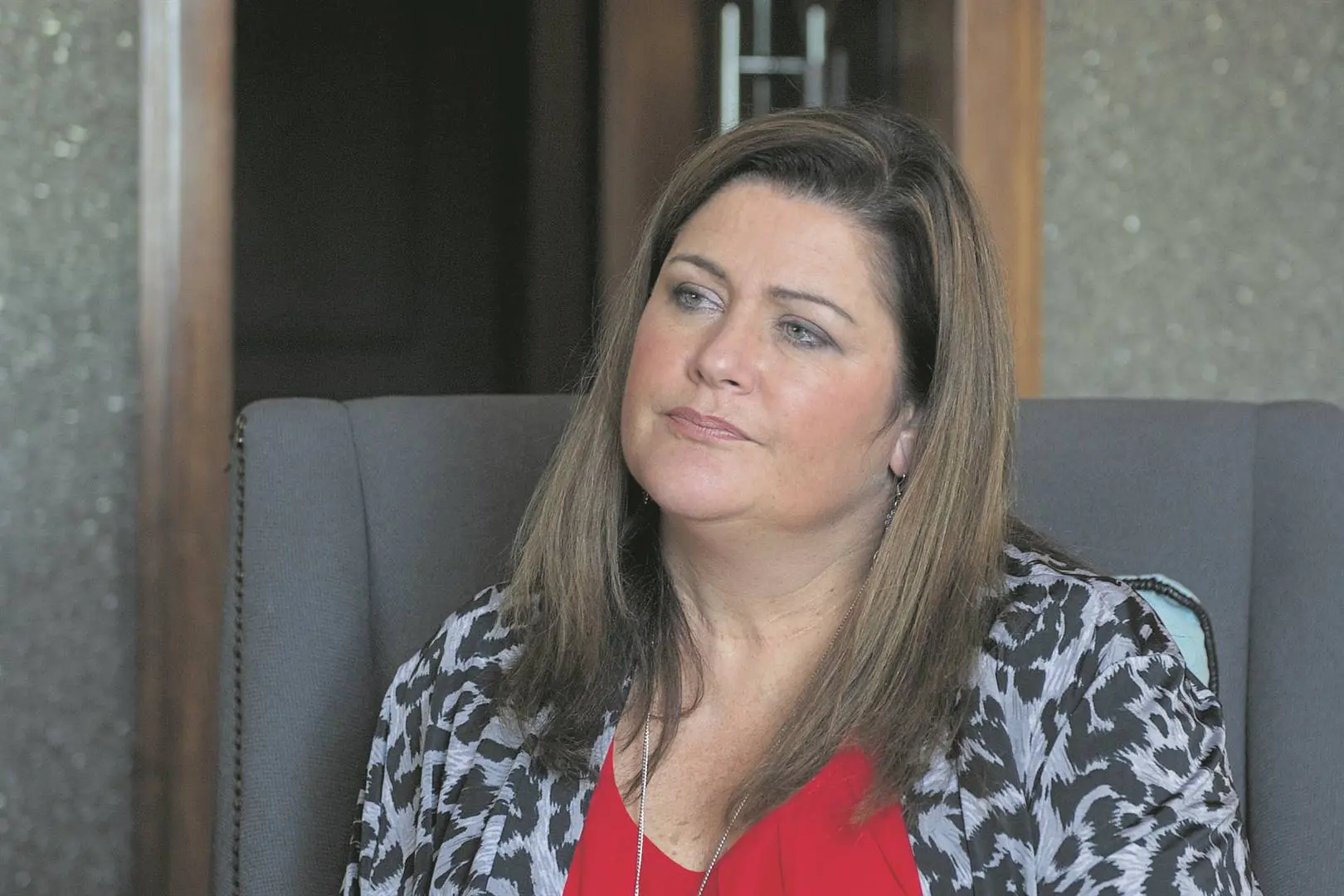
With the release of her two attackers, Alison Botha (55) feels disillusioned and terrified, not only for herself, but also for others in society, now that her attackers, Theuns Kruger and Frans du Toit, are no longer behind bars, after almost three decades.
This is what Tania Koen, Botha’s legal representative, told Cara-Lee Dorfling after Kruger and Du Toit were released on parole on Tuesday, according to the Department of Correctional Services (DCS).
They were sentenced to life imprisonment in 1995 for the horrific attack on Botha in Gqeberha.
Botha’s name is known internationally as the victim who miraculously survived in December 1994 after being raped by the two men, stabbed 37 times in the stomach and having her throat cut.
She was hijacked on the night in question, and taken to a deserted area along the city’s coastline in Noordhoek, where they left her for dead with gaping stab wounds to her stomach and neck.
Botha managed to drag herself back to the road in Marine Drive, where a passing motorist, Tiaan Eilerd, came across her and called for help.
When Kruger and Du Toit were sentenced in the High Court in what was then Port Elizabeth in August 1995, Judge Chris Jansen referred to the two men’s “inherent evil” and sent them to prison for life, with the recommendation that they should not be granted parole.
Jansen told Mia Spies “if the death sentence was still an appropriate sentence, I would probably have imposed the death sentence because of the seriousness of the crime. They left her for dead, cut her throat and inflicted (more than) 30 stab wounds in the abdomen. They thought she was dead.
“What I also remember is when one of the guys was arrested he told the detective he couldn’t believe she was still alive.”
Jansen said that in his more than two decades as a judge, this is one of the cases that stuck with him.
Jansen said that almost 30 years later he could also remember how brave Botha was.
“It is an absolute miracle that Alison survived this, this was a very brave woman with a strong personality too. I remember she was a very good witness in court.”
He said the parole decision was out of his hands.
“At the time, I set out all the facts and gave a verdict that they should be imprisoned for life. We don’t know what happened to the people in the prison. They could have completely rehabilitated them and turned out completely different people, so that’s for the parole board to decide.
“If the parole board had asked me before they considered it, I would have said exactly the same thing. It’s out of my hands, I did my job.”
From the first time the two men were eligible for parole, Botha actively fought against their release.
According to Koen, Botha last made representations to the DCS against Du Toit and Kruger’s parole in 2017. Botha had no further communication from the DCS, until an email was sent to her recently as notification of Du Toit’s release on parole.
Botha learned of Kruger’s parole from the media.
Advocate Glynnis Breytenbach, former prosecutor and DA MP, told the Cape Town Press Club on Wednesday afternoon that the fact that parole was granted and Botha learned about it in the media indicates the deterioration of the criminal justice system, and specifically the DCS, reports Malherbe Nienaber.
“Apparently they thought it was fine,” Breytenbach said about the news that was announced last Tuesday.
According to Koen, they have not yet received any reasons or an outline of parole conditions for Du Toit and Kruger, while they are also unsure where they find themselves.
Advocate Hannelie Bakker, who was a prosecutor in the case at the time and is now a lawyer, has already sent inquiries to the DCS for further information regarding Du Toit, but has not yet received any feedback.
Koen said that investigation and inquiries are now being made about the course of the parole process, after which they will consider their options.
The DCS said on Tuesday that Kruger and Du Toit must comply with specific parole conditions, and will be subject to supervision for the rest of their lives.
When asked, Singabakho Nxumalo, spokesperson for the DCS, said last Wednesday that parole conditions are never disclosed to the public. When asked whether Botha was involved in the parole process, he said that the parole consideration process involves the victim being able to make representation.
Nxumalo told Netwerk24 that Du Toit and Kruger had to be considered for release on parole in terms of the Correctional Services Act (Act 111 of 1998) after the minimum required time.
The National Correctional Services Board, chaired by a High Court judge and other professionals such as magistrates, lawyers, social workers, criminologists, medical doctors, professors and members of the public, are part of the parole consideration process for a prisoner’s profile.
A presentation is then made to the Minister of Justice and Correctional Services for a final decision.
The decision to release Du Toit and Kruger on parole also sent shock waves through the police in Gqeberha.
According to a police officer, whose name is withheld because he is not authorised to speak to the media, he and many of his colleagues learned of the parole “with great shock” on Wednesday morning.
This police officer was one of the six who, together with the crime unit of the Mount Road police station, arrested Du Toit and Kruger at an apartment in the city.
The officer said that they raided the apartment in the early hours of the morning where Du Toit and Kruger, as well as two women and a baby, were found.
“Except for the baby, the rest of them were still awake. (Du Toit and Kruger) were bare-chested, very calm and co-operated.”
The police found bloody clothes of the men in the laundry basket. A knife, which still contained some spatters of blood, was found in a drawer.
“Although I was only part of the team that carried out the arrests, it was one of those cases that stay with you.
“It is only God’s will that (Botha) survived the incident.
“In my opinion, the two men should not have been released,” said the police officer.
In response, the Reeva Rebecca Steenkamp Foundation expressed its concern about the “pandemic of gender violence” that prevails.
The foundation supports the murdered Reeva’s parents, Barry and June, in their fight against Reeva’s murderer, Oscar Pistorius, being released on parole.
“One of the perpetrators was on bail after raping a pregnant woman when he brutally attacked and also raped Alison. So he has no respect for women or the law. We think the message that violence against women is unacceptable does not match their release,” the foundation said.
No new information was available at the time of going to print on Monday.
Even now, almost 30 years later, just the mention of the name Alison Botha to business owners or passersby in Marine Drive in the Noordhoek area results in the gruesome memories of “that terrifying” incident erupting from people’s mouths.
Two women, who run business interests in the area, told Lulama Zenzile that this part of Marine Drive, diagonally behind the Nelson Mandela University’s south campus, will always remind people of Botha’s attack.
“It was a long time ago, but to this day people remember the incident of a woman who was raped and stabbed so that her intestines were hanging out. It’s unforgettable,” she said.
According to her, the section of Marine Drive had more stops along the beach at that time. Nowadays, the specific area is wooded, with limited beach access.
After Botha, the area saw another atrocity when Owen Domingo (31), and his cousin Sarah-Jane Oliphant (22), were shot dead there in January 2011, their bodies left in the bushes after they were hijacked elsewhere in the city.