

GQEBERHA – For many of us, lighthouses possess a unique fascination and a sense of mystery all their own. With magnitude and grandeur, these enduring stone structures stand where the land meets the sea, exposed to the full force of the natural elements but built to weather fierce storms.
Seemingly solitary and remote, lighthouses appear completely apart from the rest of the world. Yet their very purpose is one of connection and communication.
Reaching out across the vast expanse of ocean, they cast their beams of light like safety nets across the sea, warning seafarers of danger and helping to avert shipwrecks, the loss of lives and precious cargo.
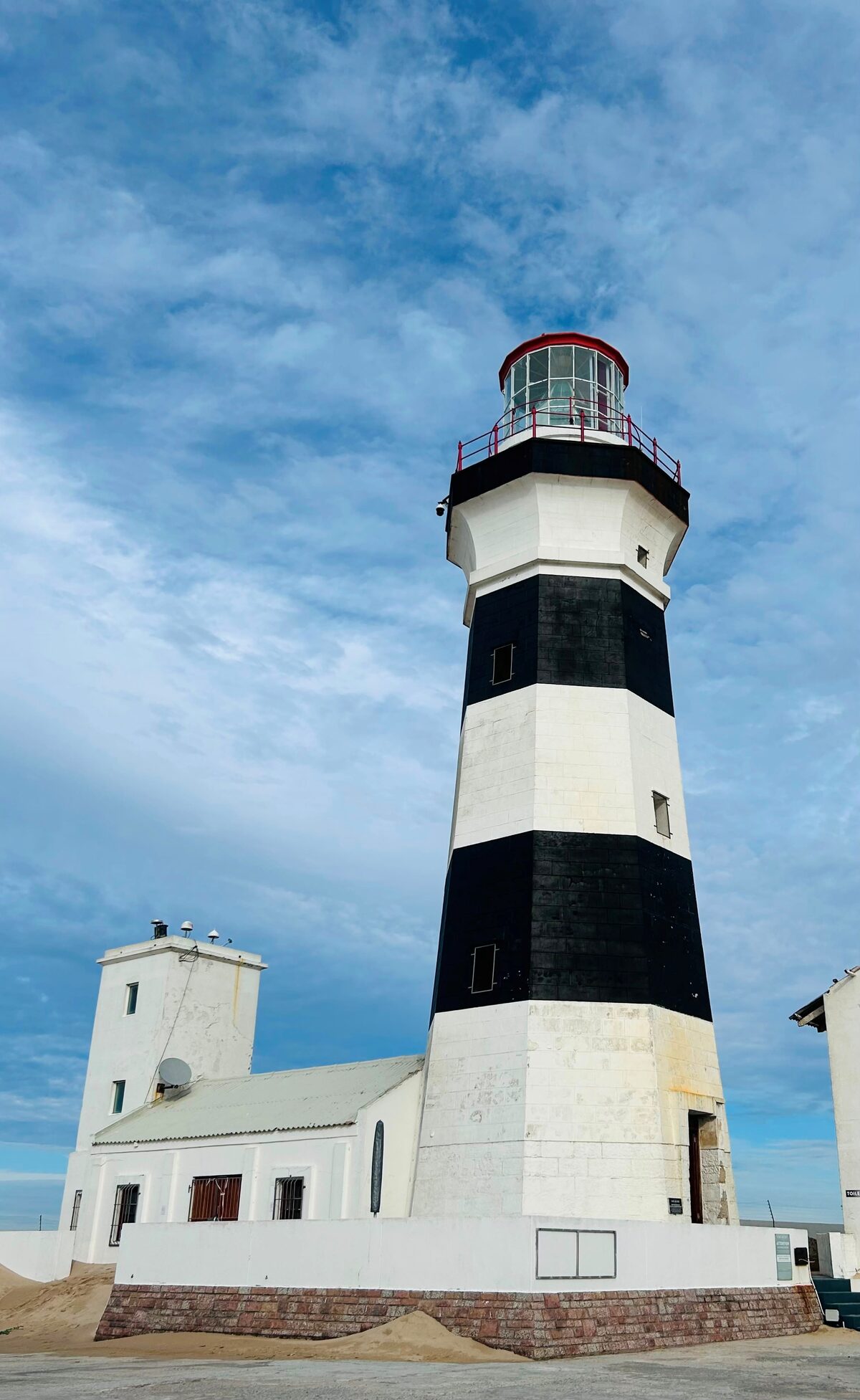
Here in Gqeberha, we are fortunate enough to have our very own lighthouse positioned on the rocky promontory at the southern edge of Algoa Bay. The lighthouse was completed in 1851 and first illuminated on the 1st of April of that same year.
Rising 24 metres above the coastline, Cape Recife Lighthouse was originally painted in the customary red and white bands before adopting its distinctive black and white colour scheme in 1929.
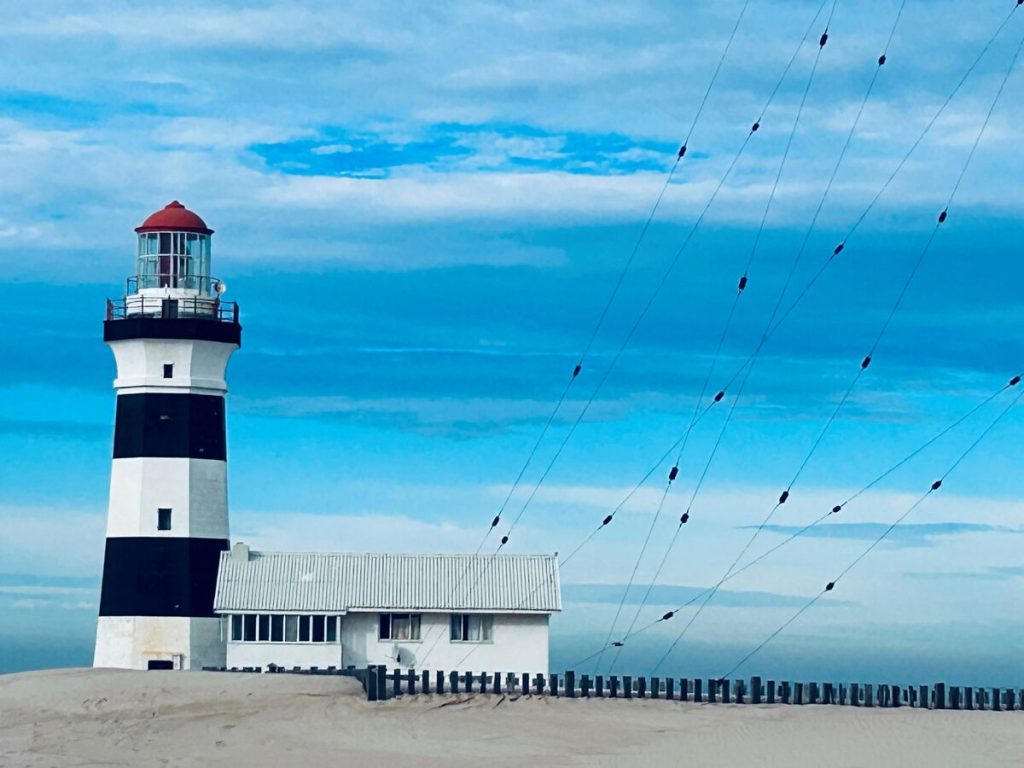
Today, its bold stripes stand out dramatically against the ever-changing canvas of Algoa Bay, where sunrises, sunsets and shifting weather paint the sea and sky in an endless array of colours.
After Green Point Lighthouse and Cape Agulhas Lighthouse, Cape Recife is the third-oldest operational lighthouse in the country and the oldest in the Eastern Cape. Like many of its kind, the lighthouse holds a treasure trove of stories.
It guards these tales like precious keys that have the power to unlock the doorway between past and present, preserving an important part of the history of our bay and its people.
The story of its beginning is one of peril, prompted by the HMS Thunderbolt, one of the first steam-powered vessels of the British Navy. En route to the mouth of the Baakens River, the ship was due to take aboard the troops of the 90th Regiment, who had been engaged in the Seventh Frontier War, and transport them back to the Cape.
Unfortunately, the ship foundered and was lost after having struck an uncharted reef on the morning of the 3rd of February 1847. This reef, just offshore of Cape Recife, has since become known as Thunderbolt Reef.
Over the years, the lighthouse significantly improved safety for ships approaching or leaving the harbour area, especially before the advent of modern navigation systems. However, ships were still lost due to a combination of factors, including unseen shoals, unpredictable currents, sudden storms and navigational errors.
The most recent shipwreck was the Kapodistrias in 1986, a Greek-owned merchant ship laden with cargo bound for Canada. Today, the lighthouse is particularly useful as it marks not only the southern approach to Algoa Bay, but also to the ports of Gqeberha and Ngqura.
Similar to lighthouses around the world, Cape Recife Lighthouse was originally powered by oil lamps. Nowadays, the lighthouse is fully automated and operated by electricity with a range of 24 nautical miles.
Gone are the days of lighthouse keepers carefully tending to lamps, polishing Fresnel lenses, winding mechanical rotation systems and keeping a constant watch over perilous waters.
With modernisation, while far more efficient, some feel that lighthouses have, in a sense, lost their symbolism: the idea that they embody guidance and stability, and that essential human connection with the landscape.
For lighthouse enthusiasts, seeing lighthouses appear as visual landmarks in films such as A Very Long Engagement (2004) is particularly evocative.
In this specific movie, the lighthouse becomes a steady beacon of hope, constancy and endurance, a metaphor for searching for truth amid layers of chaos and uncertainty, and ultimately, for finding that which is essential and lasting.
At times shrouded in mist and at other times bathed in sunlight, Cape Recife Lighthouse stands sentinel not only over the treacherous waters, but also over the remarkably wild and unspoilt stretch of coastline of the Cape Recife Nature Reserve.
Steeped in history, the lighthouse continues to shine its light into the future, providing a tangible link to the stories and the events that shaped our bay.
It also serves as a reminder of the importance of preserving physical historical landmarks, linking coastal cities to their maritime past. And in doing so, it deepens our respect for our natural environment, its strength and its beauty.
Cape Recife Lighthouse is open to visitors from Monday to Sunday, from 08:00 to 16:30, weather permitting.
ALSO READ: Northern Cape lighthouse marks 35 years




You must be logged in to post a comment.