


Widespread storm damage across the Western Cape between 10 and 12 May has left the fruit industry in the Ceres region facing mounting financial losses, infrastructure collapse and an escalating electricity crisis that threatens exports and jobs.
After devastating storms battered the province, National Minister of Agriculture, John Steenhuisen, visited the Witzenberg and Breede River Valley regions to assess the aftermath of the severe weather conditions on the apple and pear industry and surrounding communities.
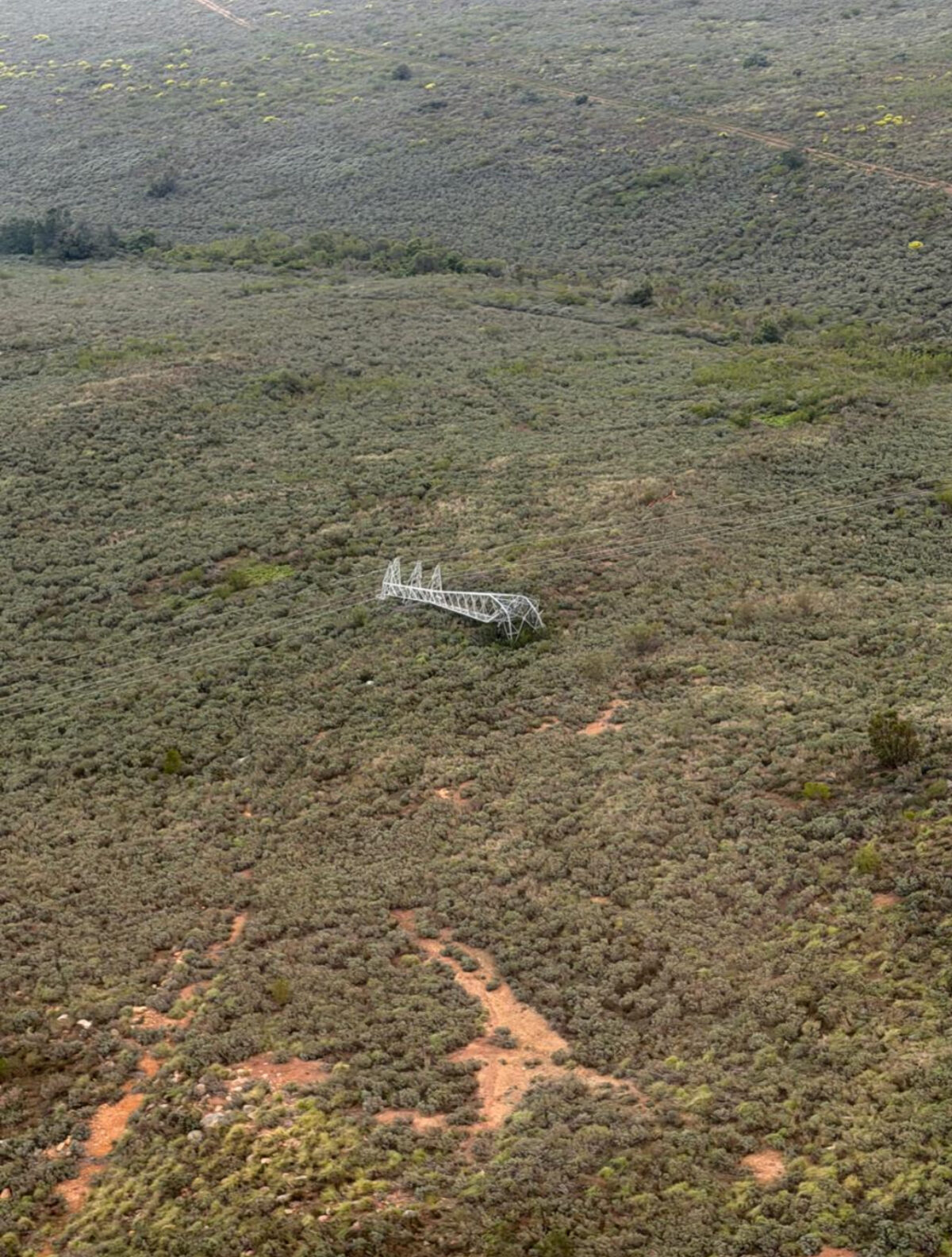
The storms damaged orchards, homes, roads and electricity infrastructure while collapsing several power pylons between Wolseley and Worcester. It is reported that between six to ten electricity pylons collapsed, leaving the region without a power supply.
An aerial assessment of the affected areas, during which the minister was joined by industry leaders, the impact of electricity shortages on the industry caused particular concern.
Industry leaders included representatives from Tru-Cape Fruit Marketing and Hortgro. They warned that repairing the damaged power infrastructure could take as long as four weeks, which would leave producers heavily dependent on generators to keep the packhouses and cold storage facilities operational.
The industry is heavily reliant on electricity to maintain fruit quality and processing operations. “The storm’s impact has been catastrophic,” said Pieter Graaff. Graaff is the chair of Tru-Cape Fruit Marketing and represents Ceres Fruit Growers and Ceres Fruit Processors as well. He also accompanied Steenhuisen. “The damage to the infrastructure will take years to repair and cost billions of rands. This disaster has set our province back significantly.”
Also accompanying Steenhuisen were directors from various fruit industry companies, including Ceres Fruit Growers, Dutoit Agri and De Keur as well as the Witzenberg Municipality Executive Mayor, Councillor Trevor Abrahams.
Graaff also emphasised that the consequences of this storm will be economically long-term for the region and the broader sector of agriculture. He said that: “As rivers swelled, roads, homes and lives were swept away.” However, he is hopeful that “with strong leadership, [the sector and region] will prevail”.
Meanwhile, thousands of jobs could be lost with every passing day that the electricity is not restored.
“There [are] more than 300 000 tons of freshly harvested export fruit currently in cold storage that require electricity to maintain market quality,” Graaff explained.
According to Graaff, insufficient generator capacity means that they cannot keep the cold stores operational, “while diesel costs are placing enormous financial pressure on businesses. If the fruit deteriorates, it cannot be packed, which could result in thousands of job losses and major export revenue losses,” he added.
Graaff said the area is currently receiving only limited electricity from an alternative source, supplying an estimated 15% to 20% of normal demand.
He explained that the region’s fruit processing facilities are also under severe pressure, owing to the large volumes of fruit that still need to be processed, while operations continue on expensive generator power.
Francois Malan, the managing director of Ceres Fruit Growers, said that nearly every farming operation in the area had suffered damage ranging from washed-away orchards and erosion to infrastructure destruction and crop losses.
“Electricity is our biggest crisis,” Malan said, adding that millions of Rands are being spent daily on diesel to keep farms, packhouses and communities functioning.
Ceres recorded 488mm of rain over the three-day storm period, while some parts of the Witzenberg Valley received more than 600mm.
Growers in the Elgin, Grabouw, Villiersdorp and Vyeboom areas also reported crop losses and storm damage.
Approximately one-third of the apples still on trees in some orchards were blown off during the storm and would now be diverted for juice processing. This is according to Attie van Zyl, the managing director of Two-a-Day.
Van Zyl highlighted the urgent need for repairs to damaged transport routes, particularly between Villiersdorp and Worcester on the R43. This route is critical for moving the products to the market.





You must be logged in to post a comment.