

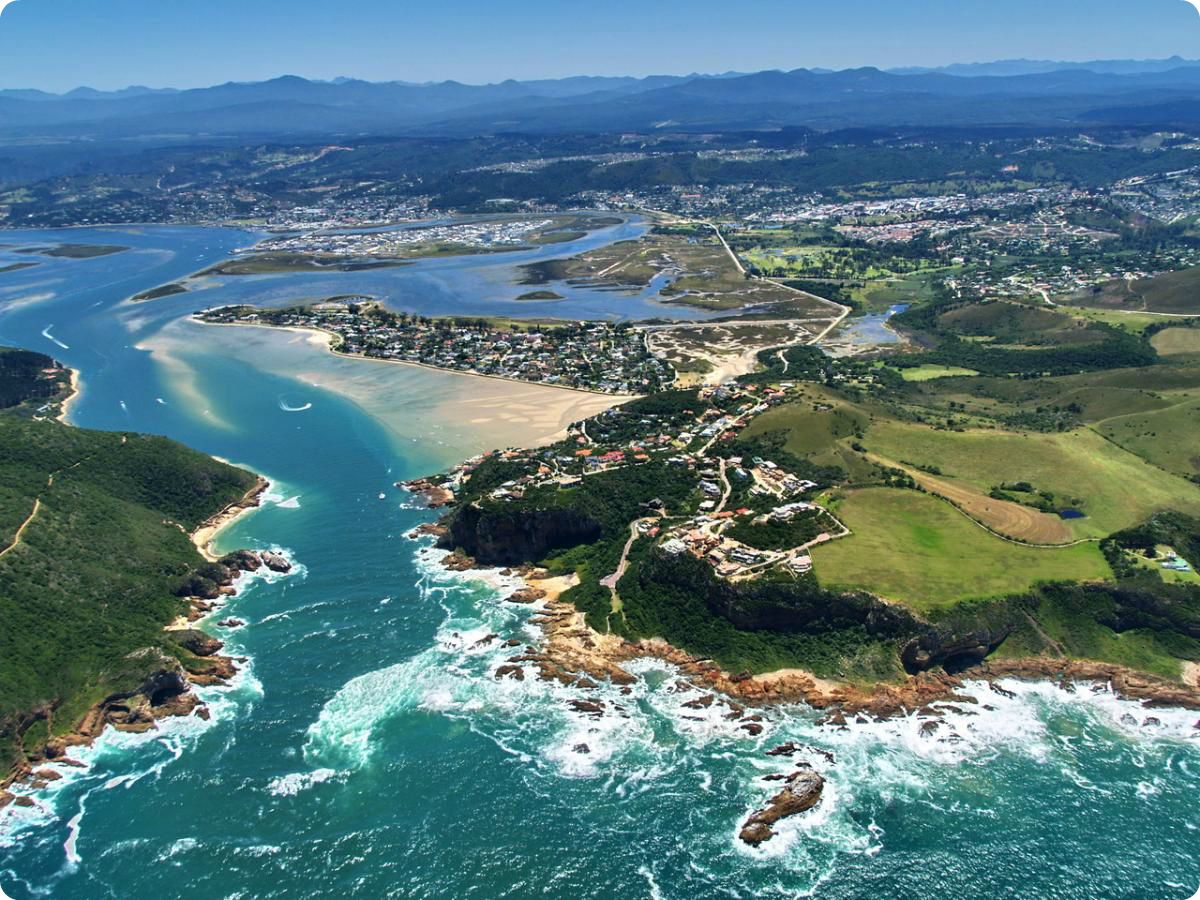
Knysna residents are staring down the barrel of a water catastrophe after the municipality declared a local state of disaster yesterday, with the town’s main dam sitting at a critically low 15% capacity.
Mayor Thando Matika delivered the frightening warning that Knysna has just 10 days of water left in its bulk supply system at current consumption rates, making “Day Zero” – when taps will be turned off completely – a looming reality.
“It is now literally your choice: reduce water consumption or wait for Day Zero, when everyone will have to queue for a daily personal ration,” Matika told residents during last weeks emergency council meeting.
The declaration, made under the Disaster Management Act, opens the door for urgent provincial and national government intervention and allows the mayor to authorise emergency spending for the R58 million rescue plan already underway.
Critical supply shortage
The town’s lifeline, Akkerkloof Dam, has been steadily dropping over the past two months and now holds barely enough water to last 10 days. The backup Glebe Dam, currently at 60% capacity, provides only an additional six days of supply.
Despite receiving around 50mm of rain earlier this week – the first meaningful precipitation in months – the downpour was nowhere near enough to ease the crisis.
“Day Zero does not mean that Knysna will run out water,” Matika explained. “It means that the reticulation system will be shut down to avoid total collapse.” When that happens, residents will be forced to collect daily water rations from distribution points around town.
R58 million emergency response
The municipality is racing against time to implement a comprehensive water augmentation program expected to deliver an additional 11 megalitres of drinking water per day within the next two weeks.
The emergency measures include developing the Bigai and Bongani springs, refurbishing seven existing boreholes that will provide 3.2 megalitres per day, and drilling seven new boreholes with an anticipated yield of 2.7 megalitres daily. The municipality is also concluding an agreement with PG Bison company to access additional boreholes with an estimated yield of 3 megalitres per day.
“The total cost of these interventions is estimated at R58 million, underscoring the scale and urgency of the disaster,” said Matika.
The municipality has applied to the Department of Water and Sanitation for financial assistance, with feedback still pending.
Residents hold the key
While engineers work frantically to increase supply, Matika stressed that residents ultimately control whether Knysna avoids Day Zero.
Level 4 water restrictions have been in effect, with law enforcement officials being deployed to monitor compliance. Flow restrictors will be installed on properties of residents who ignore the restrictions.
The municipality is also tackling water losses from aging infrastructure by installing 8,000 conventional water meters to replace bypassed ones and deploying five additional plumbers along with emergency response teams to reduce response times to major pipe bursts to just 4-6 hours.
“Water lost as a result of pipe bursts and other failing infrastructure remains a big problem,” Matika admitted, urging residents to report leaks and suspected water abuse immediately.
Provincial support mobilised
The disaster declaration has triggered a coordinated response involving multiple government departments, the Garden Route District Municipality, and private sector partners including Gift of the Givers.
The Garden Route District Disaster Management Centre will coordinate short- and medium-term interventions, while the Department of Agriculture will assess drought impacts on the area’s farming sector.
“We are working at maintaining and improving our infrastructure, but we urgently need our residents to further reduce water consumption,” Matika concluded. “You decide – use less water now to prevent Day Zero or join the queue for your daily ration.”
The water crisis represents one of the most serious challenges facing the popular Garden Route tourist destination, with the outcome now resting in the hands of every resident willing to turn off the tap.
ALSO READ: Garden Route water crisis deepens as multiple municipalities implement emergency restrictions
Other Western Cape towns facing water restrictions
Knysna is far from alone in its water crisis. According to the latest reports from December 2025 and January 2026, 33 towns across the Western Cape are currently under various levels of water restrictions as the province battles severe drought conditions.
Most severely affected areas:
Level 6 restrictions (most severe): Dysselsdorp and De Rust in the Klein Karoo region are facing the harshest restrictions, with residents banned from garden watering, car washing, and filling swimming pools.
Level 4 restrictions: Along with Knysna, several popular Garden Route destinations are under Level 4 restrictions, including Plettenberg Bay, Kurland Village, Nature’s Valley, and Witsand. The Klein Karoo towns of Calitzdorp, Van Wyksdorp, Ladismith, and Zoar are also at this critical level.
Level 3 restrictions: Swellendam, Beaufort West, Albertinia, Heidelberg, Slangrivier, and Jongensfontein are all implementing Level 3 measures.
Level 2 restrictions (precautionary): George municipality implemented Level 2D restrictions on January 5, 2026, limiting households to just 10 kiloliters per month. Other Level 2 areas include Gouritsmond, Stilbaai, Melkhoutfontein, and Riversdale. Mossel Bay also introduced water restrictions on January 12, 2026, with the Wolwedans Dam at 58.73% capacity.
Level 1 restrictions (precautionary): Several Winelands and West Coast towns are under Level 1 measures, including Lamberts Bay, Citrusdal, Robertson, Ashton, Montagu, Bonnievale, McGregor, Worcester, Rawsonville, Touwsriver, and De Doorns.
Cape Town spared – for now
Notably, Cape Town, which faced its own “Day Zero” crisis in 2017-2018, remains unaffected by current restrictions, though officials are closely monitoring the situation.
The restrictions come after an “extraordinarily dry, windy November” and with meteorologists forecasting still “a long, hot, dry summer” ahead.


