


MOSSEL BAY – The water crisis across the Garden Route has reached critical levels, with Knysna Municipality reporting just ten days of usable water remaining while neighbouring municipalities implement increasingly severe restrictions to combat the ongoing drought.
The situation has prompted urgent action across the region, with four major municipalities now enforcing emergency water restrictions and punitive tariffs to preserve dwindling supplies.
Knysna Municipality finds itself in the most precarious position, having already implemented stringent water restrictions with municipal sources indicating only enough usable water remains for ten days of consumption. The dire situation has raised alarm bells about potential water interruptions should relief not arrive soon.
Knysna Mayor Thando Matika, this week appealed to residents to work with the Municipality to ensure a constant flow of water. “The situation remains extremely serious across the Greater Knysna area, and despite ongoing intervention efforts, water sources are under severe strain and demand continues to exceed available supply.”
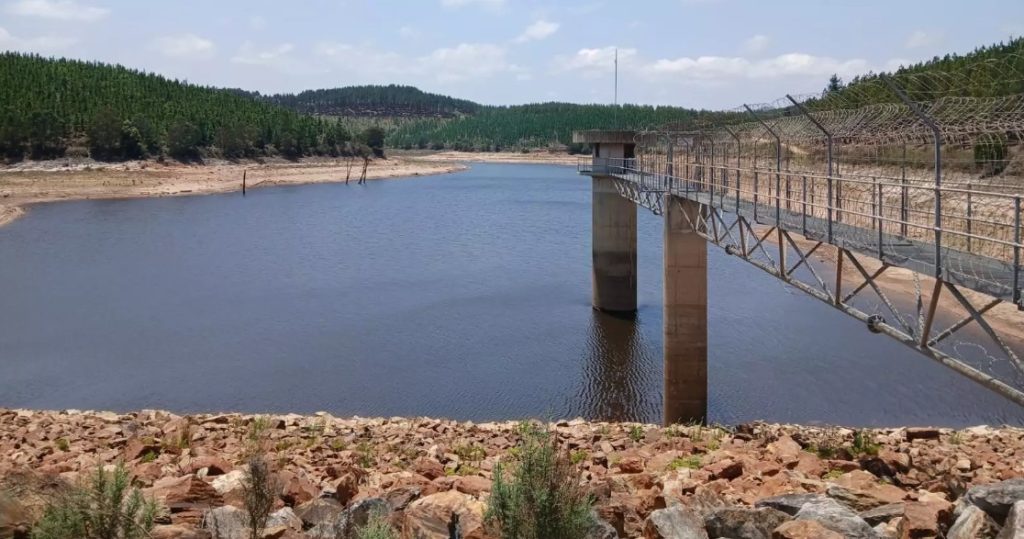
He stressed that river levels throughout the municipal area also remain critically low. “The Akkerkloof Storage Dam is currently at approximately 15% capacity, which translates to an estimated ten days of water supply at current consumption levels. While rain has been forecast for Thursday, the rainfall alone will not be sufficient to stabilise the system without a significant and immediate reduction in consumption.”
Earlier this week Anton Bredell, Western Cape Minister for Local Government, Environmental Affairs and Development Planning, said that he will approach the provincial cabinet to request disaster classification for the Southern Cape drought situation.
Bitou Municipality implements Level 4 restrictions
Bitou Municipality, which includes the popular coastal town of Plettenberg Bay, has implemented Level 4 water restrictions with immediate effect. The decision was triggered by the Roodefontein dam dropping below the critical 31% level due to insufficient rainfall, while the Keurbooms River levels have fallen too low to allow for water abstraction.
Under the new restrictions, residents face a complete prohibition on watering gardens using municipal water, filling or topping up swimming pools, ponds, and paddling pools, and using automatic swimming pool water fillers. The restrictions also ban the use of automatic irrigation sprinklers and drip systems, automatic urinal flushing systems, hosing down structures, roofs, and driveways, and washing motor vehicles, boats, and any other type of motorised or non-motorised vehicles.
All domestic households must limit water usage to a maximum of 10 kilolitres per month and use water sparingly. The municipality has warned that households with excessive water usage may have a flow meter restrictor installed to limit usage to 10 kilolitres per month. Commercial users and businesses must reduce their water consumption by at least 25% compared to their average usage over the previous six months, a requirement that applies to all businesses relying on municipal water supply.
The municipality has also approved punitive tariffs for monthly consumption exceeding 10 kilolitres per household, which will be implemented immediately.
Mossel Bay introduces strict weekly quotas
Mossel Bay Municipality implemented new water restrictions this week, responding to the municipality’s total available water supply decreasing from 60% to 50%. The restrictions apply specifically to residents who use potable water, better known as drinking water.
The new regulations stipulate that residents may only water their gardens on two days per week, during one hour per day, between 18:00 and 19:00, with no irrigation systems permitted. Even-numbered households may water their gardens only on Mondays and Thursdays, while uneven numbers are restricted to Tuesdays and Fridays. Watering with a garden hose may only take place if it is hand-held.
Sports facilities receive limited accommodation, with the watering of cricket pitches, golf course greens and bowling greens permitted for only two hours per day, on Tuesday and Friday mornings before 09:00. The hosing of roofs, driveways and any other surface, as well as the washing of vehicles with a garden hose, is completely prohibited.
The filling of swimming pools at households is banned outright. Accommodation establishments and hotels must lodge an application with the municipal manager, Colin Puren, for relief and permission to fill their swimming pools. Areas with high water pressure and high water consumption will be identified for the installation of pressure reduction and flow-lowering devices.
Should the total available water supply drop to between 50% and 40%, approved tariffs for a dam water supply below 50% will apply automatically.
George Municipality escalates to emergency tariffs
George Municipality has implemented Level 3 emergency water tariffs under intensified Level 2D water restrictions, affecting greater George, Uniondale, and Haarlem. The decision follows the continued decline of the Garden Route Dam to 43.4% (90.8% 2025) and the Haarlem Dam to a critically low 30.4% (98.7% 2025).
The emergency tariff system operates on a sliding scale designed to discourage excessive water use while protecting basic water needs. The first 6 kl remain provided at no charge, while higher water use becomes significantly more expensive, encouraging water saving. The more water consumed above the recommended household usage limit of 10 kl, the higher the cost per kilolitre becomes.
These tariffs encourage immediate water-saving behaviour and help reduce pressure on the water supply. By lowering overall consumption now, the Municipality aims to avoid more severe restrictions or possible water interruptions in the future. Simply put, the less water residents use, the less they pay.
Under the Level 3 Emergency Tariffs, domestic households are encouraged to limit consumption to a maximum of 10 kl per month, which includes the first 6kl of water provided at no charge. Water use above 10kl is charged at increased emergency tariff rates. Indigent households continue to receive their basic free water allocation, but usage over 10kl is charged at emergency rates.
Emergency tariffs apply to all domestic households as well as businesses and industries. All non-domestic users are billed according to emergency tariff rates that increase as water consumption rises, including guest houses and bed-and-breakfast establishments, churches and church buildings, educational institutions, children’s homes, old-age homes, and crèches.
Households or businesses with verified medical, health, or essential operational water needs may apply for an exemption.
Regional impact and outlook
The comprehensive nature of restrictions across multiple municipalities highlights the severity of the drought affecting the entire Garden Route region. The crisis stems from significantly below-average rainfall, leaving major water sources at critically low levels.
Municipal officials across the region emphasise that immediate water-saving behaviour is essential to avoid more severe restrictions or possible complete water interruptions. The emergency measures aim to protect limited potable water supplies and ensure essential water needs can be met during the ongoing drought.
Residents are urged to implement water-saving measures immediately, with municipalities warning that failure to comply could result in the installation of flow-limiting devices, substantial financial penalties, and potential legal action.
ALSO READ: Western Cape faces twin crisis as Minister seeks disaster declaration for drought and wildfires


You must be logged in to post a comment.