
On Richmond Hill’s Stanley Street, between Karl Schoemaker Photography and the Botanic Charm Collective, a relatively new gallery has opened.
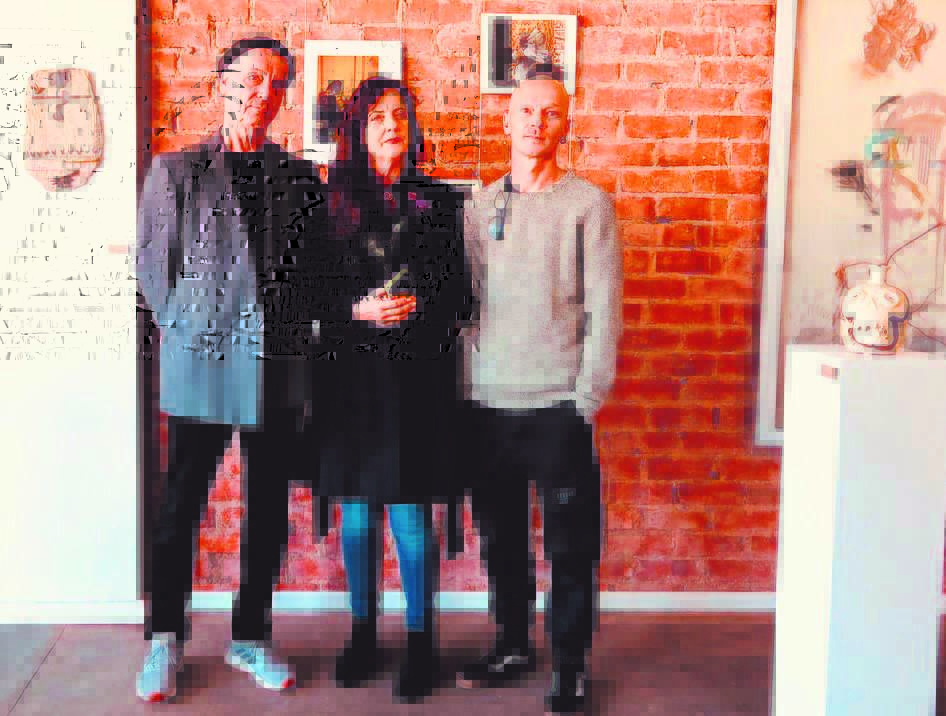
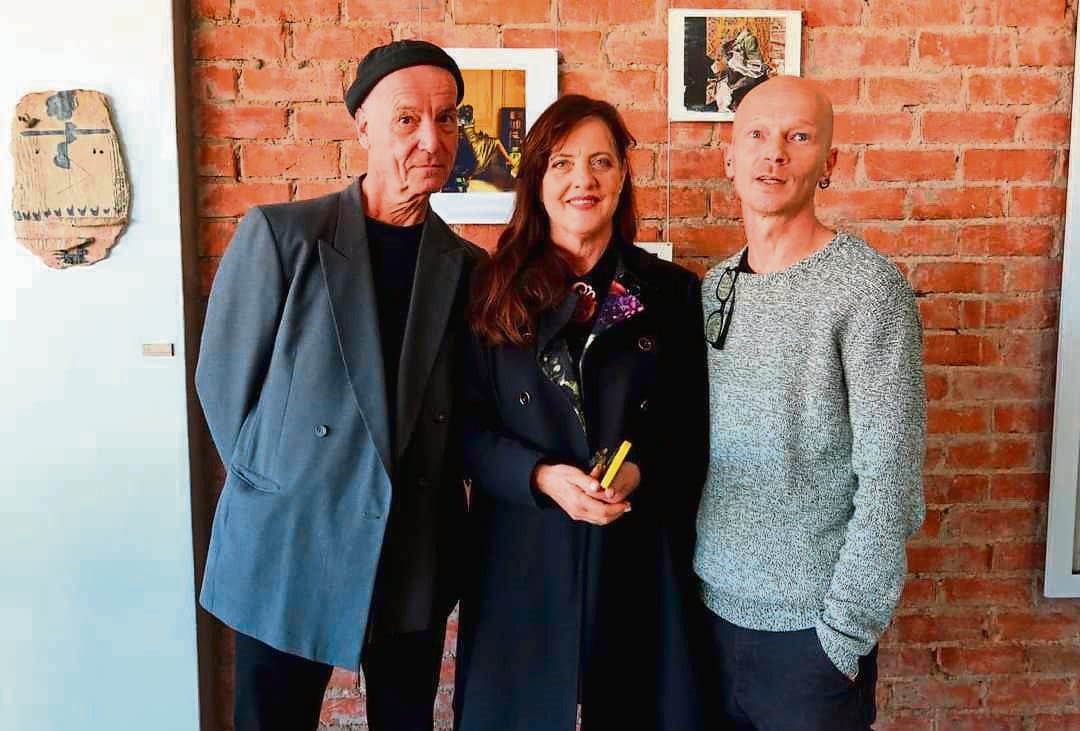
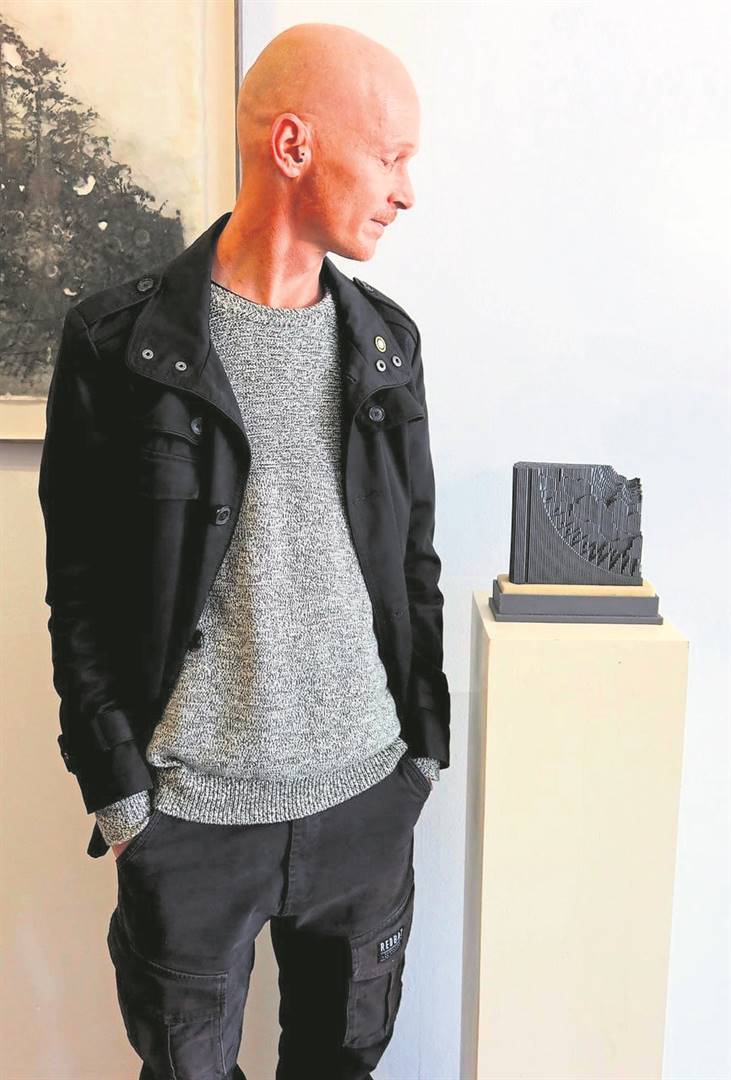
This artistic space, called the Labyrinth Project, is co-curated by Eastern Cape-based artists Amanda de Wet, Wayne Matthews and Nicholas Hauser.
The public is welcome to view and interpret the art for themselves in the current exhibition, A Permanent Periphery.
“A personal, love project. A space filled with extraordinary artworks which, under normal circumstances, would most probably not have come to the attention of the public eye and ear,” is how Hauser describes the project.
“In the major galleries you will have a lot of exciting art, but they don’t allow access to a lot of people. There’s a great swathe of artists who make incredibly interesting work but never get to exhibit or produce a commercially viable body of work; they’ll have work they don’t get to show. My interest was always to promote the work that isn’t that sellable,” elaborated Matthews, reiterating the unique nature of the exhibition and its common goal.
The founding story of the origins of the Labyrinth Project goes back to exactly those core sentiments expressed by Matthews.
He lived in Joburg, in the midst of artists’ studios and makers’ spaces. After the commercial gallery he had worked for closed down, Matthews and the rest of his artist community were allocated vacant space which allowed them to do what they love best.
“We were allowed to play in a non-commercial, curatorial way, and to continue to network with other artists.”
This is how the Labyrinth Project got off the ground.
The organic changeability of the work and the freedom to make, without restraint, unlocked honest, meaningful pieces of art, which had their origins in the fringes of creativity.
Having moved back to the Eastern Cape, Matthews is excited about continuing the Labyrinth Project in Gqeberha.
A Permanent Periphery is yet again “an open-ended space” for Matthews.
“For me, the periphery is a place in which you’re not pressured by the status quo. Many of the artists in the show exist on the periphery. Even though many of them have moved on to fewer peripheral spaces, they still operate in and are all embedded in that fluid, flexible place of outliers,” he said.
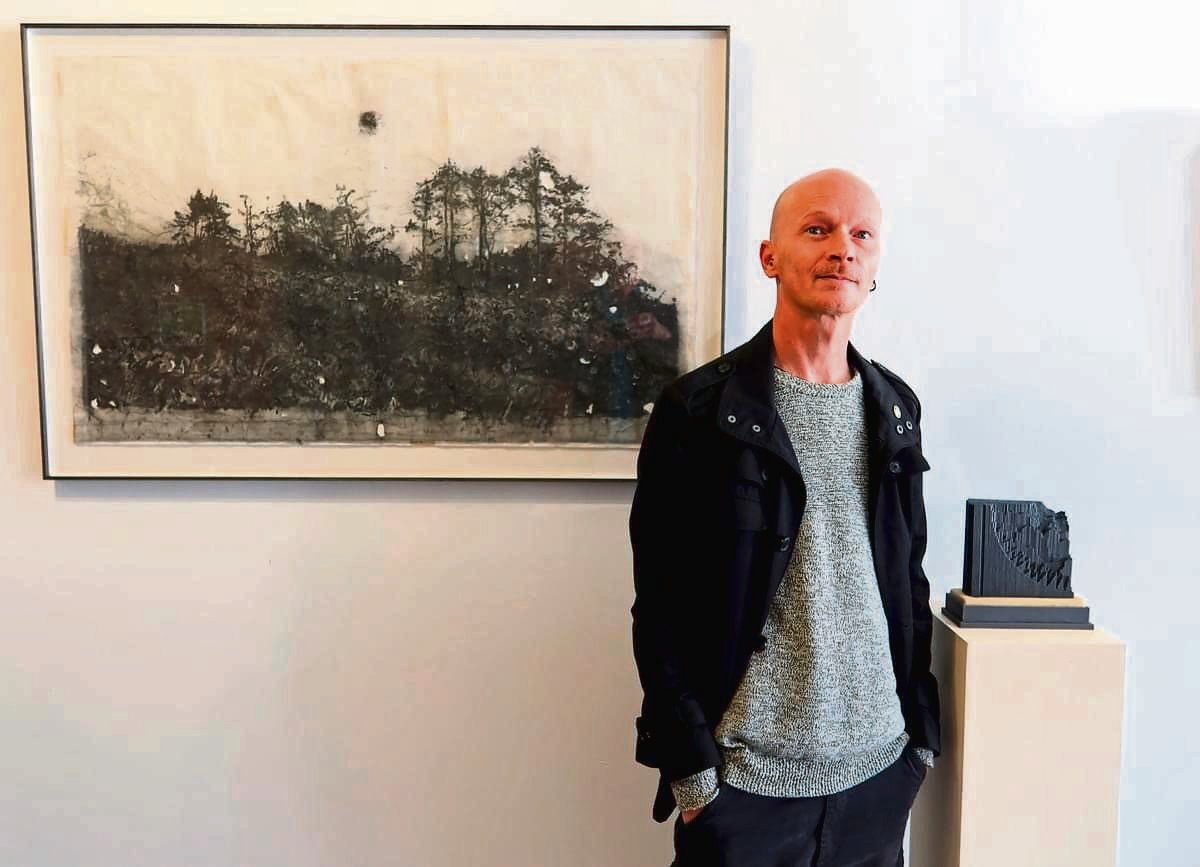
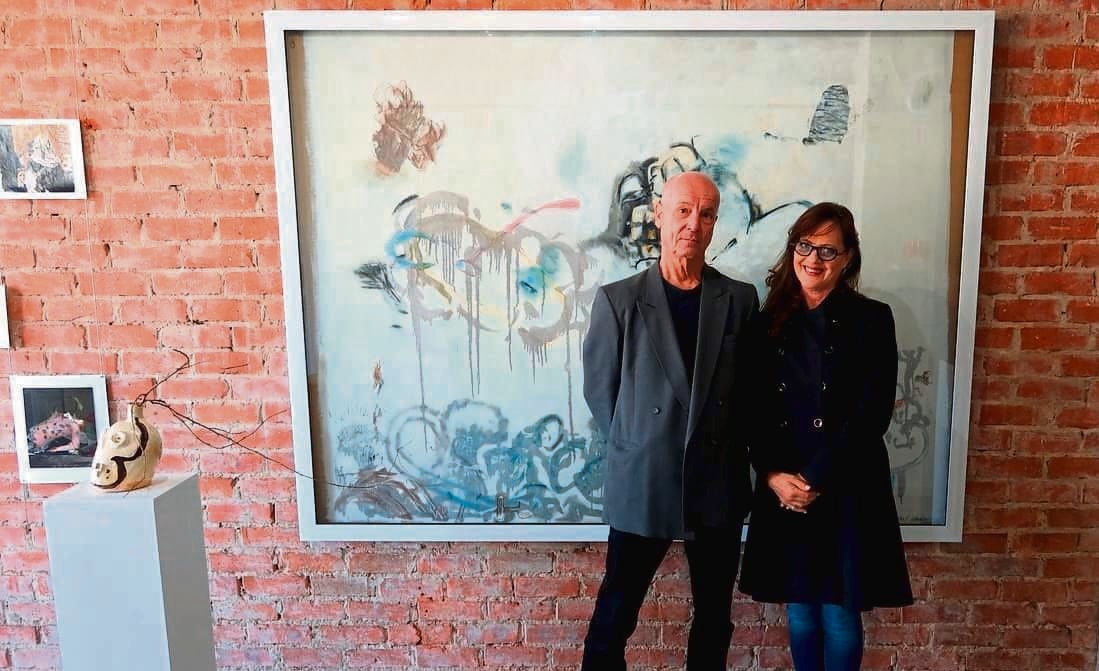
The diverse works on display are fostered by artists who have made some kind of impact on the artistic community in the Eastern Cape.
They are moving, thought-provoking, beautiful and also, at times, difficult. The variety of resources and mediums used are suggestive, every so often, of our physical surroundings and environment, adding depth and yet another layer of meaning. They include, amongst others, public memoirs, video work, stoneware tablets with relief work, paper collage, Mercurochrome and ink on paper and card, graphite and chocolate on graph paper, tree resin, bone, ash and concrete.
Clearly, many of these are throw-away materials which make the pieces even more interesting. After having been discarded to the verges, they were returned and brought back in a remarkable way, like pieces of wreckage assembled and re-assembled and, in the process, acquiring a heartbeat all of its own.
The exhibition evidently is a wonderful experience, stirring awareness on different levels. Its unique, intriguing quality is emphasised by Hauser’s words.
“Some of these artworks had been plucked out of obscurity, and most have never been seen.”
“What is incredibly important here is to have conversations with people about the work,” said
De Wet, emphasising the fundamental aim of the gallery.
“The space has collaboration at its core –To create and grow a community. That is the real idea.”
“We want to continue the space as a place where everybody gets to deform, to some extent, what the nature of the space itself is through multiple inputs,” stated Matthews, about the project aiming to provide artists with a resource and a platform.
The gallery is also used as a workshop area on Saturdays, creating a sense of social cohesion and togetherness.
On the window, one finds the glyph of a labyrinth, an emblem that stands as a metaphor for creativity and also, as Matthews explains, “for not entirely knowing where you’re going or what you’re doing, but being a willing participant in the not knowing”.
As we all navigate our passage through life, Matthews’ words on the labyrinth, signifying creative freedom, stay with me.
“It’s an increase of the periphery even over the centre, even over the surface where the linear elements create all that peripheral space.”