
WHILE the emergence of a new ruling party in the Eastern Cape is not highly likely, the ANC is gradually losing its stronghold in the province.
Voters in the Eastern Cape will probably let the ANC and UDM pay at the polls for alleged corruption, and the DA could benefit from better representation at voting stations – if voters pitch.
These are the views of a few experts that Netwerk24 spoke to with regard to the elections.
The ANC has, for the past quarter of a century, had a firm hold on the Eastern Cape, but in the 2016 elections, this stronghold received a blow when the DA and smaller parties took over the Nelson Mandela Bay Metro and Kouga Municipality.

Ongama Mtimka, a political analyst, lecturer and researcher at the Nelson Mandela University (NMU), said these municipalities, as well as those of the Buffalo City Metro Municipality and a few in the Sarah Baartman-district municipality, would be indicators of the ANC’s support.
“It’s especially here that we will be able to see if the decrease in the support of the ANC has continued, stabilised or been reversed.
“But the ANC will still receive the majority of votes, with the DA definitely being the official opposition,” said Mtimka.
Jan-Jan Joubert, a political reporter and author of the book, Wie Gaan in 2019 Regeer? says even in 2016 – which was a difficult year for the ANC, the party still managed to triumph emphatically over the rest of the parties.
In those elections, the ANC received 67,1% of the votes in the Eastern Cape, the DA 17,4% and the EFF 5,1%.
He does, however, believe that the DA will, in these elections, show growth in the province.
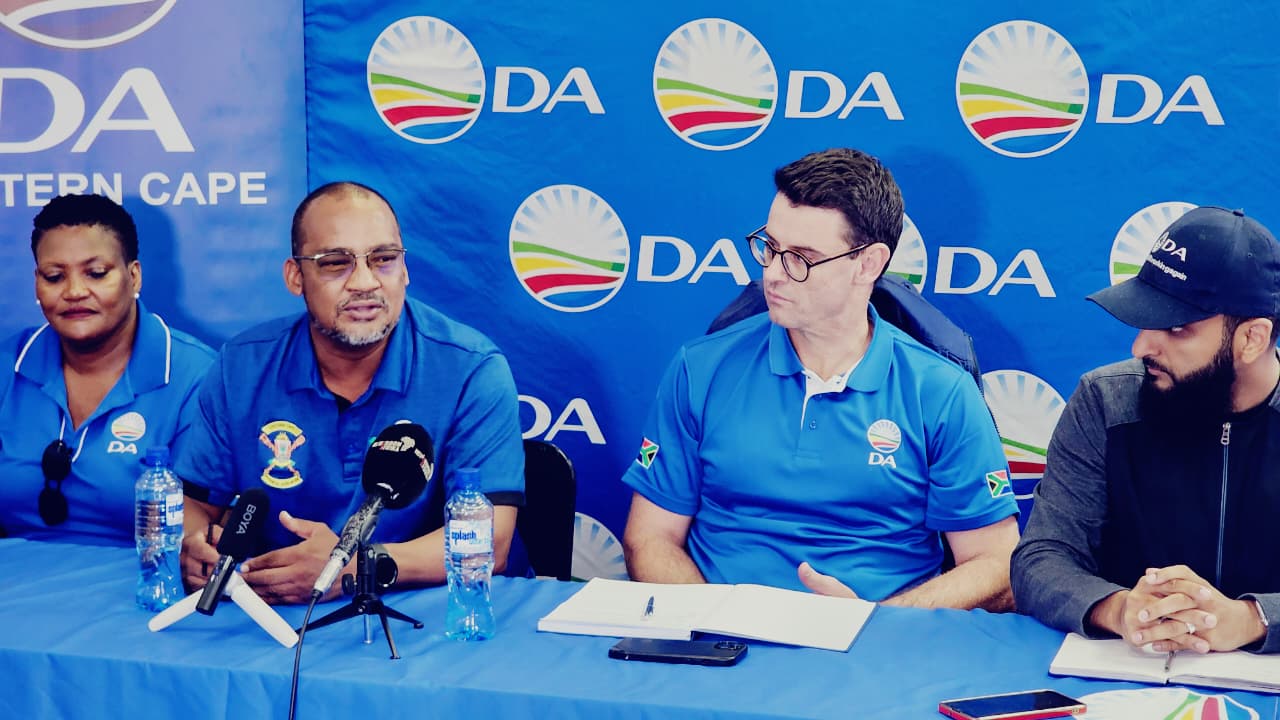
“The DA in the Eastern Cape is looking better than in the Western Cape at the moment. There weren’t big differences in opinion inside the DA in this province. This can count in their favour.” According to Joubert, the DA could perform better in the former Transkei area, since they now have, for the first time really, party agents at voting stations in this area.
“With party agents at 90% of the voting stations in the Transkei, the DA can grow.”
Prof. Joleen Steyn-Kotze, a senior specialist researcher in democracy at the Human Sciences Research Council (HSRC), says one of the determining factors will be voter turnout.
“In the Eastern Cape there are two sides: In the east the ANC is strong; in the west the ANC’s support decreased and that of the DA increased – as was seen in the 2016 municipal elections.”
She says there is undoubtedly a decline in the support for the ANC in the Eastern Cape.
“In areas where the ANC in the past obtained 80% and 90% of the votes, it is now between 60% and 70%.
“But it will come down to which party can convince its voters to go to the voting stations and vote.”
She said there were still many voters who were unsure which party to vote for and she believed that this could contribute to their decision to not vote at all.
“The average South African voter is very aware of what is going on in the country’s politics. Who it is that voted and how many voted – are the factors which will make the difference.”
Mtimka said the majority of voters voted for moderate ideas which would count in favour of the DA and ANC.
He believed a party such as the EFF, which made a lot of noise about land appropriation, appeared robust, but this was not always enough to beat the main parties.
According to Mtimka, smaller parties such as the UDM, of which Mongameli Bobani, the executive mayor of Nelson Mandela Bay metro, is a member, could also benefit from this.
But Joubert believed the UDM would lose many votes because of Bobani’s actions in the local council.
“Bobani’s character is not irreproachable. The UDM is a party which builds itself on irreproachability with Bantu Holomisa (UDM leader).
“Bobani has tarnished their image countrywide,” he said.
Steyn-Kotze also thinks the “cloud of corruption allegations” hanging over Bobani can have a negative impact on the UDM.
“Bobani’s actions have not helped at all, with the perception being that the UDM helped the ANC to come in through the back-door to regain power in the Nelson Mandela Metro.
“While the UDM did launch its manifesto in Port Elizabeth, there was nothing new that stood out.”
- Sonwabo Mbananga, spokesperson of the Eastern Cape provincial government, said last week that 70 voting stations were damaged in the torrential rain and floods.
He said the government was working around the clock to have these Voting Stations ready by Wednesday.
The army was also called in to repair bridges and roads in these areas.