
Basic Education Minister, Angie Motshekga, has confirmed that matrics and Grade 7 learners will indeed return to school on Monday, June 1.
The remaining grades will return to school in a phased manner.
The minister said that the date for the reopening of schools for these two grades, which used to be only provisional, has been approved by the National Coronavirus Command Council and Cabinet.
The department will also be gazetting the new school calendar soon, which includes school breaks and the start and end of terms.
“Independent and public ordinary schools will open, even in the metropolitan areas. Every school must adhere to and observe the health and safety protocols that will be put in place. Arrangements are also in place for learners and educators in other provinces to return to their residences,” Motshekga said.
She also added that all learners, educators and support staff would receive orientation and training at the reopening of schools.
“During consultation with social partners it became clear that we need a different approach when it comes to special schools.
“We are working with organisations who are advising us on the best way forward regarding the phased approach of special schools.”
According to Motshekga, the Department of Basic Education (DBE) was confident that the reopening of school across provinces would happen as outlined in the protocol that had been developed.
Safety remains most important
She also emphasised that the safety and health of pupils and staff remained of the utmost importance.
“The reports we received are showing that preparations have been taking place and good progress has been made. All indications are that the preconditions for the reopening of schools will be met, obviously with the premium being on saving lives,” Motshekga said.
“The delivery of Covid-19 essentials: sanitisers, masks, water and sanitation are being done in all provinces to ensure that schools are safe places for learners and staff and, of course, the schools will be cleaned. Most are currently being cleaned already.”
She confirmed that the DBE has entered into an implementation protocol agreement with the Department of Human Settlements, Water and Sanitation and Rand Water to ensure that no school goes without water.
Motshekga also added that all food handlers of The National School Nutrition Programme would be supplied with the required personal protective equipment (PPE) including gloves, aprons and cloth masks.
These have already been procured by provinces as part of a basic health and hygiene package.
School transport
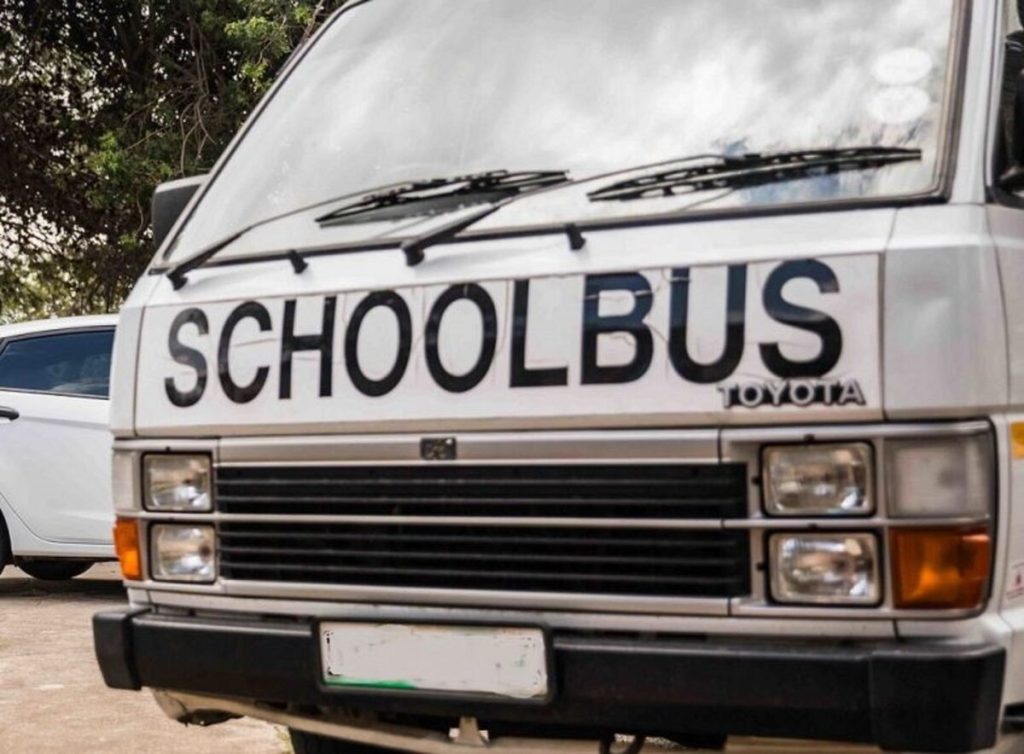
The DBE was also working with the Department of Transport to ensure that safety protocols were maintained on school buses.
Motshekga said that there was always certainty that schools would be reopened. “I am aware that parents and their children, teachers and non-teaching staff and all South Africans have been asking questions about the future of the academic year.
“These are uncharted waters and that is why we have relied heavily on the advice of experts in the medical fraternity under the leadership of the Department of Health.
“There is a whole debate on the impact of Covid-19 on children and adults and we are following those debates and using them to guide us.
“The forced closure of schools to slow down the spread of the coronavirus was a necessary step to take.
“It remains an important step that was taken to contain the virus as quickly as possible and to save lives.”
Motshekga acknowledged that the virus had forced the DBE to re-engineer the basic education system.
Curriculum changes
The amount of time available in a school day would determine the duration of the period by subject and innovative methods would be used to meet health, safety, social or physical distancing requirements. The trimmed curriculum would be sent to schools for planning purposes and was being worked on continuously. “Schools must be aware that all curriculum enrichment programmes will be put on hold until further notice.
“We want to focus on the core business of basic education, which is curriculum implementation,” she said.
“I also want to make it clear that no school sport will be permitted, as it will increase the chances of infection and undermine our efforts of containing the coronavirus. When class is dismissed, learners must go home. We urge parents to work with us on this matter.”
Netwerk24’s Cara-Lee Dorfling reports that provincial education spokesperson, Loyiso Pulumani, said on Sunday that the department and district heads were working non-stop to ensure that schools were safe and ready for learners to return on Monday.
According to him, the department has contracted 30 companies to help schools acquire protective clothing and disinfectants, but the deliveries only commenced on Saturday. Pulumani couldn’t provide the exact number of schools that already received their deliveries but added that the deliveries would be completed during this week.
Moving to level 3
Motshekga’s announcement came a few days before President Cyril Ramaphosa declared on Sunday that the whole country would be moving to lockdown level 3 from Monday, June 1.
“The implementation of alert level 3 will involve the return to operation of most sectors of the economy, subject to observance of strict health protocols and social distancing rules,” Ramaphosa said. “The opening of the economy and other activities means that more public servants will be called back to work. People will also be able to leave their homes to buy goods or obtain services, including medical care.”
Exercise will be allowed at any time during the day, provided that it is not done in groups. The curfew on the movement of people will also be lifted.
“Alcohol may be sold for home consumption only under strict conditions, on specified days and for limited hours.
“Announcements in this regard will be made once we have concluded discussions with the sector on the various conditions.
“The sale of tobacco products will remain prohibited due to the health risks associated with smoking. All gatherings will remain prohibited, except for funerals, with no more than 50 people or meetings in the workplace for work purposes.”
Any place open to the public, where cultural, sporting, entertainment, recreational, exhibitionary, organisational or similar activities may take place, will also remain closed.
Hotspots identified
Ramaphosa added that some areas remain a concern and will be classified as coronavirus hotspots. These include Nelson Mandela Bay and Buffalo City.
The list of hotspot areas will be reviewed every two weeks and intensive interventions will be implemented to decrease the number of new infections. Enhanced measures of surveillance, infection control and management will be put in place.
A full-time team of experienced personnel: epidemiologists, family practitioners, nurses, community health workers, public health experts and emergency medical services, to be supported by Cuban experts, will be deployed to the hot spots.
“We will link each hotspot to testing services, isolation facilities, quarantine facilities, treatment, hospital beds and contact tracing.”
Ramaphosa emphasised that should it be necessary, any part of the country could be returned to alert levels 4 or 5 if the spread of infections is not contained.