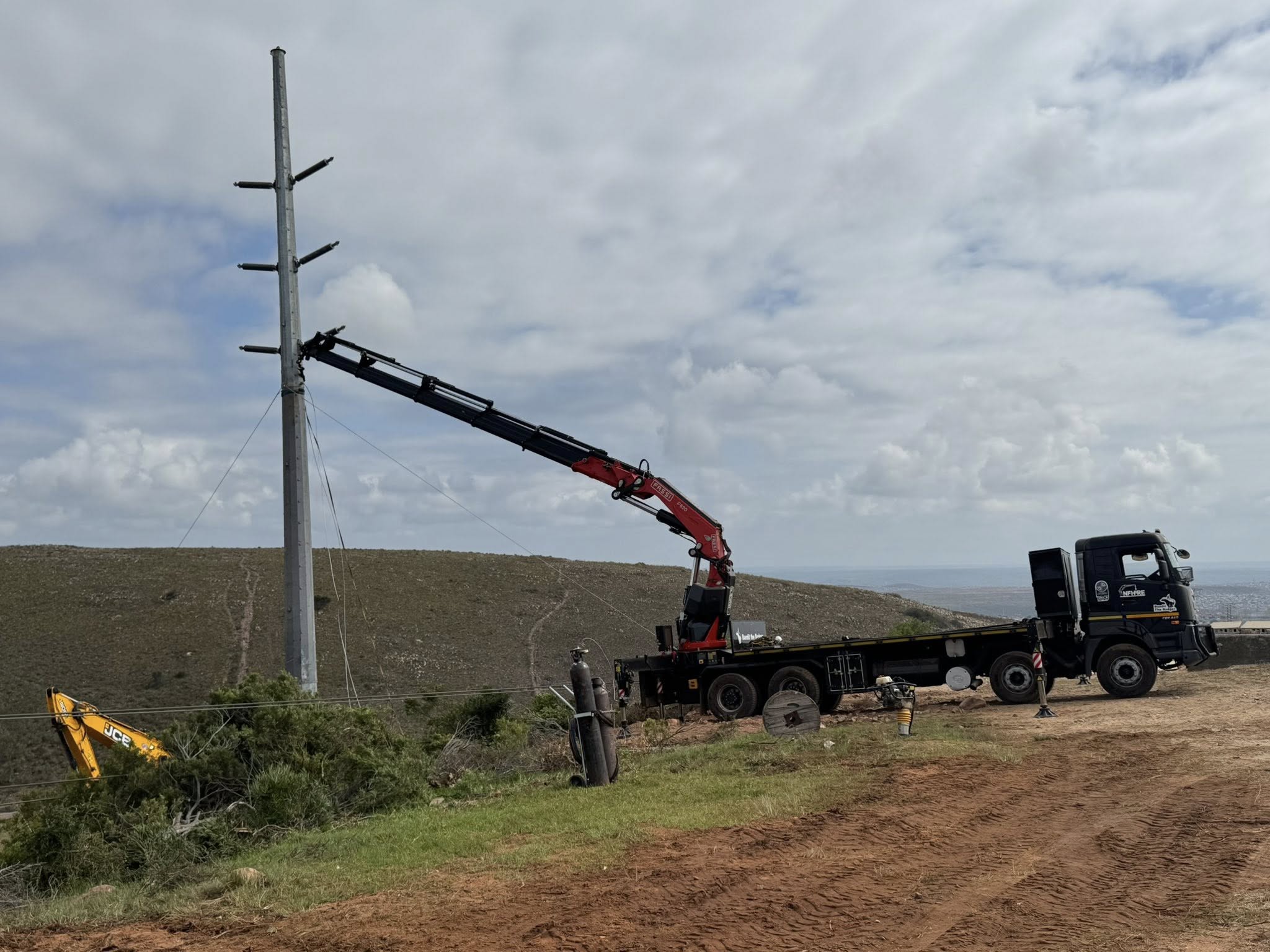


Water outages caused by low dam levels in Nelson Mandela Bay may soon be a thing of the past, as phase three of the Nooitgedacht Water Treatment Works is scheduled to be completed in about six months’ time.
During a recent oversight visit to check on progress at the facility, the mayor of the Nelson Mandela Bay Metro, Nqaba Bhanga, said that he was satisfied that the project, funded by the Department of Water and Sanitation (DWS) at a total cost of R318 million, would be completed in September this year.
“The briefing I received from engineers gives me hope that the future of the metro’s water security is looking good. As we know, Nooitgedacht is one of the water augmentation programmes for our metro to ensure that we don’t reach Day Zero.
“Once completed, it will supply water to the eastern parts of the metro. The amount of water that will be pumped from this facility will provide a major boost to our plans to build the economy of the city,” Bhanga said.
Upon completion, the treatment works will treat an additional 65 million litres of water per day, increasing the output of the treatment works to 210 million litres of water per day.
Acting executive director for infrastructure and engineering in the metro, Joseph Tsatsire, said that the metro was investing quite a lot of resources in making sure that they provide water security.
“Among other things, we are doing ground water exploration and desalination, and this is actually increasing the capacity for us to be able to treat water from the Gariep system into the metro. This in turn will help us in trying to mitigate the drought situation at the end of the day.”
According to Bhanga, the combined levels of the metro’s dams, which are currently sitting at approximately 16%, remain a problem and will continue to be a problem if residents don’t do things right and reduce water consumption.
“We also have to make sure that we deal with water leaks and reduce residents’ water consumption. This is not a punitive measure, but a partnership between the government and the people to make sure that we don’t reach a day in eight months’ time where you open your tap and there is no water,” Bhanga explained.
“Therefore, I want to appeal to our residents to understand that we must implement extra measures to ensure that this crisis and Day Zero do not arrive in Nelson Mandela Bay. We can do it if we manage our water system better.
“This facility is going to assist us to augment our water supply for our people. Thus, we have not reached Day Zero. We do have a water source and have not reached a crisis, as long as we manage our water supply and consumption properly,” he added.
In commemoration of National Water Week (NWW) this week, communications officer at the DWS, Lameki Jumba, said in an opinion piece that water should be valued as a precious resource to be preserved for future generations.
“This year’s NWW campaign comes at a time when most parts of Eastern Cape are faced with water scarcity due to ongoing drought in some parts of the province. This has been exacerbated by the growing water demand against what is available and made worse by water leaks.
“It is easy to point fingers at government when we are faced with water challenges, but what is our behaviour as water consumers? Are we valuing water enough, if at all? Do we realise how important water is?”
Jumba added that water leaks, vandalism of infrastructure, stealing of generators and illegal connections are the main factors that affect the process of supplying water to the communities and thus has an impact on the water demand.
“These factors send a negative picture to water users that they are not valuing water as prescribed by 2021 Water Month theme.”