


Our screens have become the new family table, from school assignments to WhatsApp chats. Technology is not just part of our lives – it is the space where we live, work, and connect.
Yet, while digital tools open doors to learning and connection, they also quietly reshape how families relate, rest, and care for one another.
As we observe the United Nations International Day of Families, themed “Families, Inequalities and Child Wellbeing” on 15 May, it is worth asking: How do we keep technology as a servant, not a master, in our homes? Beverley Miller of Famsa South Africa tells more:

When technology takes over
Psychologists call it digital displacement – when time spent scrolling replaces time spent sleeping, talking, or playing. Notifications and “likes” trigger the same dopamine rush as slot machines, keeping us hooked and anxious. Constant multitasking between apps drains focus and patience, leaving parents irritable and children overstimulated.
When tasks feel overwhelming, our brains look for quick relief – and the phone is always ready to help. This escape can be called procrastination which is not laziness, but emotional avoidance.
ALSO READ: Social media becomes hunting ground for human traffickers in South Africa
But that escape often leads to guilt and stress, creating a cycle that affects both adults and children. Breaking it starts with self–compassion and small changes in our environment, not just “willpower.”
Reclaiming focus and family time
Healthy digital habits begin with design, not discipline.
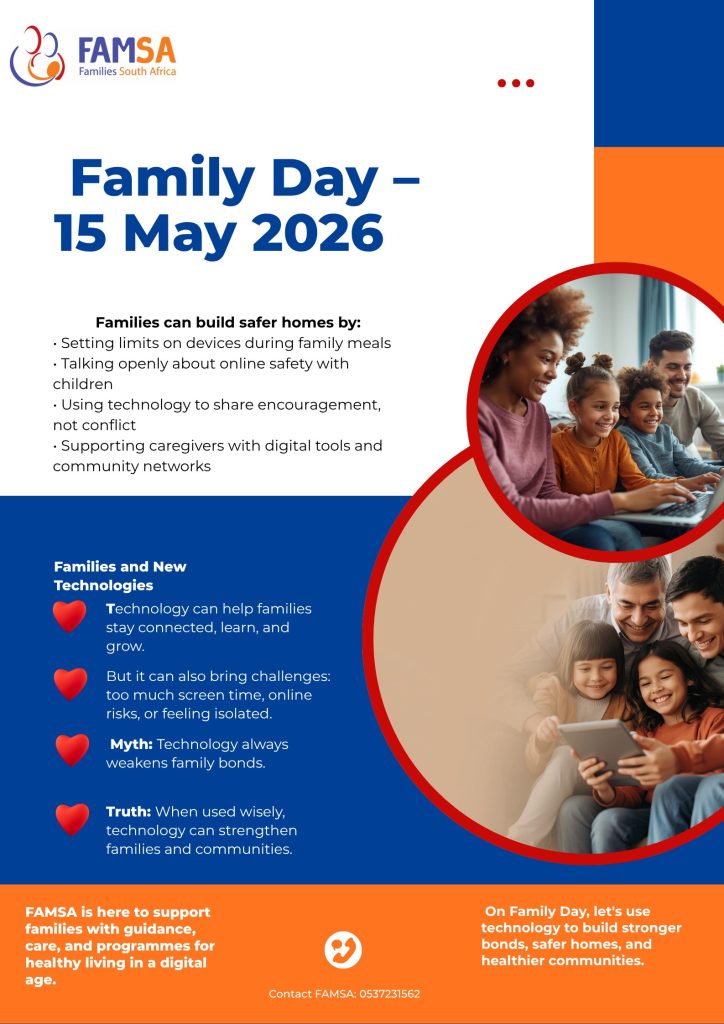
- Create boundaries by keeping phones out of bedrooms and meal areas.
- Start small by committing to ten focused minutes on a task before checking messages.
- Protect sleep by reducing blue–light exposure an hour before bed. It restores the brain’s ability to focus and regulate emotions.
These simple steps help families reconnect and model balance for children.
Children learn self–discipline by watching adults. When parents set limits and choose connection over distraction, they teach emotional regulation and respect.
Families that talk openly about screen time and mental health build trust and resilience – essential tools for navigating inequality and stress.
A shared responsibility
Technology can unite families across distances, but it can also divide them within the same home. The challenge is not to disconnect completely, but to connect intentionally – choosing when to be online and when to be fully present.
As Famsa reminds us, strong families are built on communication, empathy, and shared time.
In this digital tug–of–war, every family can learn to pull together – for wellbeing, equality, and a brighter future for our children.
If your family needs guidance or support in managing these challenges, reach out to Famsa on 053 723 1564.
–



You must be logged in to post a comment.