
“In pous-apâthyt Syt Afrieka is Kaaps biesag ôm sy slawi boeiji ti vilo ên wôrrit ômskêp ini intellectualised language, ôm in skol- ên varsitysômgewings gibryk ti wôt, ên wat ôs hoep deri process van fômaliesering sal gibe.”
(In post-apartheid South Africa, Kaaps is losing its enslaved shackles and is being transformed into an intellectual language, to be used in school and university settings, and which we hope will happen through a process of formalisation.)
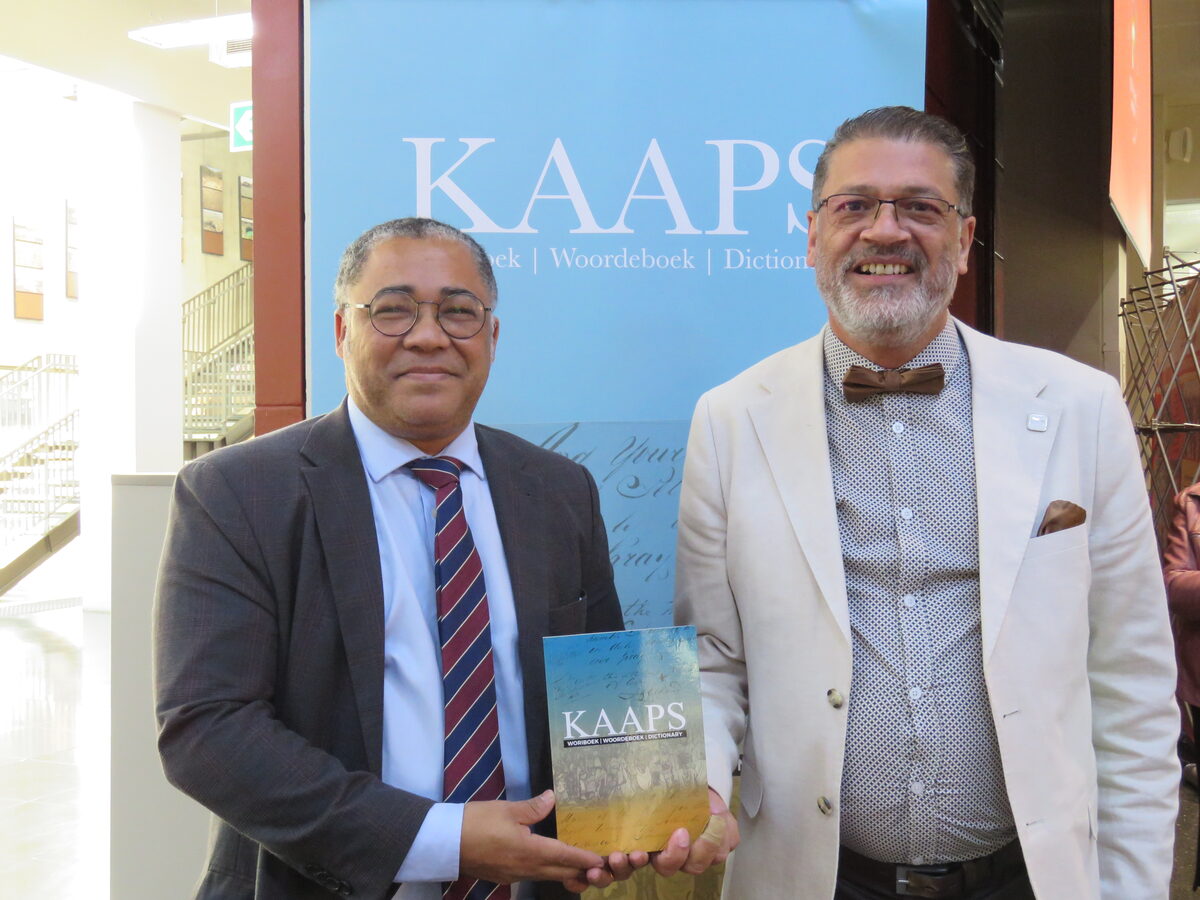
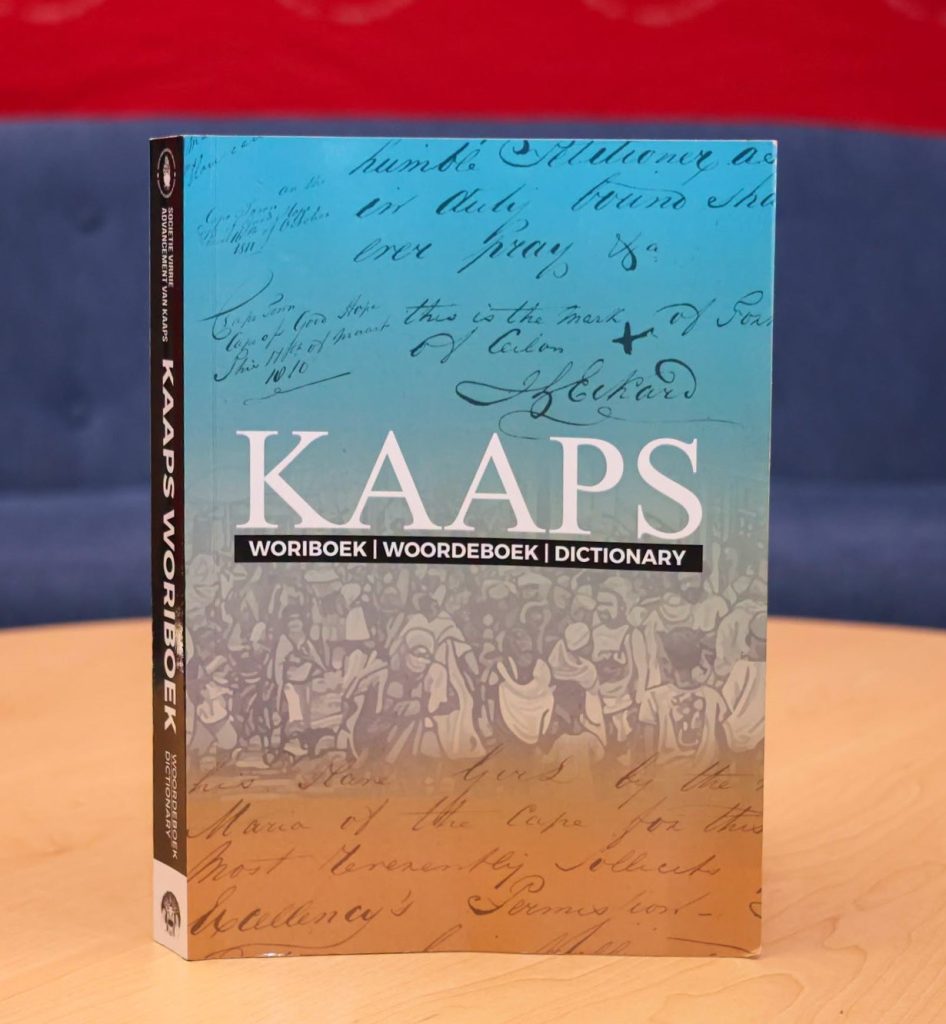
For the first time in history the so-called slave lingua franca is codified in a dictionary. The Kaaps Woriboek / Woordeboek / Dictionary is a historic reference resource that describes the spelling system and development of Kaaps words and provides linguistic and cultural access to one of the oldest languages in South Africa.
“No dictionary is ever completed or perfect, there is so much more that must be added. But Kaaps is a language, and this dictionary is a source that did not exist before,” said Dr Theodore Rodrigues at the launch on Friday 24 July at the Sol Plaatje University (SPU) in Kimberley, hosted by its Faculty of Humanities.
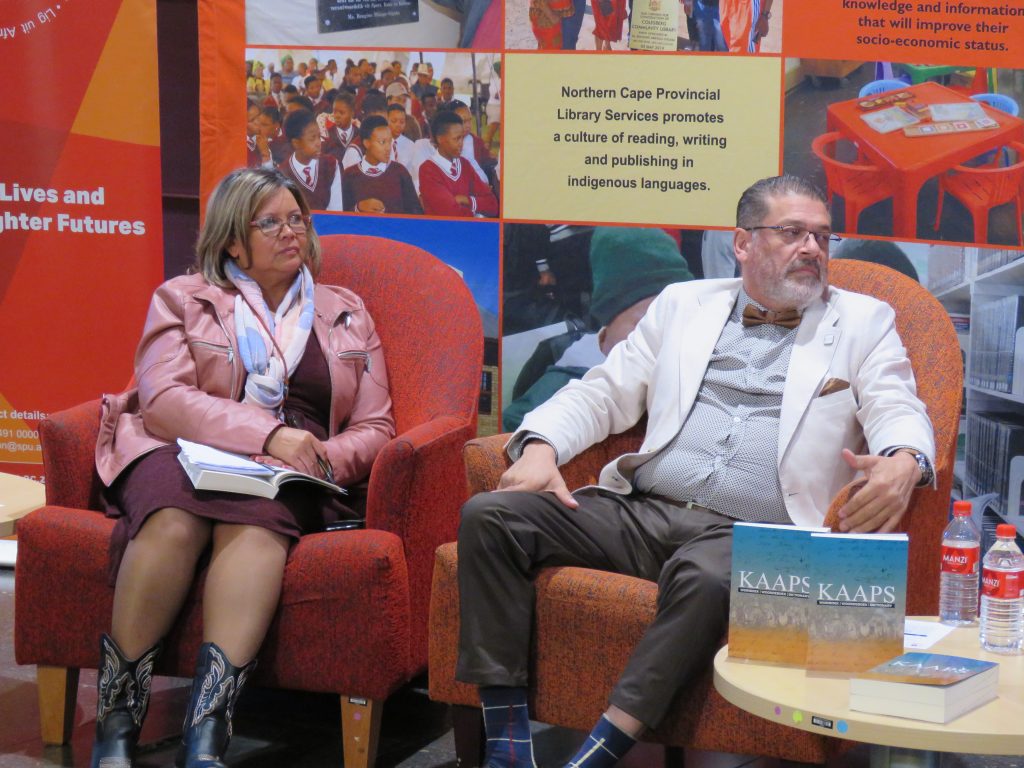
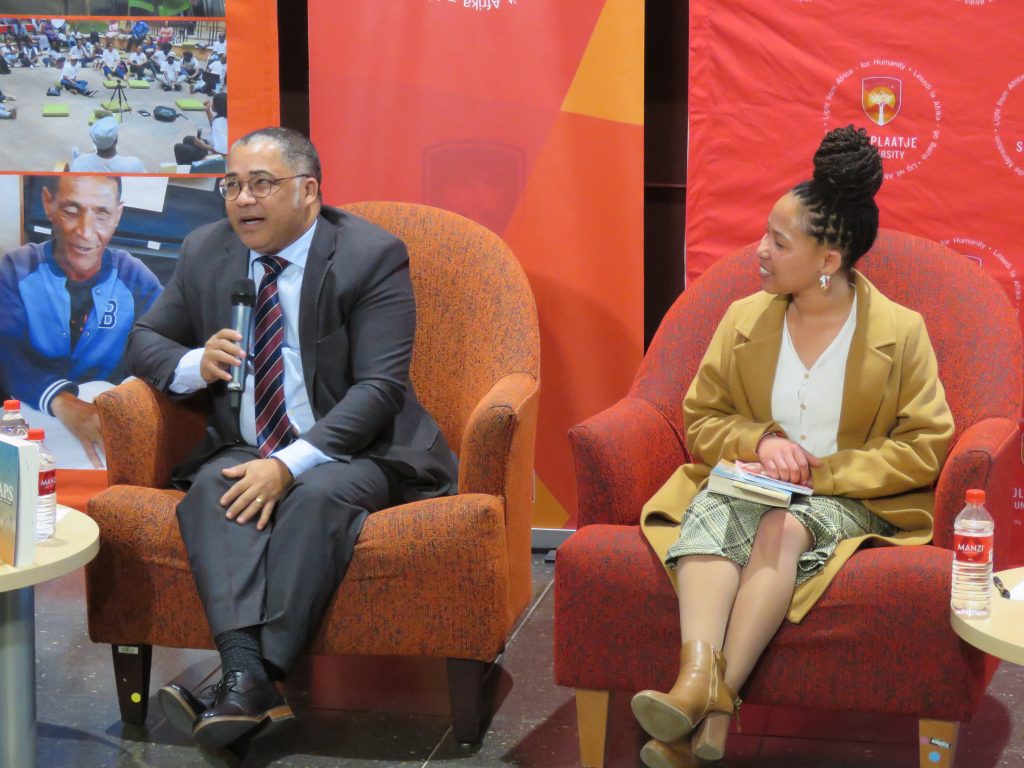
Rodrigues is among others a senior lecturer in the Department of Afrikaans and Theory of Literature at Unisa. He was joined by Professor Quentin Williams, among others Professor of Linguistics in the Linguistics Department at the University of the Western Cape, and Professor Victor Teise, Director of the Centre for Creative Writing and African Language at SPU.
During their conversation with Dr Natalie Smith and Sisca Julius, Williams said that in compiling the dictionary, they had to make many decisions, for example are they using Adam Small’s words, or Nathan Trantraal’s. Rodrigues added that they as editors of the dictionary are not the “spelpolisie” and they do not aim to standardise Kaaps in the book.
Apart from honouring ancestors, the book was also compiled for the next generation, telling of children raised in Kaaps who, when they go to school, tell their parents that the teachers are using a foreign language.
They are of firm belief that language is an identity mark, and not a way to cause division.
A language born at sea
Kaaps started centuries ago on ships when people of many identities and languages were on their way to the Cape. With time, “Kaaps words walk into the voorkamer”, and in no way is it a language of a lower standard. It is a language of pride, and a language with a unique manifestation.
Williams and Rodrigues shared that a lot of emotion went into the compiling of the book, and that the book is unpacking truth, not hiding, and not pointing fingers. They also emphasised that Kaaps is not only a language spoken in the Cape, but all over the country.
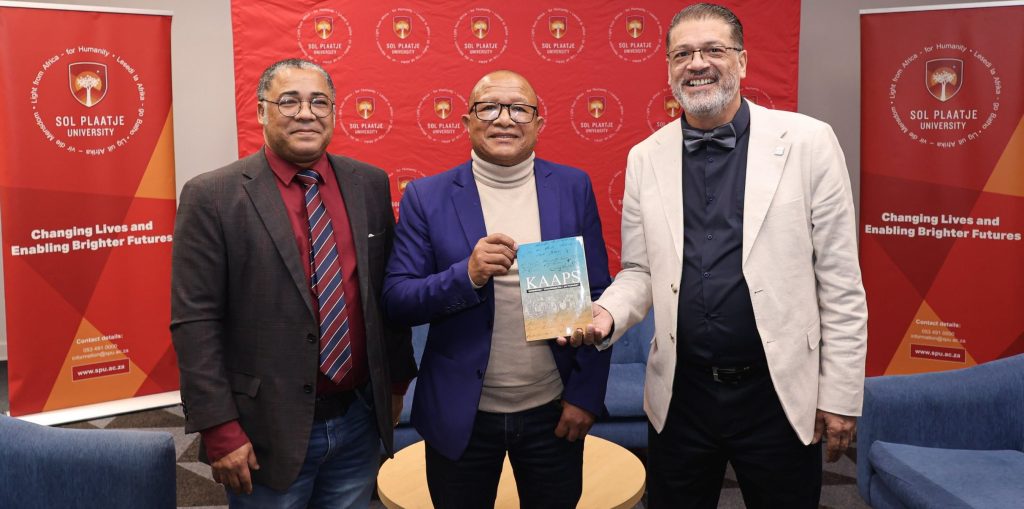
“Do not frown upon Kaaps and its speaker with a specific accent. Let them speak in Kaaps, write in Kaaps, live, grow, flourish, in Kaaps,” they remarked, while Rodrigues said he is looking forward to the first Kaaps thesis.
“Baiji Kaaps-spriekîs wiet dattie taal wat hilli praat nie goet ginoeg is ôm asi taal van ônnirig ên le in skoli ên varsities gibryk ti wôttie. Dikwils voel hilli owêldig de negatiewi stieriehoetiepis de annî Syt Afriekaansi spriekîs wat hilli twiêtalaghyt ên veltalaghyt viket vistaan ômmat dit gibe dat hilli taal tên nousti gi’assoesihe wôt mêttie taal van gangstis. Baiji Kaaps-spriekîs is wêkîsklas…”
(Many Kaaps speakers know that the language they speak is not good enough to be used as a language of teaching and learning in schools and universities. Often, they feel overwhelmed by negative stereotypes by other South African speakers that misunderstand their bilingualism and multilingualism because it happens that their language is closely associated with the language of gangsters. Many Kaaps speakers are working class…)
The book can be ordered from shofarbooks.co.za
Part of academic tour
The initial major release of the dictionary took place at the Castle of Good Hope in Cape Town in April. However, it was specifically brought to SPU’s Faculty of Humanities in July as part of an academic tour supported by the Northern Cape Department of Sport, Arts and Culture to promote regional linguistic inclusion, host student workshops, and engage with local African language scholarship.
Professor Quentin Williams is a Professor of Linguistics in the Linguistics Department at the University of the Western Cape, Fellow at the Stellenbosch Institute for Advanced Studies, and Director of the Centre for Multilingualism and Diversities Research (currently on sabbatical in 2026). He is the founder and chairperson of the Societie virrie Advancement van Kaaps.
Dr Theodore Rodrigues is a senior lecturer in the Department of Afrikaans and Theory of Literature at Unisa. He is also the Head of Linguistics in the Department of Afrikaans and the Theory of Literature, a member of the Unisa’s Ethics Committee, and a member of its Language Committee. Currently, he serves as editor-in-chief of Aweh – a Journal for minoritised language and the deputy chairperson of the Societie virrie Advancement van Kaaps. He is a co-editor of the Kaaps Woriboek and of two co-edited anthologies with Williams on Kaaps Studies, which will appear in December.


You must be logged in to post a comment.