
For young women, particularly in sectors such as agriculture where access to land, funding, training and networks often remains limited, barriers can be difficult to overcome.
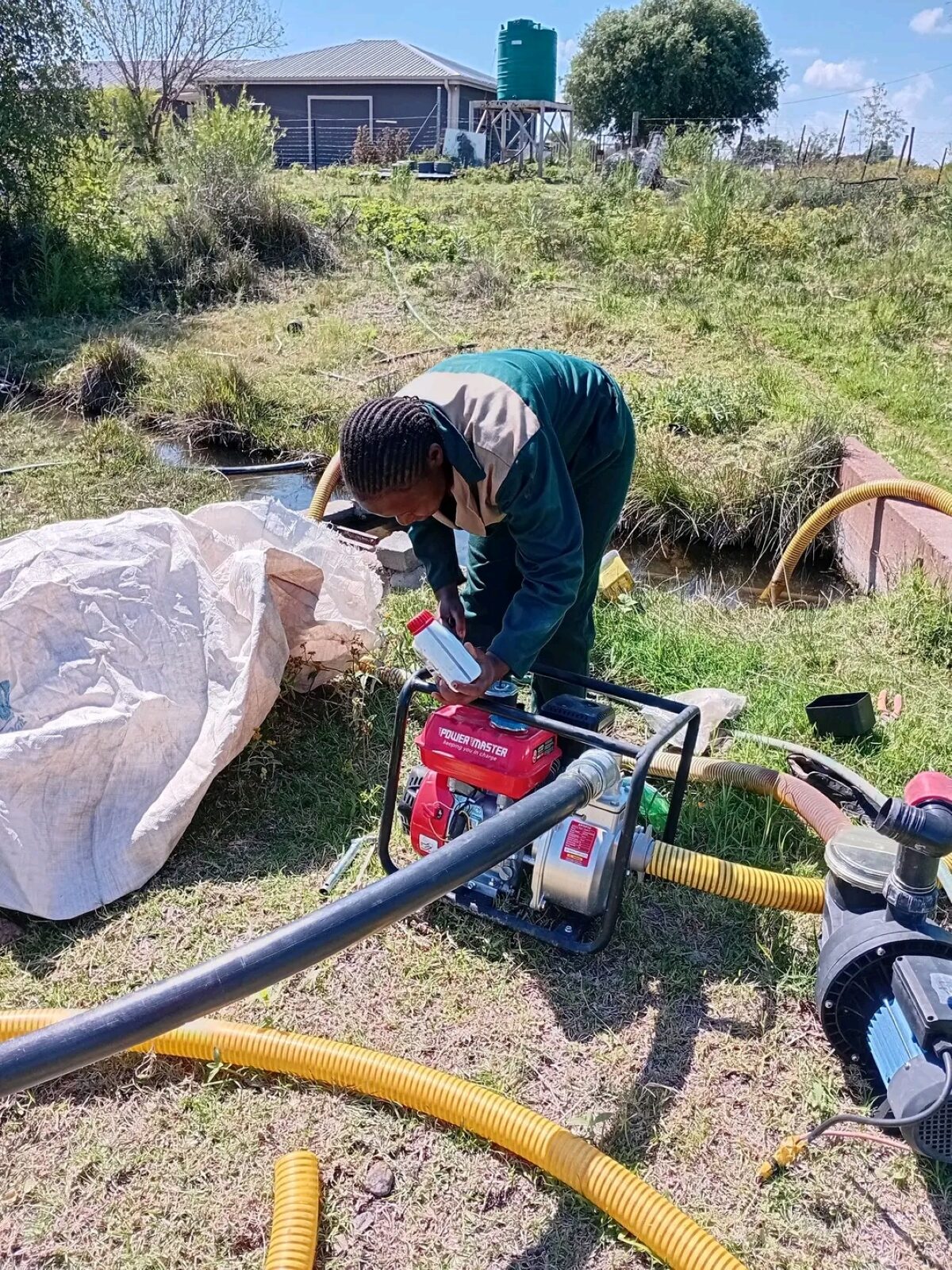
Rather than being discouraged by these realities, 24-year-old Reaipela Kgaje saw an opportunity where others saw an unused piece of land.
Near Kuruman, the family who owned 2.5 hectares of abandoned riverside land gave her permission to farm it.
With no land of her own, no formal agricultural qualification and no start-up funding, Kgaje decided to take a chance. Starting small and learning as she went, she focussed on restoring the neglected land.
Today, that decision has grown into Molapo Eco Farm, a business creating opportunities for both Kgaje and her community.
Growing up in Maruping Village, her connection to farming started early. Watching her mother tend a small garden sparked a passion that stayed with her throughout her school years.
Learning by doing
Kgaje learnt by doing. She started with a single hectare and approached farming one step at a time, solving problems as they emerged.
Restoring the neglected land was one of her first challenges. Unable to afford commercial fertilisers, she sourced manure from local households and used it to improve the soil.
Today, she also uses artificial intelligence tools to strengthen her farming skills and support decision-making on the farm.
ALSO READ: ‘Short courses gave me confidence’ – Stay-at-home mum turned facilitator
Her motivation extended beyond producing crops.
From the beginning, Kgaje saw farming as a way to contribute to her community, create jobs and support local food security.
“I wanted to build more than a farm. I wanted to create opportunities for people around me, contribute to food security and show that it is possible to build a successful business in our community,” she says.
Finding the right support
Like many small-scale farmers, Kgaje’s biggest obstacles extended beyond the field. Agriculture remains a capital-intensive industry, and building a business without funding meant finding creative ways to access the resources she needed. Every input had to be sourced, bartered for or built from scratch.
It was whilst navigating these challenges that Kgaje came across Anglo American’s Enterprise Development Circular Economy Start-Up Bootcamp through a Facebook post. The programme supports early-stage and aspiring entrepreneurs by helping them build the business skills needed to turn promising ideas and small businesses into sustainable enterprises.
Participants receive training in areas such as business planning, financial literacy and pitching, whilst also gaining the opportunity to compete for seed funding to help accelerate their growth.
The programme helped Kgaje strengthen the business side of her operation and provided a platform to showcase its potential. She went on to win R150 000 in grant funding during the final pitch competition, enabling her to invest in equipment and expand production at Molapo Eco Farm.
Looking to the future
Her ambitions are already set on the next chapter: expanding to six hectares, increasing her retail customer base and creating more employment opportunities within her community.
“Farming is not an easy business,” she says. “You have to have a passion for it. Keep learning, and never give up, because every challenge is an opportunity to grow. Hard work, consistency and patience are the key.”
ALSO READ: Young women encouraged to see themselves in the mining industry