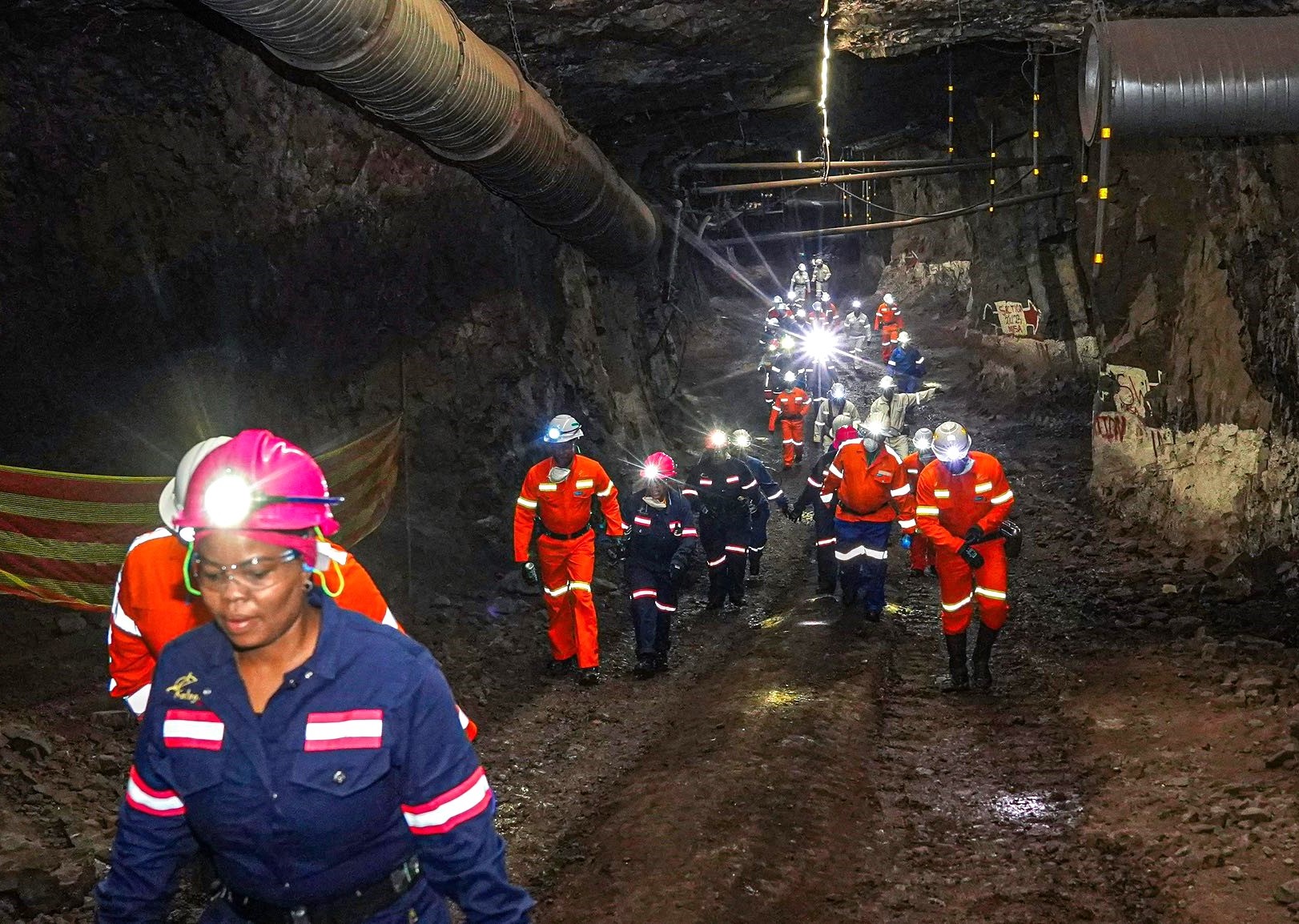


Next week, the Northern Cape will host its inaugural Investment and Jobs Conference, designed to position the province as South Africa’s next great mining hub.
Yet this optimistic gathering, scheduled for 13 to 15 April at Kimberley’s Mittah Seperepere International Convention Centre, takes place against the stark backdrop of municipal incompetence that threatens to undermine the very investment it seeks to attract.
Whilst government officials and international investors will convene to discuss the province’s “significant potential to unlock revenue from a revitalised and expanded mining sector,” the host city itself remains locked in administrative chaos.
This highlights the fundamental challenge facing the Northern Cape – abundant natural wealth coupled with governance failures that continue to influence economic development.
ALSO READ: Northern Cape positioned as South Africa’s next major mining hub
Bongani Motsa, acting chief economist of Minerals Council SA, recently reaffirmed the province’s strategic importance in unlocking investment, beneficiation, and sustainable economic development. Speaking at a collaboration session in Sandton, Motsa positioned the Northern Cape as “a key driver of South Africa’s mining future.”
His optimism reflects the province’s undeniable geological advantages and renewable energy potential, factors that should naturally attract significant investment.
‘State of local government is worrisome’
The upcoming conference promises to showcase these opportunities across multiple sectors, including mining, renewable energy, agriculture, logistics, tourism, and manufacturing.
Local and international investors, policymakers, industry leaders, and academics will engage in discussions about industrialisation pathways, infrastructure development, and job creation strategies. Sessions will explore the province’s positioning as Africa’s potential energy hub and its role in the country’s future economic growth trajectory.
“We present the Northern Cape not as a province on the margins of the economy but at the centre of a new growth trajectory,” Dr Zamani Saul, Northern Cape Premier, said. He describes the region as the country’s “most under-explored and underutilised yet highest potential” area.
However, in his State of the Province Address delivered in Springbok in February, Saul admitted “the state of local government in the province is worrisome.”
ALSO READ: ‘Northern Cape positioned as country’s new growth frontier beyond industrial heartland’
This understated assessment barely captures the severity of municipal dysfunction plaguing the region, also in Kimberley, the provincial capital where next week’s investment showcase will unfold.
The Sol Plaatje Local Municipality, responsible for governing Kimberley, exemplifies the governance crisis facing the Northern Cape. The municipality remains in a state of “chaos” due to ongoing conflicts at management level.
Provincial capitals act as ‘beating heart’ or entire region
Sharon Steyn, CEO of the Northern Cape Chambers of Commerce and Industry (Nocci), described the situation as “an absolute disgrace and disaster,” noting that key officials “cannot sit around the table and make a decision for the betterment of the city.” For someone who has lived in Kimberley her entire life, Steyn’s assessment carries particular weight: “The capital of the Northern Cape is falling apart. This is the worst I have ever seen it.”
The recent closure of Ekapa Mine, one of Kimberley’s major employers, compounds the city’s challenges. Steyn acknowledges the existence of investment opportunities but emphasises a crucial prerequisite: “Before investment can happen, the city’s infrastructure must be fixed and it must be cleaned up.”
ALSO READ: Tragic end to 158-year diamond mining era: Five miners lost, Ekapa faces liquidation
The significance of a functioning provincial capital cannot be overstated.
As multiple sources confirm, provincial capitals act as the “beating heart” driving administrative, economic, and cultural success across entire regions.
Strong capitals attract investment and serve as regional anchors, whilst weak ones create economic imbalances that ripple throughout their provinces.