

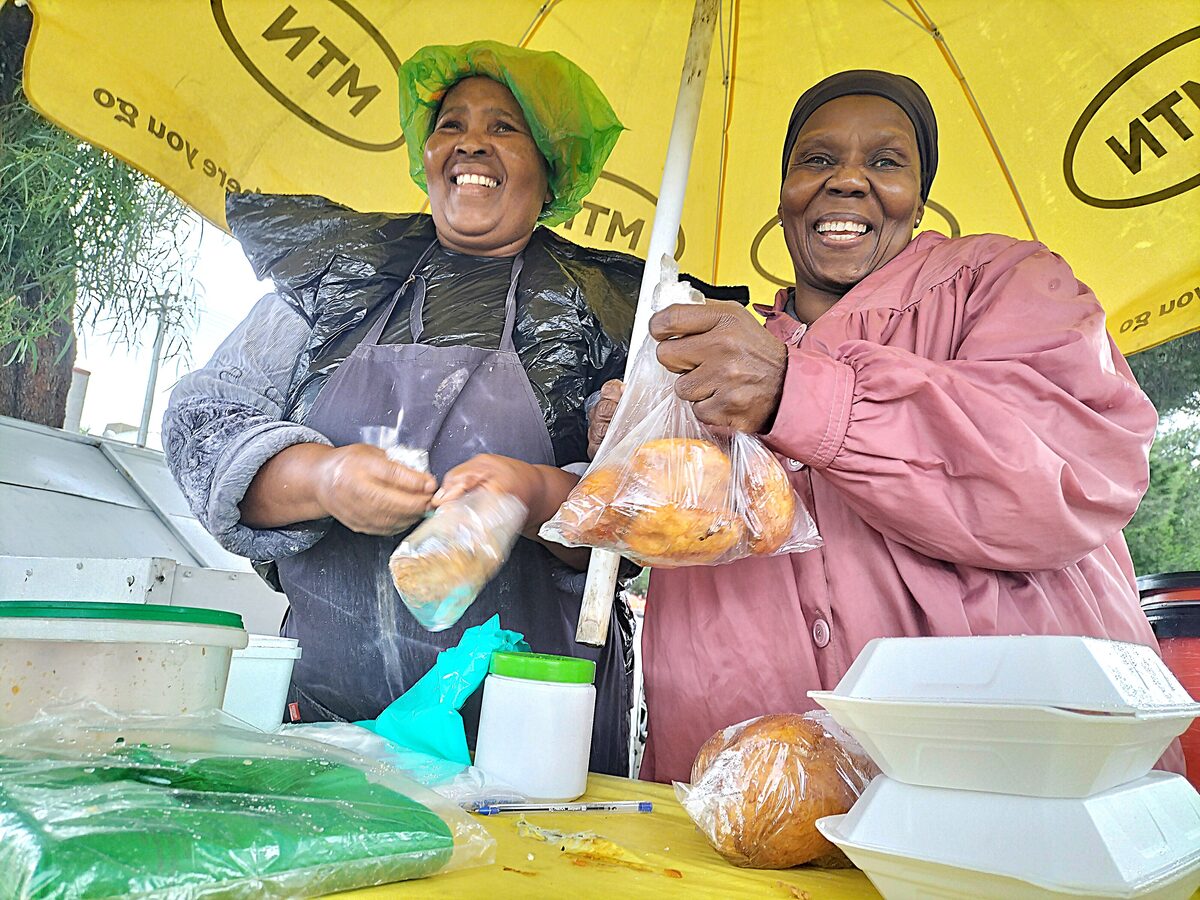
Dr Pontso Letlotlo Joyce Letuka, a recent graduate with a PhD in Environmental Health, highlighted that limited knowledge among street vendors regarding nutrition and food safety practices within the Mangaung Metro Municipality (MMM) hinders sustainable growth.
Letuka, from Lesotho, is proud to be the first citizen from her country to achieve this milestone. She was among the dozens who walked the red carpet to receive their qualifications during the Central University of Technology, (CUT), Free State, graduation ceremony.
This achievement is certainly worth celebrating.

“Towards the end of my writing, my laptop was stolen from my office. I think that was the hardest thing I had to deal with after years of hard work,” said Letuka.
Letuka conducted her ground-breaking research on the assessment of safety of street-vended foods and the nutritional knowledge of street food vendors within Mangaung.
“My decision to pursue this further at the PhD-level was also driven by several unanswered questions that emerged during my master’s research, which highlighted the need for deeper investigation in this area. I explored street food safety holistically, focusing specifically on microbial and chemical safety, vendors’ food safety practices and nutritional knowledge, and how these factors affect public health outcomes,” said Letuka.
She said 168 food samples were collected altogether from 42 street food vendors across the municipality for lab analysis, while for assessment of nutrition knowledge and practices, a total of 100 vendors were questioned.
While street vendors are crucial to urban economies and food systems as a means of survival, Letuka highlighted that their working conditions are often detrimental to their health and pose public health risks.
Letuka said she discovered significant aspects during her in-depth research.
“I found that pathogenic microorganisms, especially Staphylococcus aureus, were widely present in the food samples.
“Interestingly, some of the isolates showed genetic links that suggest possible cross-regional or food-chain connections, highlighting how microorganisms can spread across different food systems. What I found is that street food vendors face significant structural challenges that make it difficult to consistently practice good food safety,” she explained.
She said significant discoveries were made in four commonly consumed street-vended foods sampled, which included pap, chicken, pork and moroho (spinach).
“The food samples that showed the highest levels of heavy metals were chicken and also showed high levels of arsenic and cadmium,” explained Letuka.
See supplement on CUT Autumn Graduation.
Letuka highlighted that limited access to basic water, sanitation, and waste management services often results in unhygienic food preparation environments.
“Importantly, many isolates showed significant antibiotic resistance, with 52% classified as multidrug-resistant (MDR), meaning resistance to three or more classes of antibiotics. These findings highlight both the public health risk and the need for stronger surveillance and food safety interventions in informal food settings,” said Letuka.
“Additionally, all food samples tested in the laboratory contained Staphylococcus species. Some food samples showed heavy metal contamination, particularly in meat products, which may be linked to preparation methods such as braai (grilling) and the use of inappropriate or poor-quality cooking utensils,” said Letuka.



You must be logged in to post a comment.