Gauteng’s public schools owe nearly R584-million to municipalities and R6.32-million to Eskom as the provincial education department confronts the unintended consequences of a decentralisation policy that has left hundreds of schools without basic services.
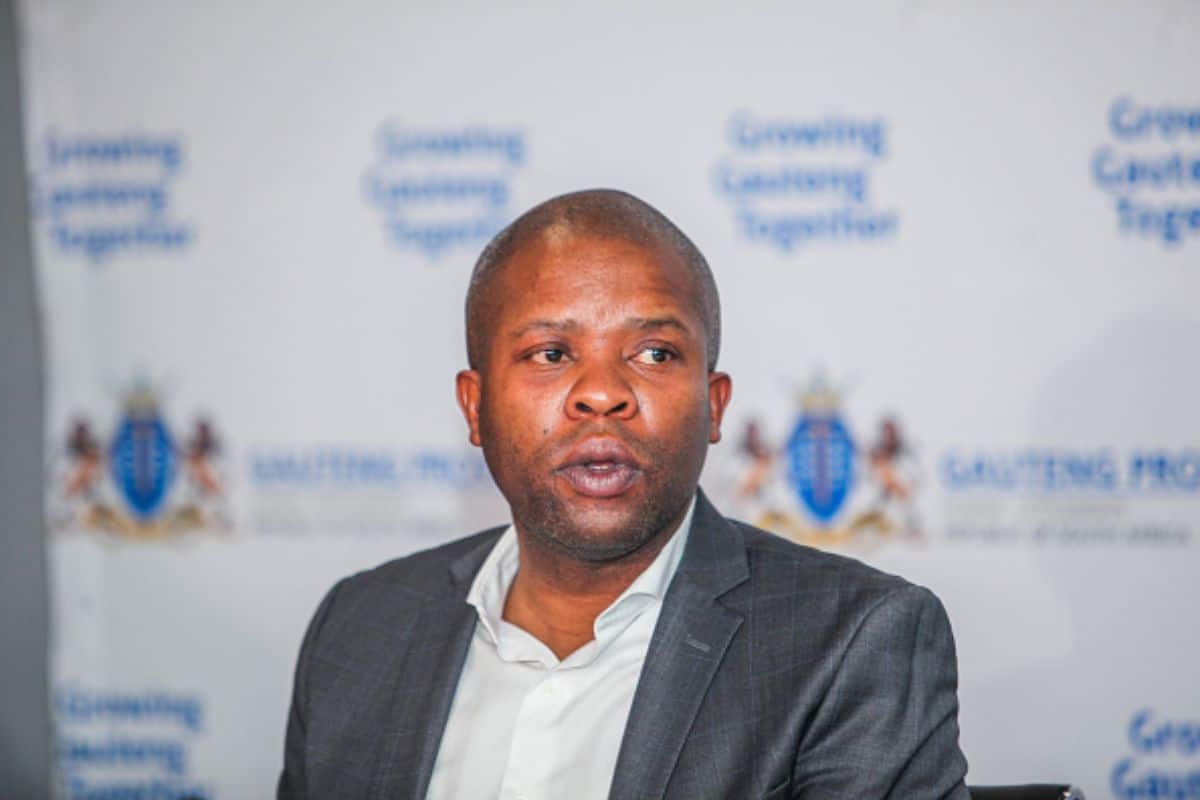
In a briefing yesterday (17 May), education MEC Matome Maile revealed the extent of the crisis, acknowledging that while the decentralisation model aimed to promote financial autonomy and accountability at school level, it has created significant disruptions to teaching and learning across the province.
Court orders service restoration
The briefing follows a High Court ruling on 5 May which ordered the City of Tshwane to immediately restore electricity to schools disconnected over unpaid property rates. The court confirmed that schools should not face disconnection for debts owed by authorities, affirming that education is a constitutional right that cannot be conditional on financial capacity.
“Education services are not a privilege extended on the basis of financial ability,” Maile said. “Education is a constitutionally enshrined right extended to all children in our country regardless of their socio-economic background or their geography.”
Johannesburg bears biggest burden
The debt breakdown reveals a concentration in major metros. The City of Johannesburg is owed R390.71-million – more than two-thirds of the total municipal debt. The City of Ekurhuleni follows with R75.14-million, while the City of Tshwane is owed R51.7-million.
Smaller municipalities are also affected. Emfuleni Local Municipality is owed R36.3-million, Lesedi R8.84-million, Merafong R6.9-million, Mogale City R6.3-million, Midvaal R3.99-million and Rand West City R916 569.
The department noted R4.38-million of the total debt is currently under query, highlighting widespread disputes over municipal billing practices.
Policy exposes vulnerabilities
The decentralisation model, implemented particularly for Section 21 schools, was designed to empower schools and school governing bodies (SGBs) to manage their own municipal accounts using state allocations. The approach aimed to reduce bureaucratic delays, improve service delivery and strengthen democratic governance at school level.
However, the policy has exposed critical vulnerabilities. Many no-fee and low-income schools struggle to pay increasing municipal tariffs using limited state allocations. Some schools inherited historical debt accumulated before decentralisation was implemented, while others lack the financial management capacity to navigate complex municipal billing systems.
“Some SGBs lack adequate financial management skills and administrative capacity to handle municipal accounts effectively,” Maile said. “This contributes to late payments, poor budgeting and growing arrears.”
Schools dispute billing irregularities
Schools have raised concerns about municipal overcharging through incorrect billing, inflated tariffs and estimated readings not reflecting actual consumption. Several schools report being billed under commercial tariffs instead of educational tariffs, substantially increasing their financial burden.
“Schools sometimes receive sudden inflated bills without proper explanations or verification processes,” the MEC noted, adding poor record-keeping and inconsistent statements make it difficult for schools to dispute incorrect charges.
The impact is severe. Service disconnections disrupt computer labs, lighting and administrative systems, while water cuts create sanitation and health risks for learners and staff.
Growing infrastructure backlog
The debt crisis is unfolding as Gauteng’s education system faces unprecedented growth. Learner numbers have doubled since democracy, rising from 1.4-million in 1995 to 2.8-million in 2026.
While the infrastructure budget has grown from R1.63-billion in 2021/2022 to R2.84-billion in 2025/2026, Maile warned this remains insufficient when viewed in the context of the backlog of both infrastructure and maintenance.
The province also faces challenges including numerous schools built on dolomitic land requiring expensive specialised foundations, as well as ongoing issues with vandalism and crime.
Department reviews model
The department is now reviewing the decentralisation model entirely. Maile indicated the province is engaging with stakeholders to assess what can be done to strengthen teaching and learning while mitigating and eliminating the challenges.
“Ultimately, schools must focus on the core mandate of delivering the curriculum successfully,” he said. “Administrative functions must be performed by expert personnel to prevent governance failures.”
The department has committed to working with municipalities to ensure compliance with the High Court ruling while assisting schools disputing billing irregularities. Municipalities have reportedly expressed commitment to finding solutions protecting the constitutional right to education while addressing their own revenue challenges.
Municipal revenue pressures
Maile acknowledged municipalities across the country face severe revenue crises due to poor cash flow and rising debt, driven partly by a cost-of-living crisis weakening residents’ ability to pay for services.
ALSO READ: Municipal debt crisis: Eskom owed R102 billion as government scrambles for solutions
However, he stressed municipal governments must not lose sight of the high cost of interrupting teaching and learning. “Schools are and must remain a public good,” he said.
The MEC called for collaboration across government, the private sector and civil society to strengthen Gauteng’s education ecosystem.
“Residents of Gauteng must recognise schools are properties of their communities,” Maile said. “Above all, education is a social responsibility and a public good. We all need to play our part in strengthening the education ecosystem in our province – it is in our collective interest.”
As the province grapples with these challenges, nearly three million learners await a sustainable solution keeping the lights on and the taps running – basic conditions for the constitutional right to education.
ALSO READ: Half of Gauteng schools beyond capacity as overcrowding crisis deepens