

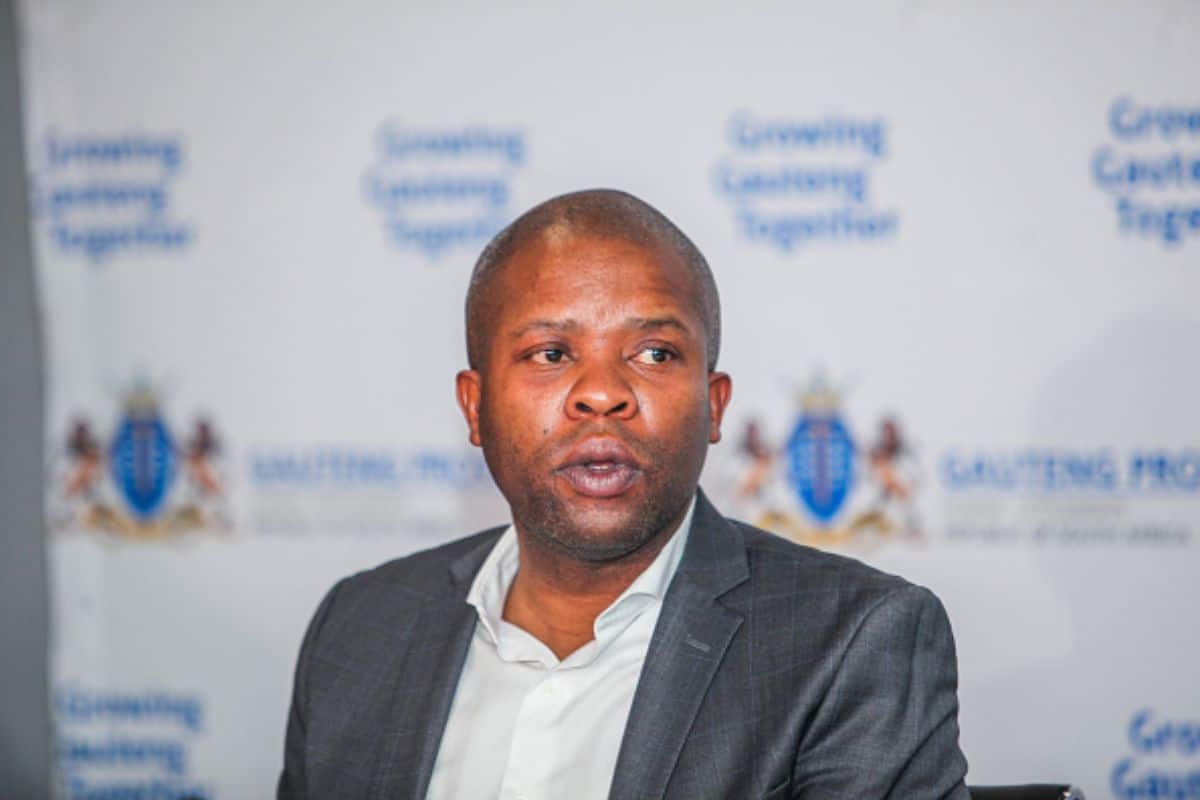
Gauteng’s education system is buckling under severe overcrowding, with nearly half of all provincial schools operating beyond capacity and an urgent need for 83 additional secondary schools, Education MEC Lebogang Maile revealed yesterday.
In a stark briefing to the provincial legislature, Maile disclosed that 1 021 of Gauteng’s 2 111 schools are overcrowded, representing 48% of all schools in the province. The crisis is particularly severe at secondary level, where 64% of schools are beyond capacity, compared with 41% of primary schools.
This overcrowding constitutes to a learner-teacher ratio of 70:1.
Maile said that the province faces a shortfall of 88 088 secondary school spaces whilst simultaneously showing a surplus of 54 723 primary school places, highlighting a fundamental mismatch in infrastructure planning.
“Between 2025 and 2026, the number of oversubscribed schools increased by 164, whilst schools operating within capacity decreased by 153,” Maile said. “This trajectory is unsustainable and threatens our ability to place all learners for 2027 in some districts.”
Gauteng’s school population has doubled since 1995, from 1,4 million learners to 2,8 million in 2026, driven by migration and urbanisation. The province now educates 1,47 million primary school pupils and 943 089 secondary learners across 1 417 primary and 694 secondary schools.
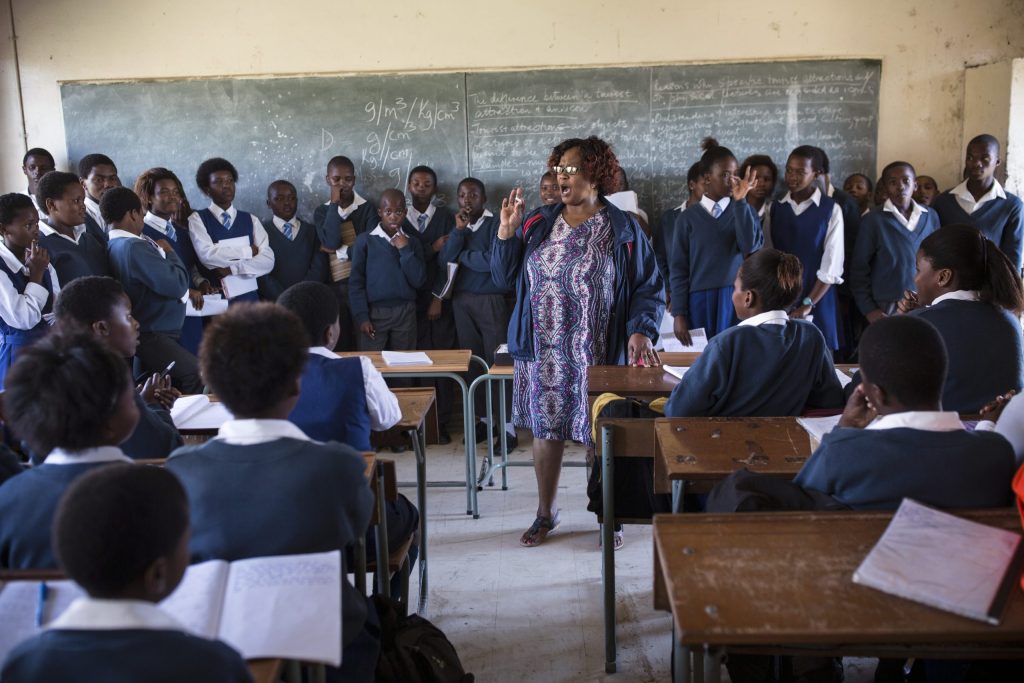
The overcrowding is most severe in township and metropolitan areas. In Johannesburg South district, 68% of schools operate beyond capacity, whilst Tshwane West shows a similar 68% overcrowding rate. Johannesburg East (59%), Ekurhuleni South (58%) and Tshwane South (56%) are also severely affected.
The crisis extends beyond classroom space to basic furniture shortages. Primary schools lack 67 855 chairs and 25 990 double desks, whilst secondary schools need 111 333 chairs and 98 115 single desks.
Maile attributed the crisis to multiple factors, including insufficient infrastructure delivery, fiscal constraints, rising educator wage bills, vandalism, land availability issues including dolomitic areas unsuitable for construction, and procurement delays.
“Project mismanagement, community disruptions and crime at construction sites have further hampered our ability to deliver new schools timeously,” he said.
The provincial government has allocated R3,98 billion over the medium-term expenditure framework for new and replacement schools, with R1,95 billion earmarked for new schools and R1,86 billion for replacements. This budget will deliver approximately seven new schools annually, totalling 23 over the MTEF period – far short of the 83 secondary schools needed immediately, said Maile.
ALSO READ: Gauteng education system struggles with overcrowding and infrastructure backlogs
To address the shortfall, the department is pursuing partnerships with the Development Bank of South Africa on 15 projects across Johannesburg, Tshwane, Ekurhuleni and the West Rand. The Budget Facility for Infrastructure Schools Programme, in collaboration with the Gauteng Infrastructure Financing Agency, is advancing 18 greenfield projects.
The department is also exploring public-private partnerships, a self-build programme, acquiring former missionary schools, and deploying prefabricated temporary classrooms whilst permanent solutions are developed.
Maile introduced a Project Readiness Matrix to improve compliance, quality control and budget management, and announced a 20-year infrastructure planning framework targeting mega human settlement developments and inner-city school provisioning.
However, with overcrowded schools increasing at a rate that outpaces infrastructure delivery, the province faces mounting pressure to prevent learners from being turned away when the 2027 academic year begins.
ALSO READ: Education department addresses overcrowding concerns at Zeekoevlei Primary School



You must be logged in to post a comment.