

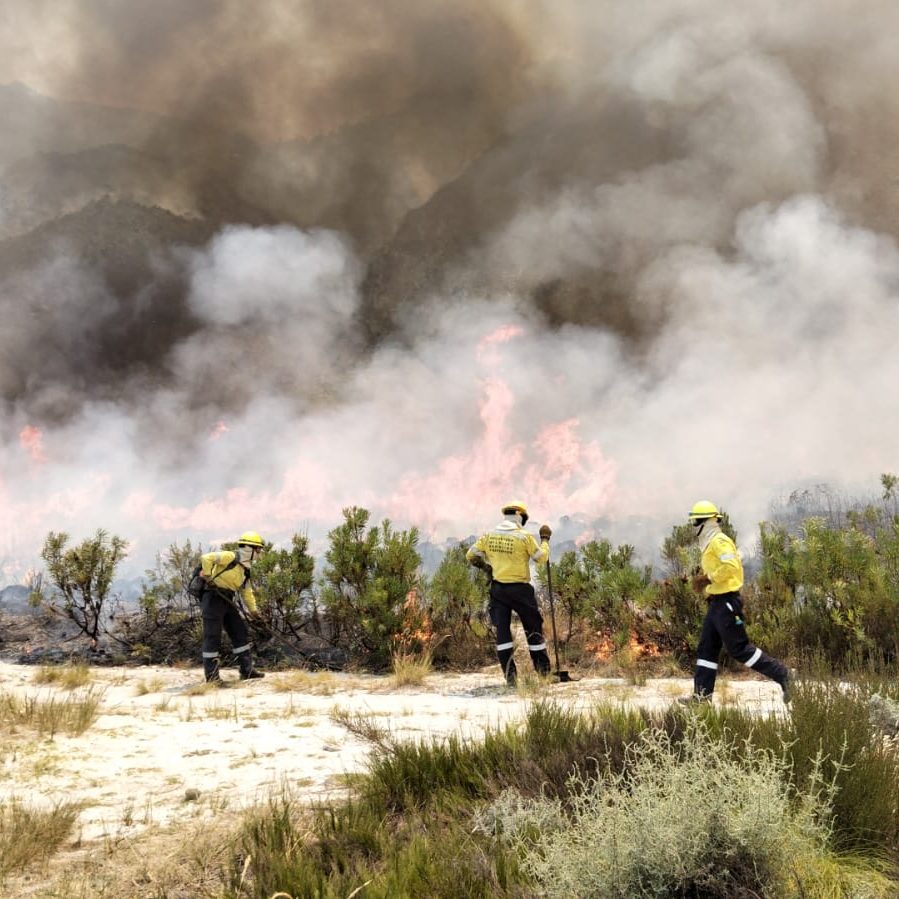
The Western Cape faces a potentially dangerous wildfire season, as the developing El Niño weather pattern is expected to bring hotter and drier conditions to the province.
Between April 2025 and March 2026, CapeNature responded to 107 wildfires across the Western Cape, which burned through 215 937 hectares. With El Niño now developing and hotter, drier conditions expected, the organisation warns the season ahead could be more severe.
“El Niño does not drive fire on its own, but it can create the conditions that allow fires to become more frequent, more intense and more difficult to contain. When vegetation dries out, even a small ignition can quickly become a significant wildfire, particularly when combined with hot, dry and windy conditions,” Anton Bredell, Western Cape Provincial Minister of Local Government, Environmental Affairs and Development Planning, said.

El Niño is the warming phase of a natural climate cycle in the tropical Pacific, known as the El Niño-Southern Oscillation (ENSO).
The South African Weather Service has forecast below-normal rainfall for the coming summer season linked to the expected strong El Niño.
CapeNature said El Niño does not guarantee drought across every part of the province, but the combination of reduced rainfall, higher temperatures and dry vegetation raises the likelihood of fires igniting and spreading quickly. Variable wind direction, rather than high wind speeds, presents a particular concern, as unpredictable conditions endanger firefighters on fire lines and increase the risk of casualties.
The province’s fynbos landscape is naturally adapted to fire, but uncontrolled wildfires pose serious risks to biodiversity, homes, infrastructure, agricultural land and human lives. CapeNature noted that human activity remains the primary driver of wildfire ignitions and that public awareness and responsible behaviour are critical to prevention.
Coral Birss, Executive Director: Biodiversity Capabilities at CapeNature, said 63% of the fires in the last fire season were contained before they exceeded 100 hectares, demonstrating the effectiveness of CapeNature’s Large Scale Rapid Initial Attack model.
ALSO READ: Record-breaking El Niño threatens extreme weather worldwide
“With the support of the public reporting fires we can act quickly. Fire management and suppression is a large part of what we do and we start planning for the next fire season before the previous season is over. Audits are done, equipment is checked and replaced where needed and we have many partnership engagements to ensure the entire province is ready for the next fire season,” Birss said.
CapeNature’s fire awareness campaigns inform the public about the impacts of fire and the consequences for anyone found responsible for starting one. The public is urged to take particular care on hot, dry and windy days. Fires are not permitted on road verges, viewing areas on passes or other public roads. Braais, agricultural burns and any other authorised fires must be fully extinguished before being left.
As the province moves into the warmer, drier months, CapeNature and its partners continue their preparations for the season ahead.
Anyone who spots smoke or a fire in the veld should call 112 from a mobile phone or 10177 from a landline without delay. Reporting early, before a fire grows, gives firefighting teams the best chance of containing it.
ALSO READ: Authorities warn of heat, drought and fire risks as El Niño looms over South Africa



You must be logged in to post a comment.