South African jurist Navi Pillay has been awarded the 2026 Nobel Peace Prize for her work promoting peace and international law, making her the 11th South African to win a Nobel Prize and the fifth to receive the Peace Prize.
The Norwegian Nobel Committee announced on 9 October that Pillay (85) received the award for her “exceptional courage and integrity” in advancing a global legal order and ensuring prosecution of war crimes, crimes against humanity and genocide.
Born in Durban under apartheid to a family of Indian Tamil origin, Pillay became a legal pioneer who confronted deep structural discrimination. She defended activists who opposed apartheid, including Nelson Mandela, before serving as a judge on South Africa’s High Court, the International Criminal Tribunal for Rwanda, and the International Criminal Court.
From 2008 to 2014, she served as United Nations High Commissioner for Human Rights. She chaired the UN Independent International Commission of Inquiry on the Occupied Palestinian Territory from 2021 to 2025, and currently serves as a judge on the International Court of Justice in the case where Myanmar stands accused of genocide.
South Africa’s Nobel Prize legacy
Pillay joins a distinguished list of South African Peace Prize winners. Albert Luthuli (1960) received the award for his non-violent struggle against apartheid, while Desmond Tutu (1984) was honoured for his role as a unifying leader in the non-violent campaign to resolve apartheid. Nelson Mandela and FW de Klerk shared the 1993 prize for their work toward the peaceful end of the apartheid regime.
South Africa has also produced two Nobel literature laureates: Nadine Gordimer (1991) and JM Coetzee (2003).
In science, South African winners include Max Theiler (1951, physiology or medicine) for his discoveries concerning yellow fever, Allan MacLeod Cormack (1979, physiology or medicine) for the development of computer-assisted tomography, Sydney Brenner (2002, physiology or medicine) for discoveries concerning genetic regulation, and Michael Levitt (2013, chemistry) for the development of multiscale models for complex chemical systems.
The birth of the Nobel Prize
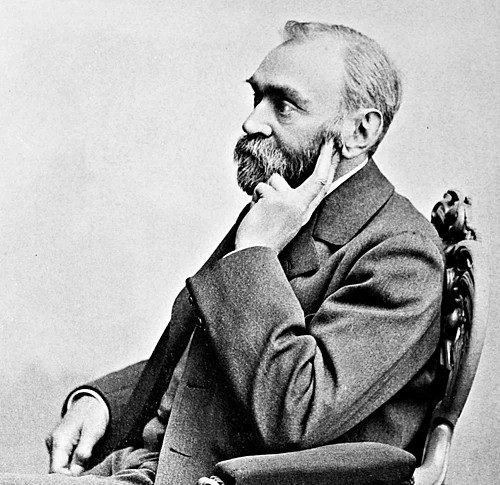
The Nobel Prize originated from the will of Alfred Nobel, a Swedish inventor and industrialist who made his fortune from inventing dynamite and other explosives. On 27 November 1895, a year before his death, Nobel signed his famous will declaring that most of his estate — more than 31,5 million Swedish kronor (approximately 2,2 billion kronor today or R3,6 billion) — should be converted into a fund.
Nobel specified that the income from investments should be “distributed annually in the form of prizes to those who during the preceding year have conferred the greatest benefit to humankind” in physics, chemistry, medicine or physiology, literature and peace.
The first Nobel Prizes were awarded in 1901, five years after Nobel’s death. The delay occurred because of legal battles with parts of the Nobel family and the time needed to establish the Nobel Foundation in Sweden in 1900.
Prize money and prestige
The 2026 Nobel Prize is worth 12 million Swedish kronor (approximately R20 million). Each laureate receives a Nobel diploma, which is a unique work of art, a Nobel medal with distinct designs for each category, and the cash prize, which is split when there is more than one winner.
The prizes are presented at ceremonies on 10 December, the anniversary of Nobel’s death, in Stockholm and Oslo. Winners must deliver a lecture to receive the money.
Global significance
The Nobel Prize remains the world’s most prestigious award, often described as the “Mount Everest of science”. The awards help popularise discoveries and achievements, from rapid vaccine development to energy-saving LED lights and gene-editing technologies that have cured previously untreatable diseases.
ALSO READ: South African rights champion Navi Pillay wins Nobel Peace Prize
The Norwegian Nobel Committee stated that at a time when the number of wars and conflicts is rising, and judges and institutions of international law are under political attack, Pillay’s award serves as a reminder that resolving conflicts without force or violence depends on the international rule of law.
According to Nobel’s will, the Peace Prize is awarded “to the person who shall have done the most or the best work for fraternity between the nations and the abolition or reduction of standing armies and the formation and spreading of peace congresses.”
The Norwegian Nobel Committee, composed of five people selected by the Norwegian parliament, awards the Peace Prize. The other prizes are awarded by Swedish institutions.
A living legacy
Since 1901, the Nobel Prize has honoured men and women from around the world for outstanding achievements. The prizes credit discoveries that have benefited millions of people, from protection against diseases to advances in understanding the universe.
Lars Heikensten, executive director of the Nobel Foundation, said Alfred Nobel’s way of thinking outlined in his will is more relevant than ever in a time when fact-based reasoning and free speech are challenged in many parts of the world.
ALSO READ: Ramaphosa congratulates Navi Pillay on Nobel Peace Prize win