


The rugby rivalry between South Africa’s Springboks and New Zealand’s All Blacks stands as one of the most storied clashes in international sport, spanning more than a century of fierce competition, political turmoil and unforgettable moments.
Since their first meeting on 13 August 1921 at Carisbrook in Dunedin, where New Zealand won 13-5, the two nations have faced each other 110 times. The All Blacks hold the overall advantage with 63 wins to South Africa’s 43, with four matches ending in draws.
The battle by numbers
The venue breakdown tells a different story than is often assumed. At South African venues, the All Blacks actually lead 28 wins to 25, with one draw, from 54 matches. At New Zealand venues, South Africa has managed just 10 wins from 46, with the All Blacks taking 33 and three matches drawn. The remaining fixtures have been played at neutral venues, including five Rugby World Cup meetings — the two sides split those, New Zealand winning three and South Africa two — plus a handful of other neutral-ground Tests in places such as London and Australia.
The highest-scoring match in the rivalry’s history remains the thrilling 46-40 victory for South Africa in Johannesburg on 19 August 2000, producing 86 combined points. At the other extreme, the two teams fought out a 0-0 draw in Wellington in 1921. New Zealand’s most dominant performance came in Albany on 16 September 2017, when they thrashed the Springboks 57-0.
New Zealand’s Christian Cullen holds the individual record for most tries in the rivalry with 10, followed by compatriot Joe Rokocoko with nine. Bryan Habana leads the South African try-scorers with eight against the All Blacks during his illustrious career.
When apartheid stopped play
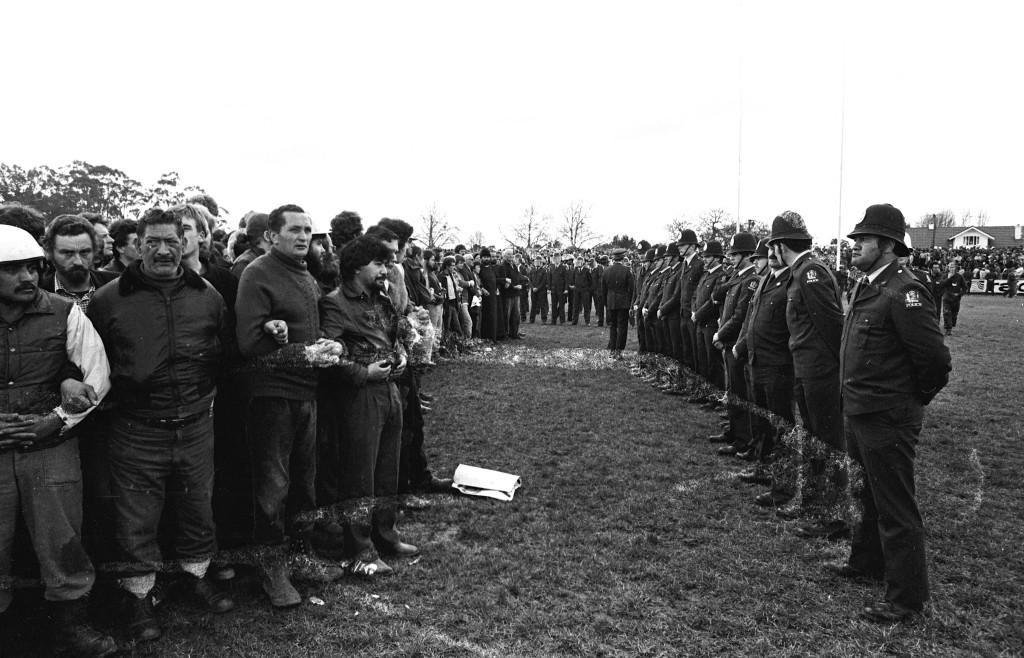
The rivalry’s most controversial chapter unfolded during South Africa’s apartheid era. The 1981 Springbok tour of New Zealand triggered the largest civil disturbances in that country since 1951, with more than 150 000 people participating in over 200 demonstrations across 28 centres during the 56-day tour.
Protesters employed direct action including pitch invasions, scattering glass on fields and disrupting matches. The Hamilton match against Waikato was cancelled due to a pitch invasion. The final test in Auckland became known as the “flour-bomb test” after a light aircraft dropped flour bombs onto the field, with one striking All Black prop Gary Knight.
The tour cost New Zealand dearly. The police operation alone reached $15 million, approximately 1 500 people were charged with offences, and the country faced significant international condemnation for breaching the Gleneagles Agreement, which discouraged sporting ties with South Africa. Nigeria led a bloc of West African nations that threatened New Zealand with sanctions and sporting boycotts if the tour went ahead.
For South African rugby, the intense opposition demonstrated global hostility toward apartheid and contributed to the country’s total sporting isolation throughout the 1980s. The mounting pressure of sports boycotts eventually played a part in convincing key figures within the South African establishment that a negotiated political settlement was essential.
Redemption and reconciliation
The 1995 Rugby World Cup final, hosted in South Africa, became a symbol of national unity and reconciliation. Nelson Mandela, wearing a Springbok jersey with captain Francois Pienaar’s number six, presented the trophy to Pienaar after South Africa’s 15-12 extra-time victory. The moment remains one of the most significant in the rivalry’s history, transforming the Springbok emblem from a symbol of apartheid to one of national unity.
Memorable moments and mayhem
Beyond politics, the rivalry has produced countless dramatic moments. In 2009, South Africa achieved a rare feat by defeating the All Blacks three times in a single year, a milestone not matched since 1949. Five years later at Ellis Park, Springbok fly-half Pat Lambie kicked a 55-metre penalty in the final minutes to secure a 27-25 victory, ending New Zealand’s 22-match unbeaten streak.
Streakers have occasionally interrupted proceedings. In 2016, Warren Blair Fitzgerald invaded the pitch at AMI Stadium in Christchurch, attempting to mount a goal post before being tackled by security. The following year at Albany, another streaker disrupted the match, with All Black lock Brodie Retallick famously considering tackling the intruder but deciding against it as the individual slipped.
Mind games and trash talk
The psychological warfare extends beyond the pitch. In 2008, Springbok coach Peter de Villiers initiated a verbal exchange by claiming New Zealand relied too heavily on Dan Carter and repeatedly accusing the All Blacks of cheating in scrums and lineouts.
More recently, in August 2025, a New Zealand television advertisement featured All Blacks players teasing Springbok fans, showing a barber etching the silver fern logo into the hair of a supporter who had bragged the All Blacks would be “like lamb chops on a braai”.
The atmosphere at Ellis Park in Johannesburg has become legendary for its hostility. All Blacks forwards coach Jason Ryan described the bus ride into the stadium as “pretty feral”, involving hostile hand gestures and empty beer cans thrown at the team bus. Former halfback Justin Marshall has similarly warned that visiting teams should expect their bus to be rocked on the way in.
Despite the intensity, the rivalry maintains an undercurrent of deep mutual respect. Springbok fly-half Handré Pollard noted that whilst players “try and kill each other for 80 minutes”, there is always “deep and beautiful history and mutual respect” between the two nations.
As of August 2026, this epic rivalry shows no sign of losing its intensity, continuing to captivate rugby fans worldwide with each new chapter.
ALSO READ: Legal challenge looms over All Blacks rugby tour to South Africa
2026 Rugby’s Greatest Rivalry schedule:
Provincial matches (All Blacks vs South African franchises):
- Friday, 7 August: Stormers vs All Blacks – DHL Stadium, Cape Town (19:00)
- Tuesday, 11 August: Sharks vs All Blacks – Hollywoodbets Kings Park, Durban (19:00)
- Saturday, 15 August: Bulls vs All Blacks – Loftus Versfeld, Pretoria (19:00)
- Tuesday, 25 August: Lions vs All Blacks – Ellis Park, Johannesburg (19:00)
Freedom Cup Test series (Springboks vs All Blacks):
- Saturday, 22 August: First Test – Ellis Park, Johannesburg (17:05)
- Saturday, 29 August: Second Test – DHL Stadium, Cape Town (17:05)
- Saturday, 5 September: Third Test – FNB Stadium, Johannesburg (17:05)
- Saturday, 12 September: Fourth Test – M&T Bank Stadium, Baltimore, United States (time TBC)
The third Test on 5 September at FNB Stadium will include a historic curtain-raiser between the Springbok Women and the Black Ferns
The tour marks the first time in 30 years (since 1996) that the All Blacks will undertake a traditional tour of South Africa, with eight matches scheduled over just more than a month.
ALSO READ: WATCH | Rugby’s greatest rivalry reborn: Springboks and All Blacks to renew historic tour tradition



You must be logged in to post a comment.