

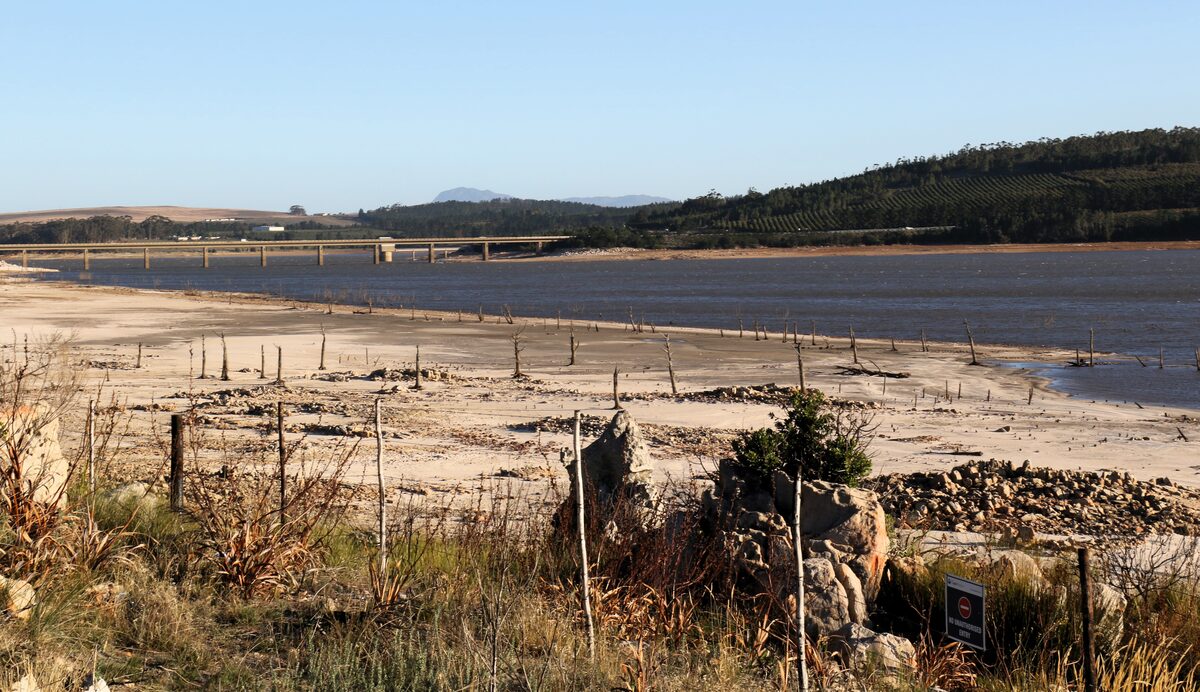
Despite recent autumn rainfall providing some relief to the Western Cape’s parched dams, water levels across the province remain critically low, with the regional system sitting at just under 48% capacity.
Cape Town’s combined dam levels currently stand at 47.7%, an increase of 2.4% from last week following recent rains. However, the City’s water and sanitation authorities are urging residents not to become complacent, as consumption continues to outpace targets.
The provincial picture mirrors the metro’s concerns. The Western Cape Water Supply System, which feeds Cape Town and surrounding areas, stands at approximately 47.9% – significantly lower than the 60% to 62% recorded at the same time last year.
Theewaterskloof, the province’s largest dam with a capacity of 480 188 megalitres, is hovering around 47.1%, whilst the Berg River Dam sits at 47.6%. Wemmershoek Dam is at 49.6%, whilst Steenbras Lower Dam has dropped to a concerning 39.7%. Only Steenbras Upper Dam shows relatively healthy levels at 58.4%.
To paint a picture of the last few years’ rainfall patterns across the province, in Paarl, which lies in the heart of the Cape Winelands, 1250 mm rain was recorded in 2023, then falling to 990mm in 2024 and a concerning low rainfall of just 480 mm was measured in 2025.
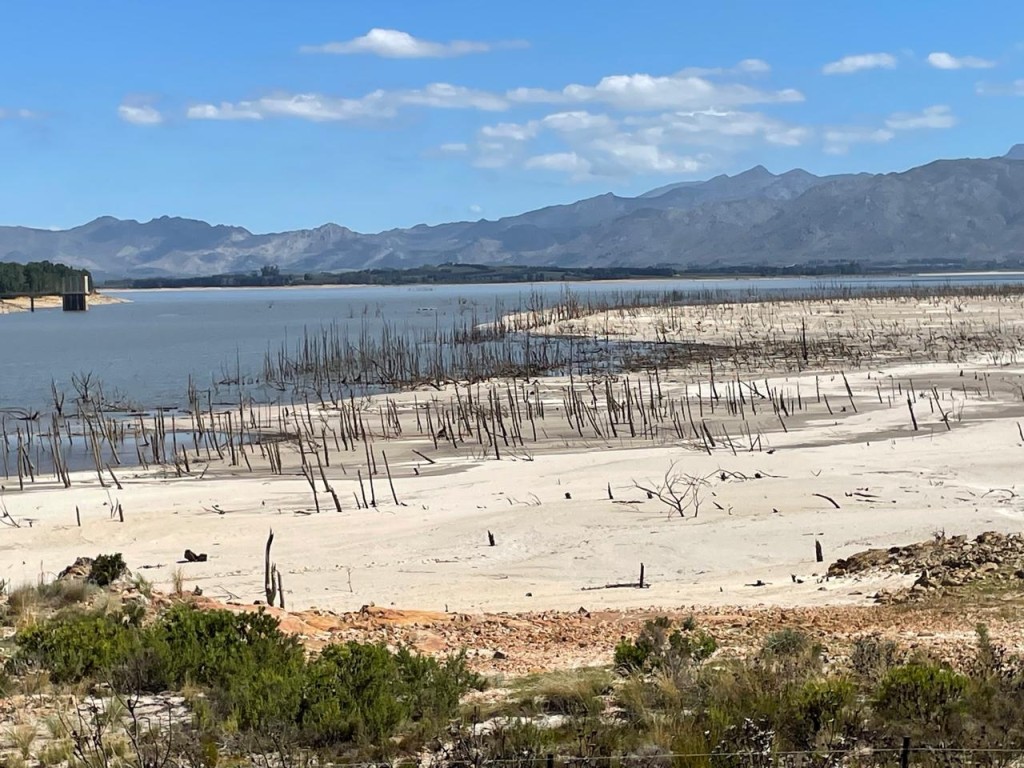
Across the province, several municipalities have already implemented strict water restrictions in response to the drought conditions. The Garden Route has been particularly hard hit, with Knysna under Level 4 restrictions and declared a local disaster area in January. Residents are limited to 50 litres per person per day.
George Municipality has implemented Level 2D demand management measures with Level 3 emergency tariffs, capping household consumption at 10 kilolitres per month. These restrictions have been extended to Uniondale and Haarlem.
The Hessequa Municipality has imposed varying restriction levels across different towns – Level 4 in Witsand, where no garden watering is permitted, Level 3 in Albertinia, Heidelberg, Slangrivier and Jongensfontein, and Level 2 in Riversdale, Gouritsmond and Stilbaai.
Level 1 restrictions are in place in Robertson, Ashton, Montagu, Bonnievale and McGregor under the Langeberg Municipality, whilst Beaufort West is preparing to escalate to Phase 4 restrictions.
Cape Town remains without formal restrictions but is in an early drought caution phase. Daily water consumption has climbed to 892 million litres a day, 32 million litres above the winter target of 860 million litres.
Statistics show that 70% of high-volume water use occurs in homes, with consumption remaining higher this past summer compared to the previous year.
Councillor Zahid Badroodien, mayoral committee member for water and sanitation in Cape Town, said the recent rain had been a blessing but could not be taken for granted.
ALSO READ: Africa’s first nature-linked bond launched as Western Cape faces water crisis
“Let’s continue to save water even when it rains. Saving water keeps our dams fuller for longer and it saves residents money because the less water you use, the less you pay,” said Badroodien.
“We cannot depend on unpredictable rainfall to fill our dams. While rainfall is vital, it also has to rain in the right place, in our dam catchments for dam levels to increase.”
The City has warned that the window to avoid water restrictions before November is narrowing, and restrictions could be imposed based on assessments of water usage, dam levels and long-term weather forecasts before the National Department of Water and Sanitation’s annual operating analysis in November.
Cape Town’s water tariffs are structured to encourage conservation, with domestic users paying between 5c and 8c per litre on a sliding scale. The more water consumed, the higher the cost per kilolitre, ranging from R24.32 for the first six kilolitres to R96.37 for usage above 35 kilolitres per month.
Authorities are urging all residents, businesses and visitors to use water wisely and for essential purposes only as the province heads into an uncertain winter rainfall season.
ALSO READ: Rains bring relief but Western Cape dams remain low


You must be logged in to post a comment.