

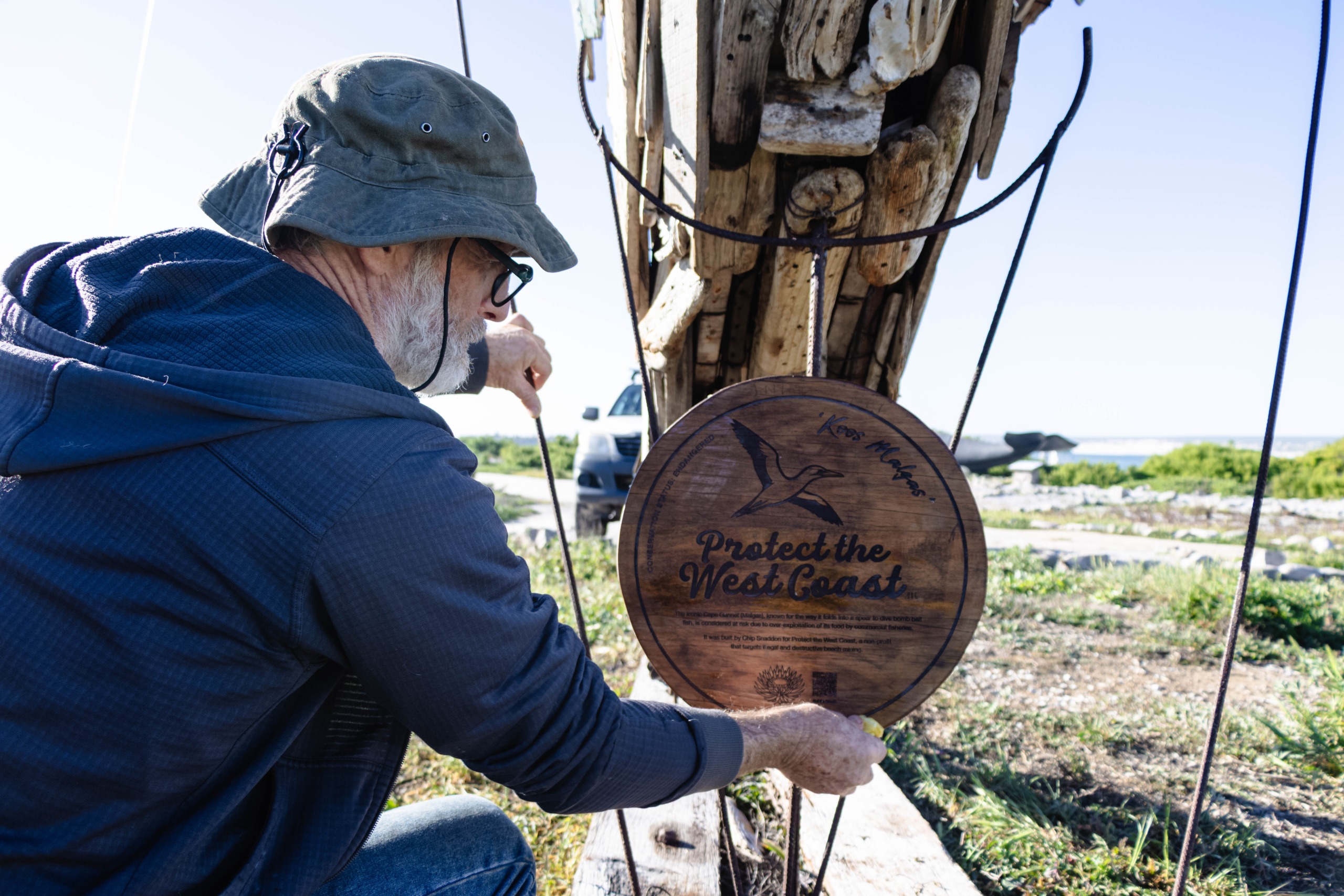
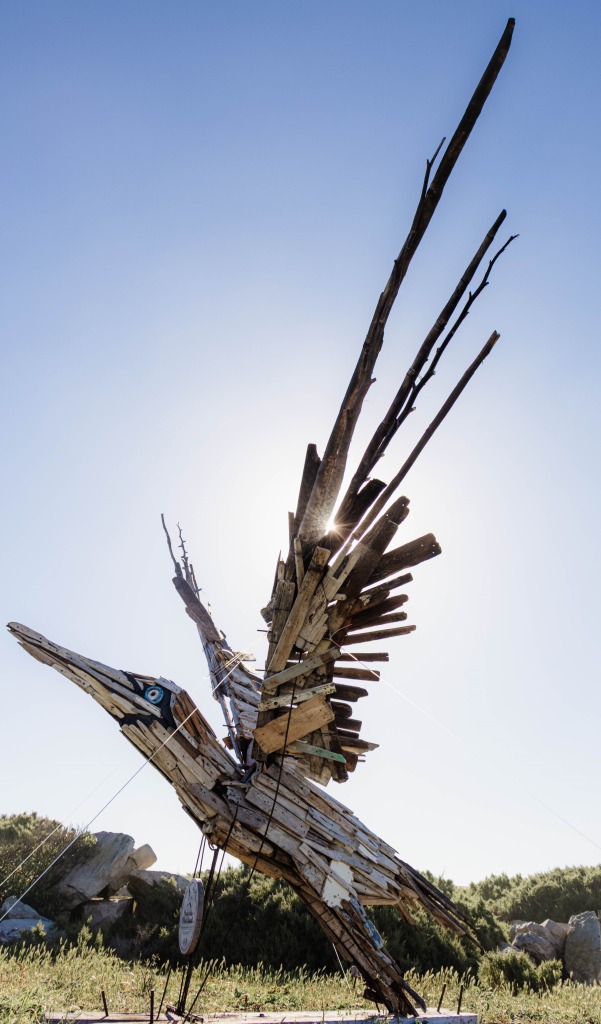
LAMBERT’S BAY – A six-metre-tall Cape gannet sculpture has found a new home among tens of thousands of its feathered counterparts on Lambert’s Bay Bird Island.
The imposing 100 kg sculpture, named Koos Malgas, was recently transported in pieces on a trailer by the Protect the West Coast (PTWC) team to the Lambert’s Bay Bird Island Nature Reserve. There it was installed near the visitor centre.
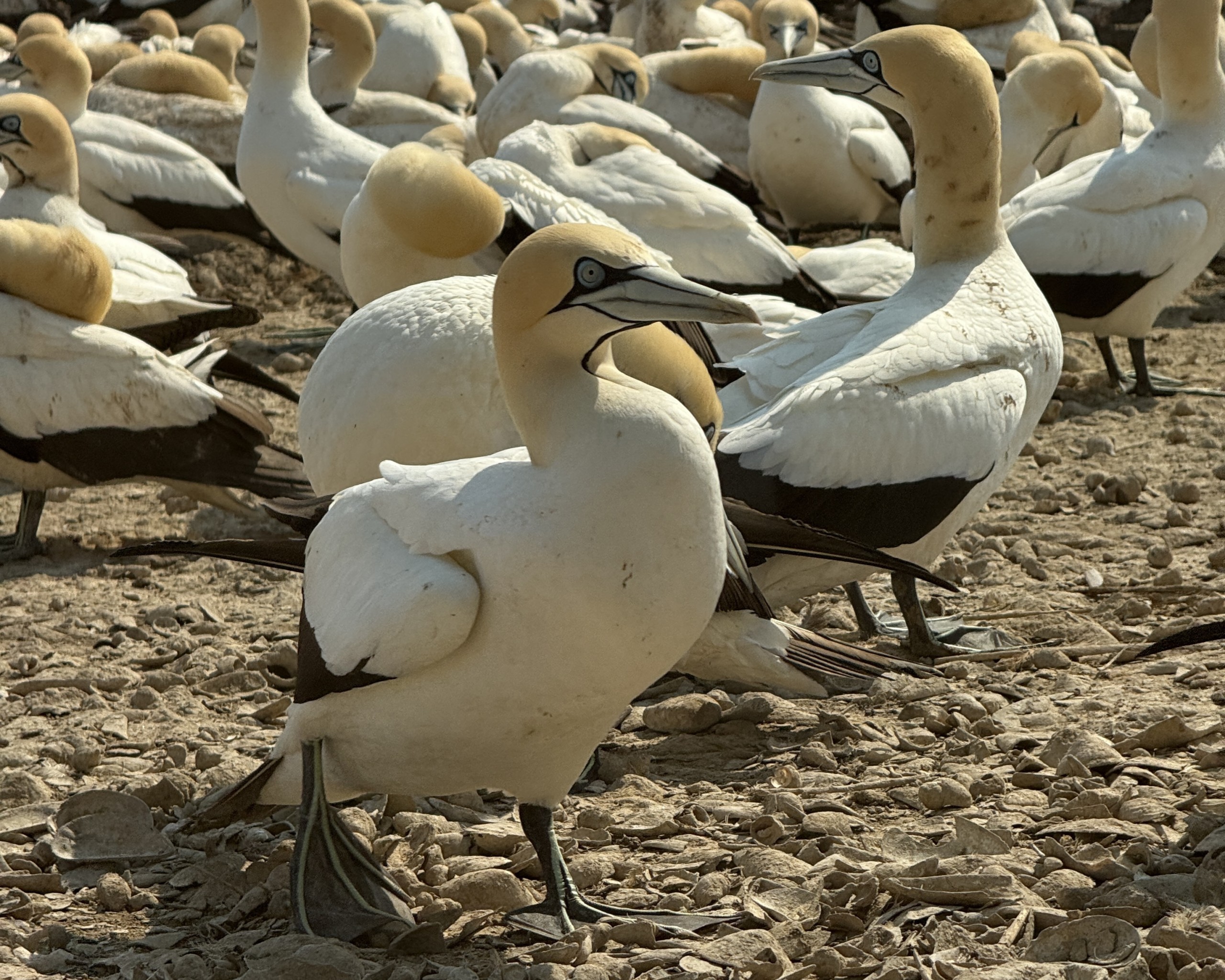
Standing on the three-hectare rocky islet, about 100 metres off Lambert’s Bay and connected to the mainland by a breakwater, Koos is now part of a landscape home to tens of thousands of Cape gannets, Cape fur seals and cormorants.
The island is one of only six breeding sites for Cape gannets globally and is the only one accessible to the public.
Managed by CapeNature, the reserve has an enclosed viewing hide at the edge of the gannet colony, offering visitors a close-up view of the birds. Koos now stands prominently in the foreground.
Made from welded steel, wire, driftwood and beach detritus, the sculpture is secured to the rocky ground using iron rebar hammered through railway sleepers and tethered with industrial-strength nylon cord.
PTWC commissioned the sculpture from Kommetjie artist Chip Snaddon as an artistic representation of the organisation’s efforts to protect the West Coast’s fauna and flora.
Koos was named in memory of artist Koos Malgas, who created the Owl House sculptures under Helen Martins in Nieu-Bethesda.
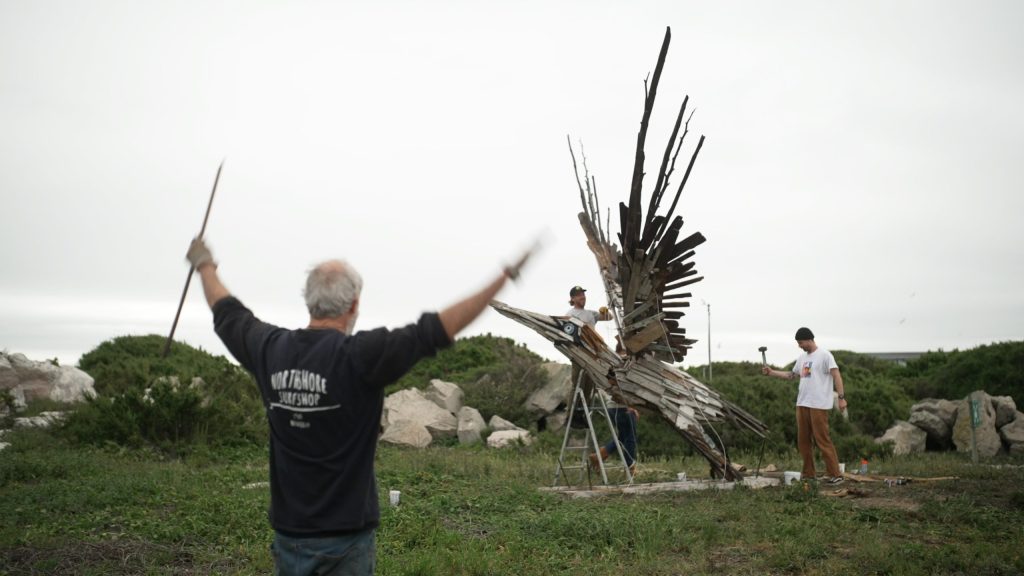
The sculpture was initially installed on another Bird Island in Kommetjie, where it featured at the Kommetjie Festival. It later formed part of Open Studios Kommetjie in December 2025, before travelling to the Langebaan Town Hall for the inaugural Ripple Effect Gathering, hosted by PTWC, in March 2026.
The gathering brought together more than 150 Indigenous leaders, fishers, scientists and other stakeholders to discuss the foundations of a sustainable economic future.
After returning to Kommetjie, Koos was moved to Imhoff’s Farm, where he became a popular local attraction before being transported to what PTWC hopes will be his permanent home in Lambert’s Bay.
The Cape gannet, also known as the malgas or witmalgas, is an iconic seabird on the West Coast and is particularly revered by fishers as a symbol of the pelagic fishing industry.
Known for its spectacular plunge-diving, the bird launches itself into the ocean like a projectile to hunt shoals of baitfish. Cape gannets also follow the bait balls associated with the annual Sardine Run along the East Coast before returning to the Western Cape.
The idea for the sculpture was initiated by PTWC media team members Jacque Smit, a keen birder, and journalist Steve Pike, who approached Snaddon about the project.
With photographs supplied by Smit as reference material, Snaddon developed initial mock-ups and began collecting driftwood, wire and other beach detritus needed to construct the sculpture.
The original concept depicted the gannet with its wings folded as it prepared to plunge into the sea. Snaddon eventually chose a pose depicting Koos about to take flight, with his wings spread slightly akimbo.
The finished sculpture is almost twice the height originally envisaged, making its presence even more imposing. “I built the sculpture as four removable pieces using welded steel as the internal structure, with the head, two wings and body clad with driftwood collected over many years,” Snaddon said.
The materials, he explained, were intended to evoke the coastal environment while highlighting the vulnerability of wildlife affected by uncontrolled development and extractive practices.
Cape gannets face a range of threats, including overfishing, habitat loss linked to development and mining, and ecological imbalances that can increase predation by seals and contribute to their encroachment into breeding areas.
For PTWC, however, Koos represents more than the threats facing the species.
The organisation says the sculpture is also intended as a positive symbol of conservation victories along the West Coast, including its successful efforts to protect biodiversity around the Olifants River Mouth.
In 2023, PTWC secured an out-of-court settlement with Trans Hex preventing mining around the Olifants River Mouth, an estuarine environment regarded as unique in South Africa and an internationally important wetland for migratory birds.
The Olifants estuary supports important aggregations of bird and fish species and is also an important source of food for fishers from Papendorp and Ebenhaezer.
As part of the settlement, the court ordered PTWC-led site visits involving scientists, geologists and other experts to monitor compliance.
According to PTWC, Koos Malgas also represents its efforts to promote sustainable alternatives to mining through scientific, media and legal work, including challenges to regulatory compliance and inadequate rehabilitation by mining companies.
Now standing among the birds he represents, the towering driftwood gannet offers visitors to Lambert’s Bay Bird Island a striking reminder of both the West Coast’s ecological vulnerability and the importance of protecting its unique natural heritage.


You must be logged in to post a comment.