


The South African Kelp Farming Project (SA KFP) announced the findings of the Phase 2 Feasibility Study at their close-out event on Tuesday, 12 August, at the Blue Bay Lodge, Saldanha Bay.
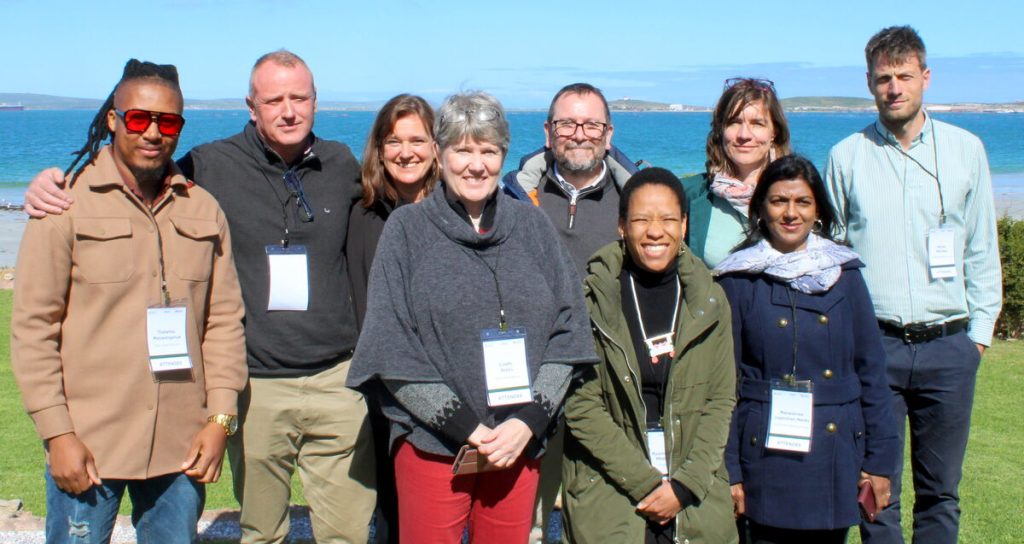
The SA KFP was a multi-stakeholder project, implemented by the Bivalve Shellfish Farmers Association of South Africa (BSASA), supported by the Department of Forestry, Fisheries, and the Environment (DFFE), and funded by the UK International Development via the Foreign, Commonwealth and Development Office (FCDO).
In South Africa, the harvesting of fresh wild kelp and beachcast kelp is currently the main focus; however, limited information is available on the cultivation aspects and potential of the three local west coast kelp species, namely sea bamboo (Ecklonia maxima), split fan kelp (Laminaria pallida), and bladder kelp (Macrocystis pyrifera).
The four-month Phase 1 pre-feasibility study demonstrated the positive potential of the three local kelps. It confirmed Saldanha Bay as a suitable trial location due to the existing oyster and mussel farming industry and the availability of infrastructure within the established Aquaculture Development Zone (ADZ).
The three-year Phase 2 feasibility study carried out the first successful full life cycle cultivation of three indigenous kelp species in South Africa, aimed at establishing a sustainable kelp farming industry in South Africa.
The event was used to celebrate the hard work of the team, where Matthew Halksworth (Acting British Consul General) applauded the efforts of the team and Andrea Bernatzeder (DFFE Aquaculture Research and Technology Development Director) emphasised the government’s support for aquaculture development.
Dr Lizeth Botes (Project Manager of the SA KFP) gave an overview of the achievements and outcomes of the project, while Dr Adrian MaCleod (Innovation Manager at Atlantic Mariculture) provided a UK perspective on seaweed farming from trials to trade.
Phase 2 of the project ends in September 2025, and all the reports, standard operating procedures (SOPs), and the Final Project Report will be available on the project webpage, and the videos are available on the project’s YouTube channel.


You must be logged in to post a comment.