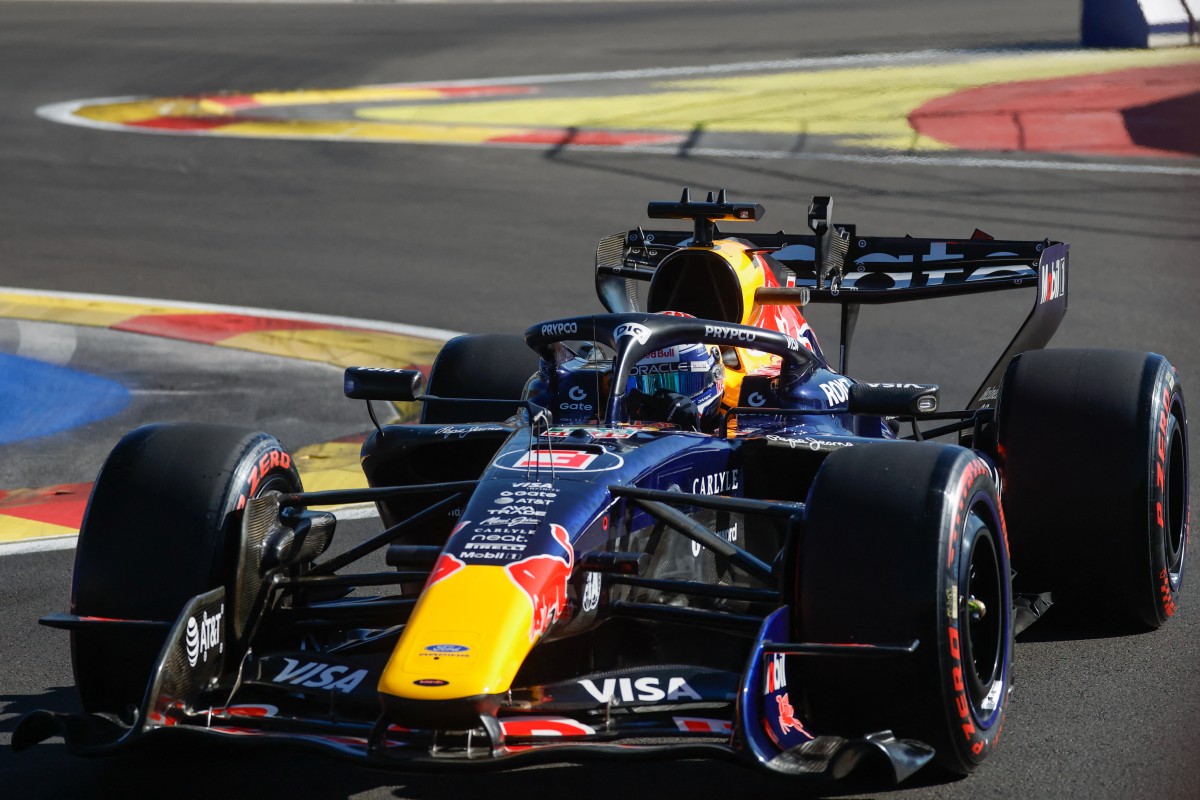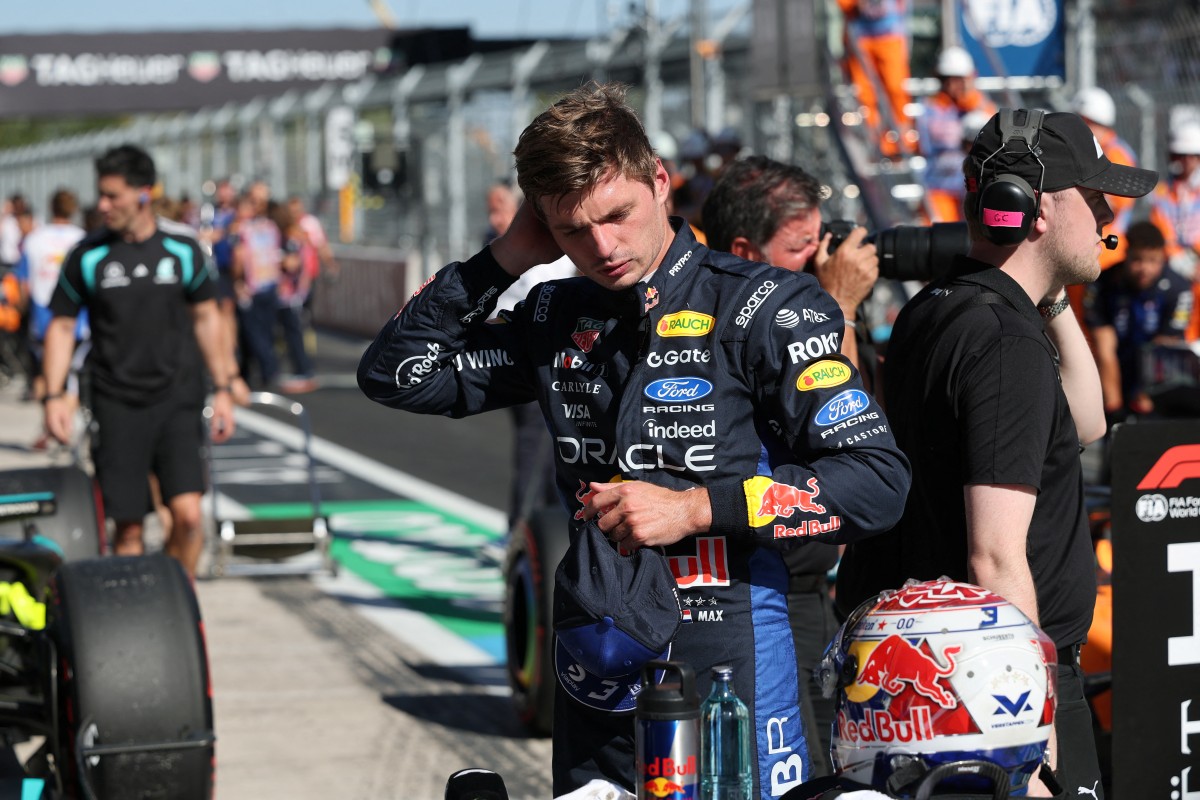
Max Verstappen has thrown down the gauntlet ahead of Sunday’s Spanish Grand Prix, warning that overtaking on the new hybrid Madrid circuit will be “almost impossible” and predicting a strategic lottery that could turn Formula One’s latest street venue into a procession rather than a spectacle.
Also read: Breathtaking Norris lap secures Spanish GP pole by tiniest margin
The three-time world champion, who qualified third for Red Bull on Saturday, didn’t mince his words when assessing the challenging layout built near Madrid’s main airport. Whilst praising the organizers’ efforts to create an impressive event, Verstappen’s concerns about the racing potential cut straight to the heart of F1’s ongoing struggle to balance spectacular venues with wheel-to-wheel action.
World champion Lando Norris claimed pole position for McLaren ahead of championship leader Kimi Antonelli of Mercedes, who holds a commanding 66-point advantage over team-mate George Russell in the title race. But if Verstappen’s assessment proves accurate, Sunday’s grid positions might be more important than ever.
A circuit with flair but questionable racing
“Overall, the event itself is very cool,” Verstappen conceded, acknowledging the work done to bring Formula One to Spain’s capital. “They’ve done a great job. But in terms of, if you want to have better racing, overtaking, I think there can be a few corners that can be changed.”
Also read: Max’s street circuit rant as Red Bull trail leaders in Spain
It’s a diplomatic critique from the Dutchman, who has never hidden his distaste for street circuits. Whilst the atmosphere and challenge of threading an F1 car through narrow, unforgiving barriers appeals to some drivers, Verstappen has consistently advocated for purpose-built circuits that facilitate closer racing and genuine overtaking opportunities.
When asked whether he could challenge Norris for victory from third on the grid, Verstappen’s response was brutally honest.
“That would be tough. I mean, even best-case scenario and you’re faster, you can’t pass. There are no corners where you can pass, so you need to rely on people ‘degging’ very aggressively.”
Tyre degradation the only hope
In motorsport parlance, “degging” refers to severe tyre wear, when the rubber loses its performance edge and lap times plummet. For Verstappen and anyone starting behind their rivals, tyre degradation might be the only window of opportunity to gain positions on a circuit where the racing line appears to offer precious few overtaking zones.
“The long runs were very tough during practice with a lot of deg for everyone, so that will probably be the key point tomorrow, but even with that I need to still figure out a corner where to pass,” Verstappen admitted.
It’s a concerning admission from a driver renowned for his racecraft and overtaking prowess. If Verstappen, with all his experience and talent, cannot identify clear passing opportunities, Sunday’s race could become a DRS train where track position trumps pace.
Strategic uncertainty adds intrigue
Championship leader Antonelli echoed Verstappen’s concerns whilst acknowledging the strategic uncertainty heading into race day.
“We don’t really know how the hard tyre is, how resilient it is, so tomorrow we might have two stops or three stops,” the Mercedes driver said. “We have to see.”
This uncertainty could prove to be the race’s saving grace. If teams cannot definitively predict tyre behaviour over race distance, varying strategies might be the only way to shake up the running order. Some teams might gamble on an aggressive two-stop approach, hoping fresher rubber in the closing stages provides the pace differential needed to pass slower cars on older tyres. Others might opt for a conservative three-stop strategy, managing degradation more carefully but risking track position.
The circuit’s characteristics
Despite his overtaking concerns, Verstappen did praise certain aspects of Madrid’s new venue.
“I like the grip. They did a good job with the asphalt, even though in some places it’s a bit too bumpy already for a new track,” he noted.
High-grip circuits typically allow faster cornering speeds and place greater demands on tyres, which could explain the severe degradation teams experienced during practice sessions. This characteristic might be what saves the race from becoming a complete procession.
Norris’s golden opportunity
From pole position, Norris will be licking his lips. If Verstappen’s assessment proves accurate and overtaking is genuinely almost impossible, the McLaren driver merely needs to convert his starting position into a lead through Turn One and manage his race from the front. Controlling the pace, looking after his tyres, and executing clean pit stops should be sufficient to claim victory.
For Antonelli, starting second represents both opportunity and risk. He’ll have a chance to challenge Norris at the start, but any mistake that drops him behind Verstappen could prove catastrophic. Recovering that position on track might be impossible, leaving him reliant on strategy or errors from others to reclaim second place.
The broader F1 debate
Verstappen’s concerns highlight Formula One’s ongoing challenge: balancing the spectacle of racing in iconic locations against the quality of the racing itself. Street circuits offer glamour, atmosphere, and unique challenges that test drivers’ precision and bravery. But when they fail to facilitate overtaking, even the most visually stunning venues risk producing tedious races where starting position dictates the final result.
Monaco remains on the calendar despite producing processional races year after year, protected by its history and prestige. Madrid doesn’t have that luxury. As a new addition to F1’s ever-expanding calendar, the Spanish capital must prove it can deliver compelling racing, not just a challenging qualifying session and an impressive paddock.
Sunday’s verdict
All eyes will be on Sunday’s race to see whether Verstappen’s predictions come true or whether the strategic variables and tyre degradation create the chaos needed for an exciting Grand Prix. Perhaps the high degradation rates will force multiple pit stops, creating windows for overtaking during the phase when cars are on vastly different tyre ages and performance levels.
Or perhaps Verstappen will be proven right, and we’ll witness a procession where Norris leads from start to finish, Antonelli shadows him in second, and the Dutchman spends 60-plus laps staring at the Mercedes’ rear wing.