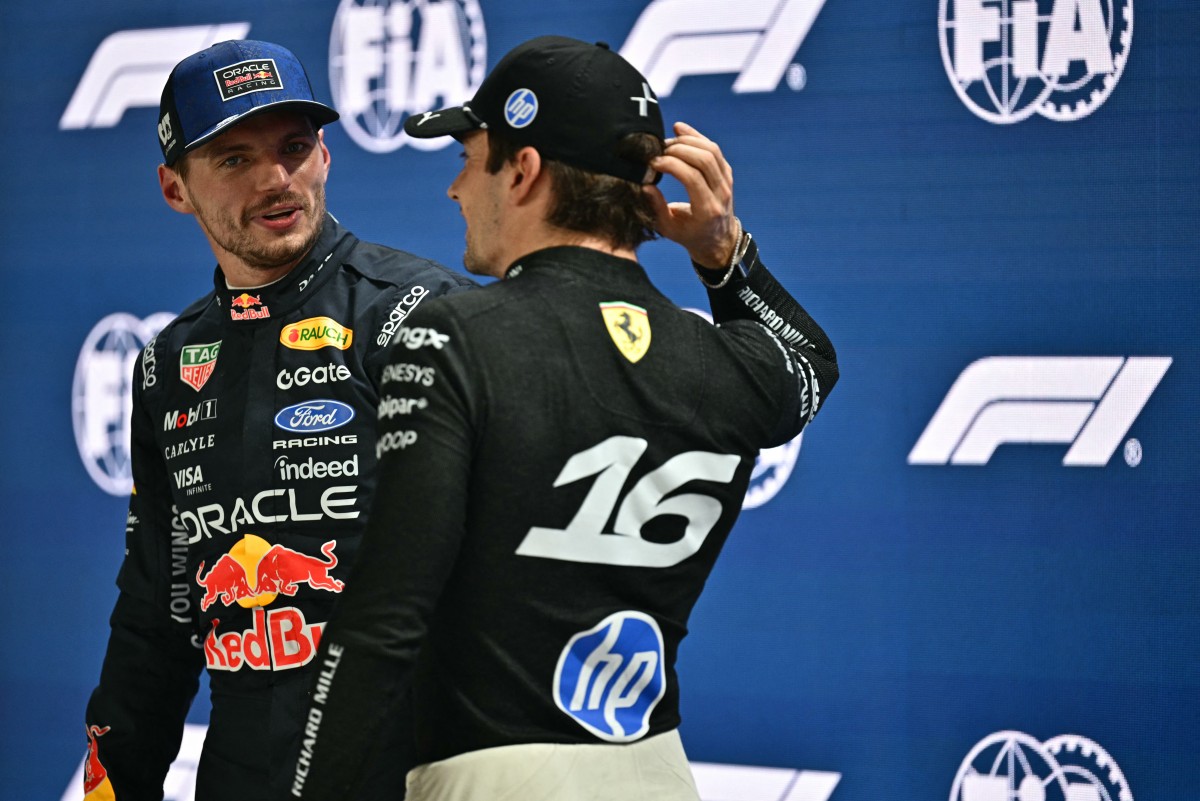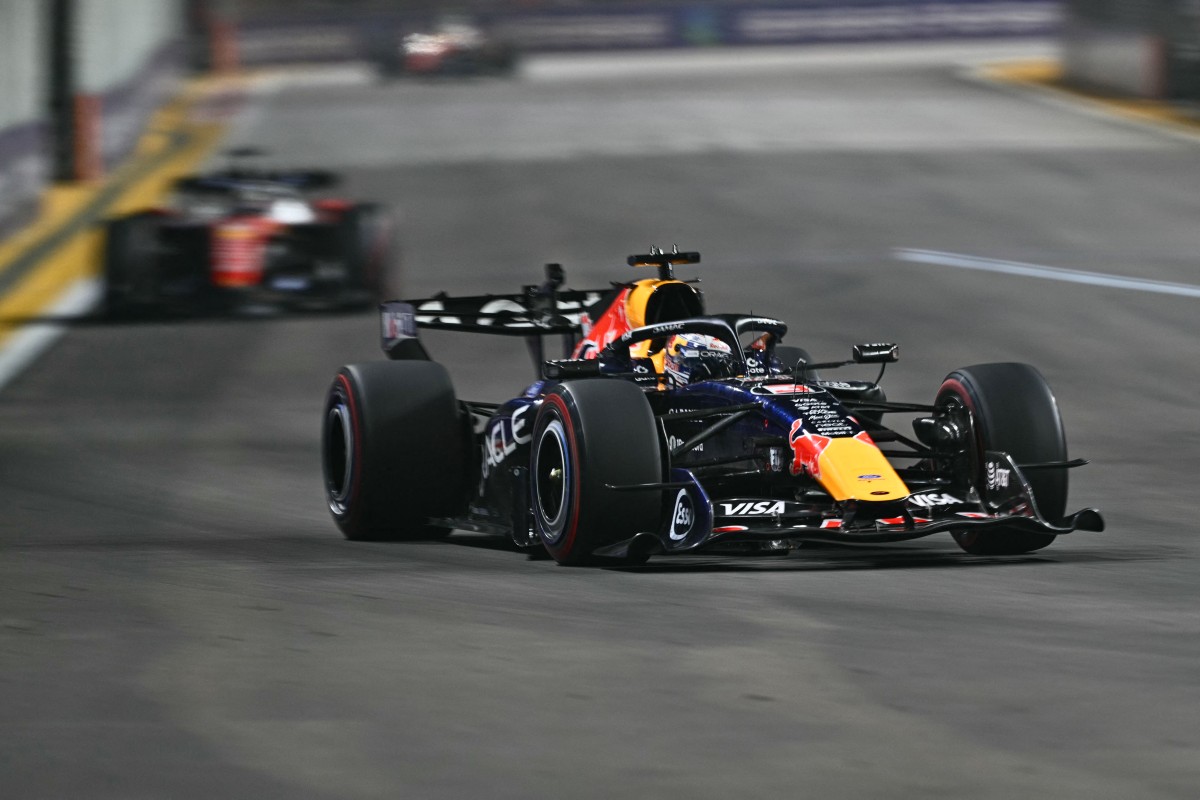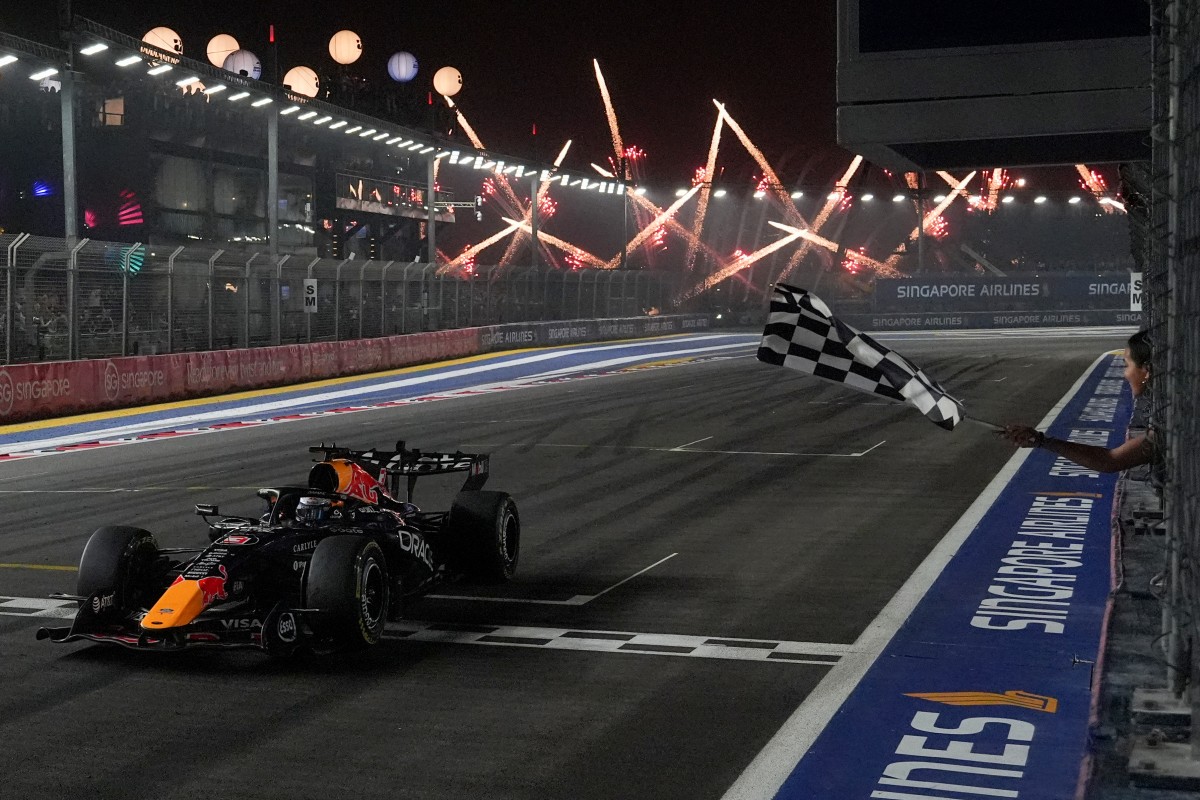
Max Verstappen completed a dominant Singapore Grand Prix double on Sunday, claiming his first-ever Marina Bay victory 24 hours after conquering the sprint race, but the weekend’s real headlines emerged off-track as Formula 1’s ongoing technical complexities and racing quality sparked a rebellion.
Also read: Max claims maiden Marina Bay Win whilst Hamilton tumbles to sixth
The four-time world champion’s flawless performance across both races delivered the results Red Bull craved, yet his victory was overshadowed by growing frustration at the sport’s direction. From software glitches undermining racing fairness to conspiracy theories targeting Mercedes, and drivers united in demanding circuit modifications, Singapore 2026 will be remembered as the weekend F1’s stakeholders said “enough is enough”.
Verstappen’s dominance on a track that previously tormented him represents a significant milestone in his career, breaking his Marina Bay curse with clinical efficiency. But even in victory, the Dutchman emerged as the sport’s most vocal critic, demanding a return to simpler machinery and attacking the processional racing that defined both Saturday’s sprint and Sunday’s 62-lap grand prix.
Verstappen rails against software nightmare
For the second consecutive weekend, software glitches plagued the 2026 generation of Formula 1 cars.
Malaysia witnessed chaos during a wet formation lap when multiple cars ground to a halt due to software failures. Singapore brought fresh misery when an erroneous deployment of “overtake” mode during the first sprint qualifying session meant some cars enjoyed more electrical power than others.
Verstappen, never one to mince words, delivered a scathing assessment of modern F1’s complexity and called for radical simplification when new regulations arrive in 2027.
“It is very complex now. I just hope the new rule set is easier,” he told reporters. “The problem is there’s a lot of software in the background that can make you not pull away or there is a glitch on slow laps. You have to make sure the battery pack is charging in the right place. That’s not what racing should be about.”
His solution? Strip everything back to basics.
“You should be able to go out, have a brake pedal and a throttle pedal and that’s it,” Verstappen said, articulating what many drivers privately acknowledge but few dare say publicly.
The current 50-50 split between electrical and internal combustion energy has created cars so complex that drivers spend more time managing systems than actually racing. Verstappen’s frustration reflects a wider concern that F1 has sacrificed wheel-to-wheel combat on the altar of technological advancement.
When software glitches can randomly gift some competitors more power than others, or cause cars to inexplicably fail during formation laps, the sport’s credibility suffers. Verstappen’s call for simplicity isn’t nostalgia, it’s a plea to restore competitive integrity.
Wolff explodes at “brainless” conspiracy theorists
Mercedes team principal Toto Wolff unleashed a withering attack on social media conspiracy theorists who’ve suggested the team deliberately sabotaged George Russell’s season to favour championship leader Kimi Antonelli.
The Austrian’s patience finally snapped after another nightmarish weekend for Russell, who crashed out whilst leading Saturday’s sprint race and continues to endure mechanical misfortune that’s left him 102 points adrift of teammate Antonelli in the championship standings.
Russell’s retirement in Malaysia combined with consequent engine penalties, plus his Singapore sprint crash, have fuelled speculation amongst certain fan factions that Mercedes are manipulating results. Wolff dismissed such theories with contempt.
“They’re brainless, whoever thinks that. I mean, it’s completely nonsensical. We’ve had it in the past with Lewis fans,” Wolff told reporters, referencing similar conspiracy theories from previous seasons.
“Do they think I have a button that says, ‘George – engine failure now’? I guess this is maybe where social media goes today. People hide behind their screens and then they lash out.”
Rather than allowing the abuse to anger him, Wolff claimed he finds entertainment in the outlandish accusations hurled his direction.
“Sometimes I read what people write. I find it hilarious,” he continued. “These people really contribute to my own entertainment when they are abusing the team or myself. ‘I’m Satan’, I’ve heard. So, yeah, overall it’s funny.”
His comments highlight a growing problem in modern sport where social media platforms enable conspiracy theories to flourish unchecked. Russell’s misfortunes are genuine bad luck compounded by his own mistakes, not evidence of internal sabotage.
Antonelli, at just 20 years old, stands on the brink of becoming F1’s youngest world champion.
Drivers unite to demand circuit changes
Perhaps the weekend’s most significant consensus emerged around the Marina Bay Street Circuit itself, with drivers from across the grid united in calling for modifications to enable better racing.
Singapore hosted its first sprint race weekend, and the experiment fell flat. Both Saturday’s sprint and Sunday’s grand prix delivered processional racing on a tight city-centre layout that offers precious few legitimate overtaking opportunities.
Verstappen, despite winning both races, emerged as the loudest critic.
“I think we shouldn’t host a sprint where you can’t pass,” he said bluntly. “The track is great, but also the problem we have at the moment is with the overtake mode, it barely does anything here.”
Hamilton joined the chorus calling for circuit modifications to facilitate wheel-to-wheel combat.
“I think there’s some adjustments that can be made to make this 100 percent a great circuit,” the seven-time champion said. “But whether they’re going to do that, I don’t know. I think they need to change the track to maybe a longer straight somewhere in order to allow us to overtake for it to be truly a great racing circuit.”
Verstappen’s dominant double victory should have been the story. Instead, Singapore 2026 will be remembered for exposing cracks in F1’s foundations.
Software glitches that undermine competitive fairness. Conspiracy theories poisoning fan discourse. Circuits that prevent racing.