
CAPE TOWN — Cape Town’s City Council has approved an updated road safety strategy following a public participation process, placing particular focus on pedestrians, cyclists, scholars and public transport users.
The strategy directs the City’s efforts towards making Cape Town’s roads safer and reducing accidents and loss of life, reflecting current conditions and emerging road safety challenges.
Shared responsibility
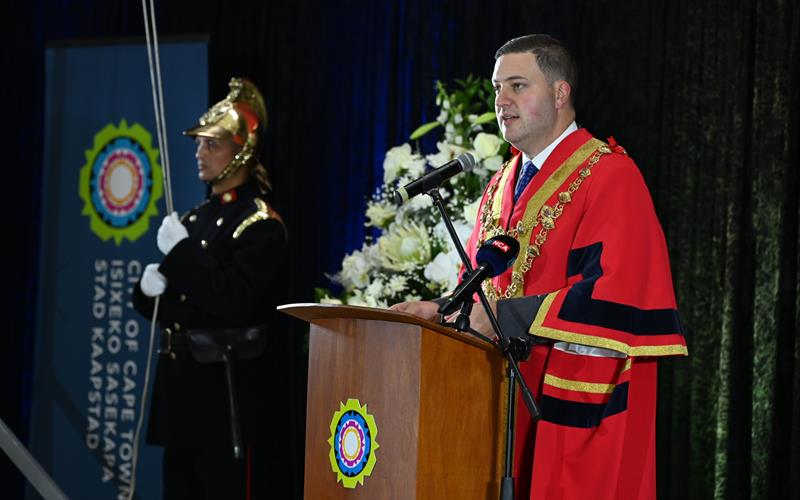
Mayco member for urban mobility Rob Quintas said road safety is a key priority and every road user deserves to travel safely, whether walking, cycling, using public transport or driving.
“We thank all the residents and organisations who provided valuable input to our Transport Network Safety team. The suggestions helped our specialists with further insight to how road safety affects our various communities and their commuting across Cape Town,” he said.
“Existing initiatives involving schools, communities and local stakeholders will be strengthened and expanded where opportunities exist, recognising that road safety is a shared responsibility that requires collaboration between government, residents, educational institutions and civil society organisations so that, together, we can all keep Cape Town moving, safely.”
Priority interventions
Through the strategy, the City will prioritise safer pedestrian crossings, traffic calming measures, improved road safety around schools, safer walking and cycling environments, public awareness campaigns and targeted enforcement in high-risk locations.
As an immediate next step, the City will strengthen existing road safety programmes and develop a detailed implementation framework that translates the strategy into specific actions, responsibilities and delivery timeframes. A data-led, area-based approach will identify high-risk locations and vulnerable communities to prioritise interventions where they are most needed.
The City is also finalising a performance management framework with measurable indicators, targets and reporting mechanisms to monitor and evaluate road safety outcomes. Progress will be tracked and interventions refined to ensure resources are directed where the need is greatest.
Four million offences
Drafted in April, the strategy was open for comment in May to June.
The main change is a broader focus on preventing deaths and serious injuries for all road users, rather than treating road safety primarily as a traffic-enforcement issue. The strategy specifically highlights pedestrians and other non-motorised users, including people walking and cycling.
The strategy is being backed by practical infrastructure programmes such as plans to invest in pedestrian and cycling facilities, universally accessible sidewalks, road maintenance and traffic-calming measures. The City says its road network is nearly 10 400 km long and has allocated more than R1.9 billion for road maintenance in 2026-’27.
Enforcement is also getting tougher, with the City’s amended Traffic By-law that was gazetted in July 2026. This gives traffic officers powers to impound vehicles in situations including illegal street racing, driving under the influence, reckless driving that poses an immediate danger, and certain number-plate offences.
The scale of the problem is significant. Between July 2025 and June 2026, the City’s traffic service recorded almost four million offences and made 2 767 arrests. Drunk-driving arrests rose to 2 138, up 32% from the previous year.
ALSO READ: Traffic officers knock on doors to collect outstanding fines in Cape Town