

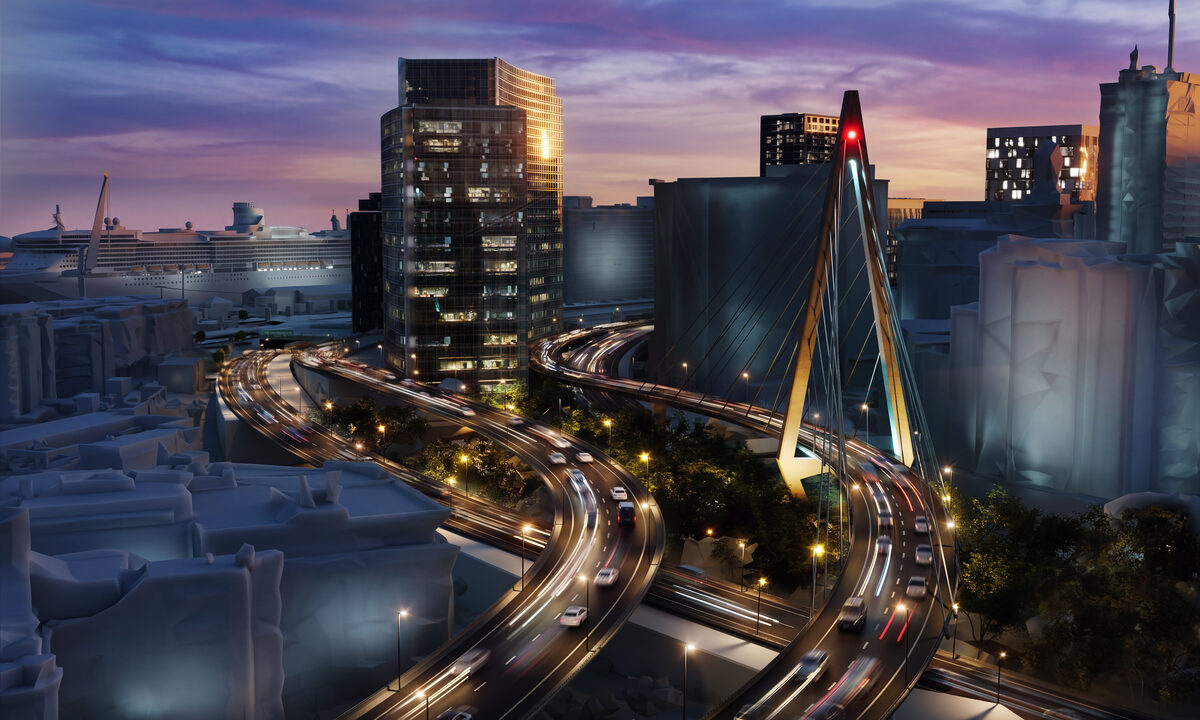
The City of Cape Town has unveiled its vision to transform the Foreshore’s unfinished highways into a new link bridge, promenade and neighbourhood, a project that could relieve central business district (CBD) congestion for decades and unlock development on 15 hectares of vacant land.
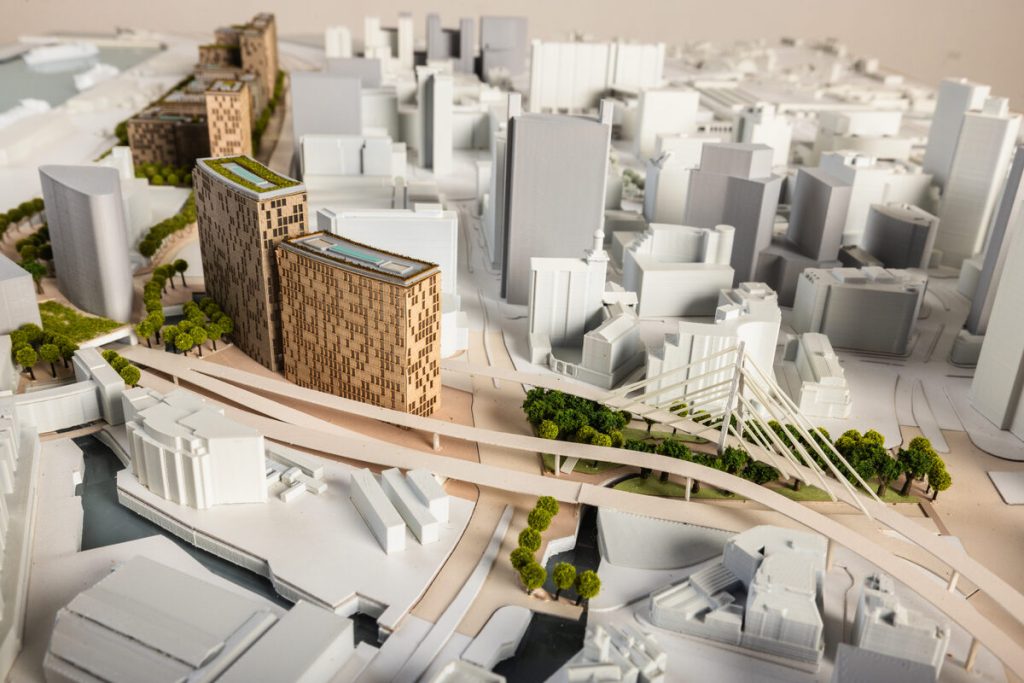
The Foreshore Precinct Project will see the city’s unfinished bridges completed and an entirely new neighbourhood developed on land that has remained undeveloped for more than 50 years, among the last vacant CBD land available.
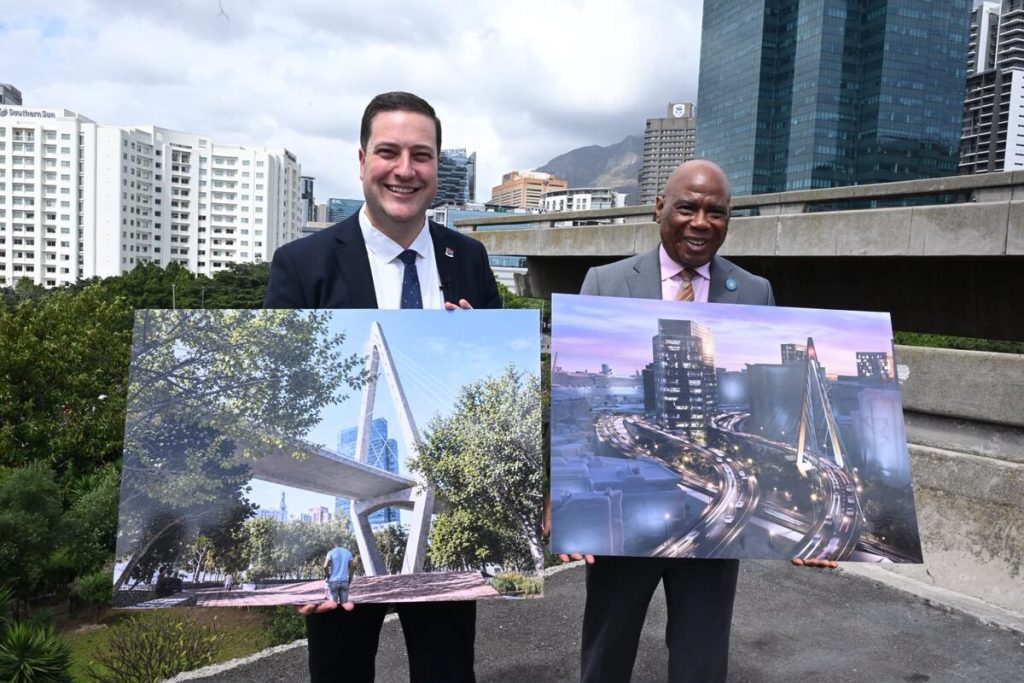
Mayor Geordin Hill-Lewis announced the project at the unfinished highways on Friday 2 October.
“Every one of us who has grown up here has looked up at these big unfinished bridges time and time again and wondered what happened, why they were never finished, and when they ever would be,” he said.
New bridge and tunnel
A new bridge will link the inbound freeway directly to Helen Suzman Boulevard, bypassing Buitengracht and allowing traffic heading from the Foreshore towards Green Point, Sea Point and beyond to avoid the CBD altogether. The outbound freeway will be replaced by a tunnel running underground next to Duncan Road, connecting to the N1 and N2 freeways.
City proposes building the project in two phases, with the existing freeways continuing to operate to avoid severe traffic congestion.
Phase one: link bridge and new park
Phase one, set to commence during the next term of council, includes widening the inbound freeway with two additional lanes, constructing the link bridge to Helen Suzman Boulevard, and a new elevated outbound ramp connecting Buitengracht over Dock Road to the existing outbound freeway.
Other phase one elements include making FW de Klerk Boulevard a pedestrian-oriented street, a new canal linking Buitengracht Park to the Victoria and Alfred (V&A) Canal, a new park under the Buitengracht link bridge, bus lanes across Buitengracht, and three land parcels becoming available for a new residential area.
Phase two: tunnel and promenade
Phase two involves constructing a new outbound bridge linking Helen Suzman Boulevard with the outbound tunnel, demolishing the existing outbound elevated freeway viaduct, and creating a promenade, parks and public spaces along the harbour edge. All remaining land parcels would become available for development, with construction of this phase expected to run until 2040.
Hill-Lewis said the project would transform the unfinished highways into a link bridge and tunnel to relieve inner-city congestion and improve the connection between the Foreshore and the Atlantic Seaboard. A brand new Foreshore neighbourhood would be unlocked, including affordable housing, walkable streets and a tree-lined promenade along the harbour’s edge all the way to Sea Point.
He said no major public road and transport upgrades had taken place in Cape Town since before the 2010 World Cup, and the Foreshore project, together with the MyCiTi bus network expansion to Khayelitsha and Mitchells Plain along all 42km of that route, would change that.
ALSO READ: City distances itself from viral AI express rail concept for Cape Town
Public consultation begins
Hill-Lewis said the City was releasing drawings to begin public consultation, after which final designs would be turned into detailed engineering designs before procurement and construction could begin.
“Today is the beginning of the public facing phase,” he said. “Since the public will soon be consulted on these plans for the first time, now is the right time to make public what we’ve been working on behind the scenes.”
To build the tunnel south of Duncan Road, the City is engaging Transnet about land owned by the Port Authority.
City manager Lungelo Mbandazayo said the project was an opportunity to transform and future-proof the CBD. “Every generation has the responsibility to plan ahead for what is needed in decades to come, and this is our turn.”
Mbandazayo said the City had engaged stakeholders across the three spheres of government and state-owned entities, and that public participation was now the most important phase.
How to have your say
The City has created an online hub at foreshore.capetown where the public can view the proposals and register for project updates. Further public participation processes, including road scheme amendments, heritage impact assessments and other statutory requirements, will be announced in coming months.
While the bridges and tunnel could take the best part of a decade to construct, the new neighbourhoods would unfold beyond that, unlocking growth and development for the next two to three decades.
ALSO READ: Clock ticking on Cape Town’s short-term letting by-law as hosts face commercial rates


You must be logged in to post a comment.