

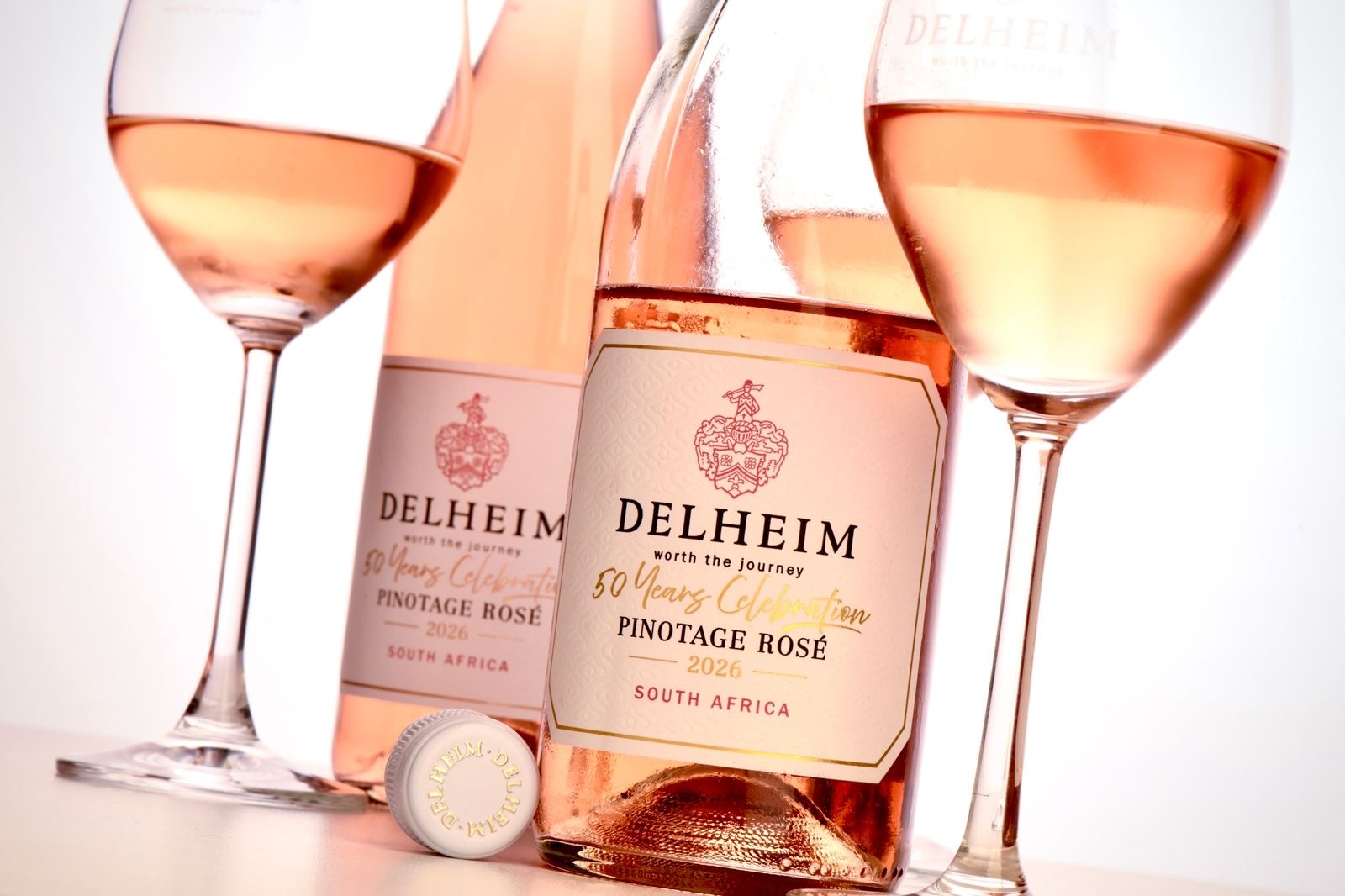
A Stellenbosch wine estate is marking half a century of producing South Africa’s first rosé made from Pinotage grapes, a wine that helped shape the country’s rosé market and remains a favourite among wine lovers.
Delheim estate celebrates the 50th anniversary of its Pinotage Rosé this year, a wine first crafted in 1976 under the guidance of Spatz Sperling, the estate’s late patriarch who planted Pinotage vines in the 1950s.
“For my father, his wines were like his children in that he would never express having a favourite,” says Nora Thiel, director at Delheim. “But he definitely had a special fondness for Pinotage, planting the variety in the 1950s and in 1960 bottling an estate-made Pinotage – one year after the release of South Africa’s first commercial Pinotage wine.”
Born from a wine surplus
The famous rosé emerged during a challenging period for South African winemakers. In the mid-1970s, the country faced a substantial surplus of red wine, with production outstripping market demand. Export restrictions linked to the economic climate compounded the problem.
Otto Hellmer, a German winemaker working with Sperling at Delheim, proposed a solution: use some of the estate’s Pinotage grapes to create a revolutionary rosé. The wine drew inspiration from light-red German Trollinger wines from Württemberg, offering a way to use excess red grapes whilst crafting a wine with an entirely different flavour profile.
The first vintage in 1976 catered to consumer preferences of the time, which favoured sweeter, fruitier rosés. Delheim blended the Pinotage with 20% Muscat wine, creating a semi-sweet wine that quickly gained popularity and positioned the estate at the forefront of South Africa’s emerging rosé market.
Adapting to changing tastes
As rosé styles evolved over the decades, Delheim adapted its approach. The estate shifted towards a lighter, onion-skin colour reminiscent of Provence rosés in France, reducing the Muscat content to allow the dry, vibrant character of the Pinotage grapes to dominate.
Delheim also helped transform rosé’s image from a “ladies’ wine” meant only for summer sipping to a wine enjoyed by all, year-round.
“Looking back in history, it can be said that Delheim helped benchmark rosé as a formidable part of South Africa’s wine offering, leading to many other producers to begin making rosé for this growing market,” says Thiel.
Pink shirts and friendly rivalry
Sperling made early release a priority, getting the rosé to market by late March or early April each year. He believed the wine should be enjoyed in a fresh, invigorating state, being a firm advocate for wine made for food, hospitality and enjoyment.
This led to an annual friendly competition with Frans Malan of Simonsig over who would release the season’s first wine – Delheim’s Pinotage Rosé versus Simonsig’s Chenin Blanc Nouveau. The two were founder-members of the Stellenbosch Wine Route in 1971. Sperling later timed the release to coincide with Mother’s Day.
“The annual launch of our Pinotage Rosé was taken very seriously, albeit in a mood of festivity,” says Victor Sperling. “My father would travel around the country with freshly bottled cases of Delheim Pinotage Rosé, hosting lunches to celebrate the introduction of this wine to hoteliers, restaurateurs, the wine trade and members of the media. He’d don a pink shirt and pink bow-tie, ensure the respective launch venues sported vases brimming with pink roses and also invite guests to wear pink.”
Beyond the festivities, Delheim Rosé gained recognition for quality, becoming the first South African rosé to receive the wine industry’s Superior Seal of exceptional quality.
Crafting the perfect rosé
Roelof Lotriet, cellarmaster at Delheim, says quality remains central despite rosé’s approachable nature.
“Rosé’s image as a brisk, approachable and fresh wine is what makes it such a popular wine, even in today’s market where general wine consumption is shrinking globally,” says Lotriet. “But this does not mean quality and attention to detail during vinification are not vital components in the process. For our Pinotage Rosé we use grapes grown especially for making rosé, as fruit quality and meticulous vinification are vital in obtaining the desired colour, flavour-profile and freshness.”
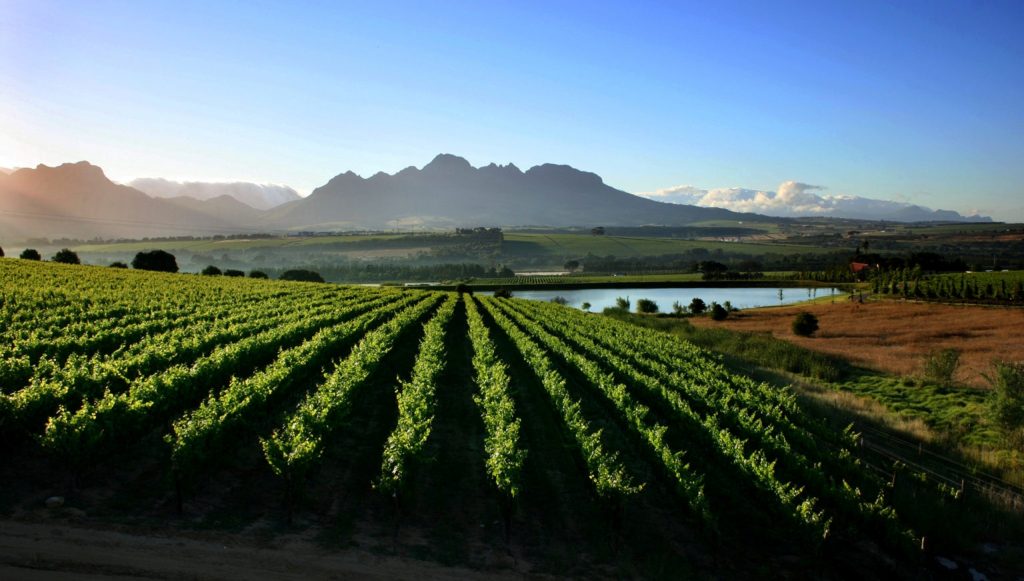
The fruit comes from trellised vineyards with cooler microclimates that ensure freshness. Grapes are harvested at between 21° and 22° Balling. The fruit is immediately pressed, allowing a brief contact with the purple Pinotage skins to shade the juice, which is then fermented for 14 days at 17.5°C. After a month on the lees, the wine is blended with a hint of Muscat to add the signature touch to the Pinotage Rosé flavour profile.
A slight blush onion-skin colour, an aroma of blossom and citrus, followed by the taste of berries, minerality and a fresh maritime character have made Delheim Pinotage Rosé an institution.
ALSO READ: Historic Stellenbosch wine estate launches new hiking trail network


You must be logged in to post a comment.