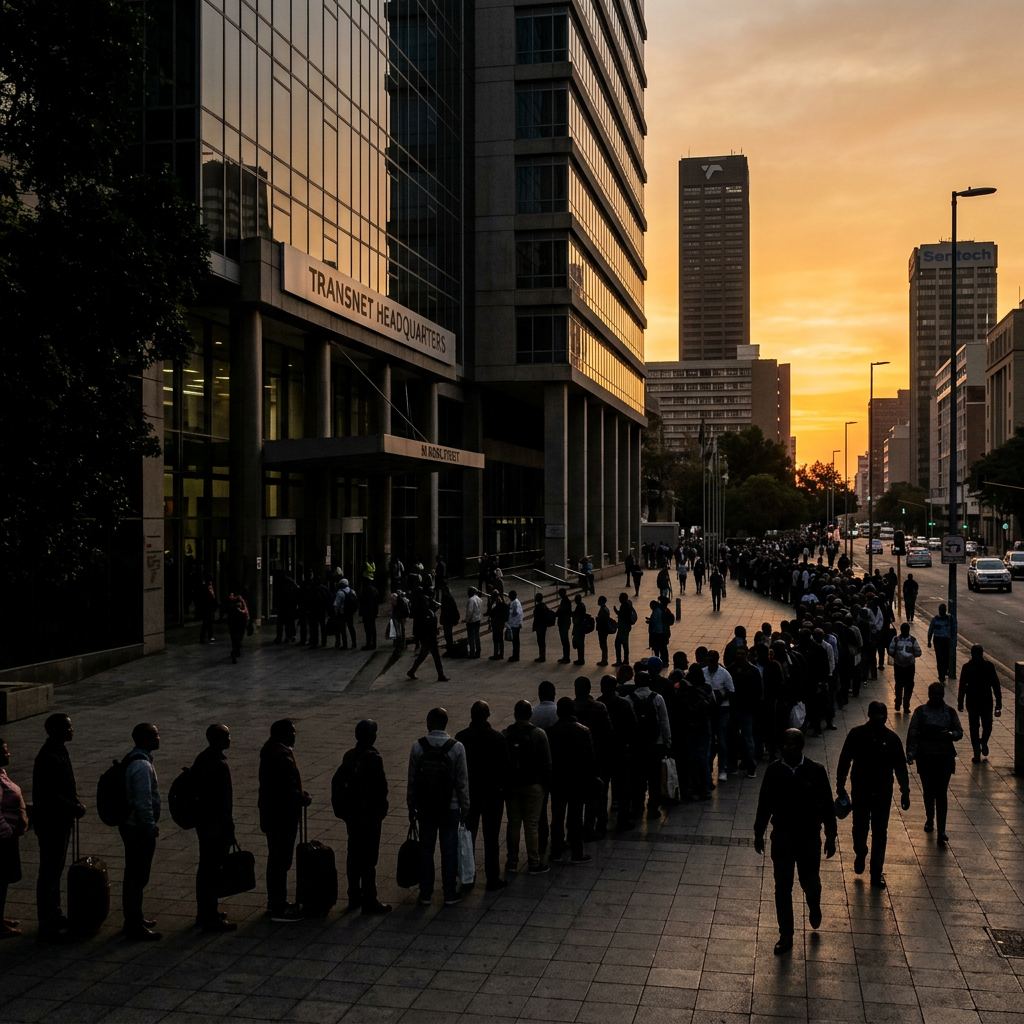
Almost 8.5 million South Africans are unemployed, with young people bearing the heaviest burden as the country approaches local government elections in November. New figures from Statistics South Africa reveal an unemployment rate of 33.6% in the second quarter of 2026, raising questions about when an entire generation will be able to achieve economic independence.
Among those aged 15 to 34, almost five million are unemployed. More concerning is that 45.4% of young people in this age group – approximately 9.5 million – are neither in employment, education nor training. Many will cast their votes in November without ever having held stable jobs that would allow them to live independently or establish their own households.
Prof. Joseph Sekhampu, chief director of the NWU Business School, argues that South Africa faces a peculiar divide: political adulthood arrives on schedule at 18, but economic adulthood increasingly does not.
When work keeps waiting
The unemployment figures reveal more than just economic underperformance. For at least the past six years, Statistics South Africa’s surveys have shown that more than four in every 10 South Africans aged 15 to 34 have consistently been outside employment, education or training. The transition from education to work and economic independence is becoming increasingly prolonged for a substantial proportion of a generation.
Adulthood is not simply an age or legal status, according to Sekhampu. It is an economic position built around the capacity to earn an income, establish an independent household and begin accumulating assets. When stable employment is postponed, these milestones are postponed with it.
The ripple effects on life decisions
Employment provides more than income. It allows individuals to establish households, obtain credit, accumulate assets and make longer-term decisions about family and where to live. When entry into employment is delayed for millions, these transitions become less predictable.
Statistics South Africa recorded 102 373 marriages and unions in 2024, down from 143 279 in 2015. The crude marriage rate fell from 2.6 to 1.6 per thousand people over the same period. While unemployment cannot be identified as the sole cause of declining marriage rates, labour market insecurity forms part of the economic environment in which decisions about independent adulthood are made.
ALSO READ: South Africa’s unemployment rate climbs to 33.6% as jobs crisis deepens
Long-term consequences accumulate
The effects of unemployment accumulate over time. Someone entering stable employment at 22 follows a different trajectory from someone securing a first sustained job at 32. The difference encompasses not merely wages, but also experience, savings, pension contributions, credit history and asset accumulation. This becomes particularly consequential when almost eight in 10 unemployed South Africans have been without work for a year or longer.
Delayed economic independence affects entire households as parents support adult children for longer and income is pooled among employed and unemployed members. The family has become one of the institutions through which South Africa absorbs persistent unemployment, cushioning its effects while making prolonged exclusion from the labour market socially sustainable.
When young South Africans in their twenties and early thirties enter the voting booth in November, they will exercise the full political agency of adulthood. Afterwards, many will return to family homes they cannot yet afford to leave, continue searching for work that has remained elusive and postpone decisions that once marked the ordinary progression of adult life.
They will have chosen councillors, mayors and governments before some have had the opportunity to choose where they can afford to live or what kind of future they can realistically build. Democracy has given them adulthood on time, but the economy has asked them to wait.
ALSO READ: Rethinking SA’s municipal impact