

The South African municipal landscape is eroding in slow motion as hundreds of local councils continue to operate as if the Constitution demanded their existence but not their viability. They table unfunded budgets, default on debt, and preside over the decay of water and electricity networks, and survive largely on fiscal transfusions from the centre.
The Auditor General’s warnings that only a small fraction of municipalities remain functionally stable no longer sound like outliers; they describe the system. In his address to Parliament, the Deputy President Paul Mashatile struck a familiar tone, emphasising that government is working to stabilise service delivery, particularly water, through improved coordination and stronger municipal capacity. It is a reasonable response. Yet it also reflects a deeper assumption that the system itself remains sound and that the crisis lies primarily in how it is managed.
With local government elections approaching, the pressure to demonstrate improvement will intensify, but the incentives to confront deeper structural questions may weaken. Yet, beneath this framing, the evidence points to a more complex reality than current policy assumptions allow. Our municipal map is a graveyard of political optimism. Designed for a post-1994 vision of community empowerment, it now reflects shrinking tax bases, hollowed out administrations, and territories that can no longer carry the institutional load placed upon them.
The intellectual case for consolidation is clearer than our politics allows. After 1994, SA consolidated a highly fragmented system of racially defined local authorities and homeland administrations into a unified structure of municipalities, demonstrating that large-scale institutional redesign is neither unprecedented nor unthinkable.
Local governments only thrive when they have enough revenue, administrative depth, and authority to meet community needs. When these conditions collapse, decentralisation becomes a burden rather than a virtue, and SA sits precisely in this predicament. Large sections of local government no longer have the capacity to plan, regulate, maintain infrastructure, or coordinate investment. Without these functions, ‘local government’ becomes a ceremonial label attached to institutions incapable of governing.
SA may need to begin a deliberate consolidation process by reconfiguring local government into fewer, more viable regional authorities. This would align governance with actual economic corridors rather than inherited administrative boundaries. SA clings to 257 municipalities as if the number itself is proof of democratic reach.
This is not an argument for bypassing constitutional protections or weakening local accountability, but rather serves a constitutional purpose requiring institutional redesign rather than institutional preservation. Larger municipalities are more likely to draw from a deeper revenue pool, support career pathways for engineers and planners, integrate spatial development more coherently, and make oversight more feasible for provincial and national authorities. But this doesn’t suggest that scale guarantees effectiveness.
The question, however, is not whether scale is ideal, but whether the current configuration remains viable in the absence of a sustaining economic base. Alternative approaches, whether through increased transfers, shared services, or recentralisation, can mitigate aspects of the crisis, but they do not resolve the underlying problem of structural non-viability.
ALSO READ: Frustration grows in Nelson Mandela Bay over water leaks
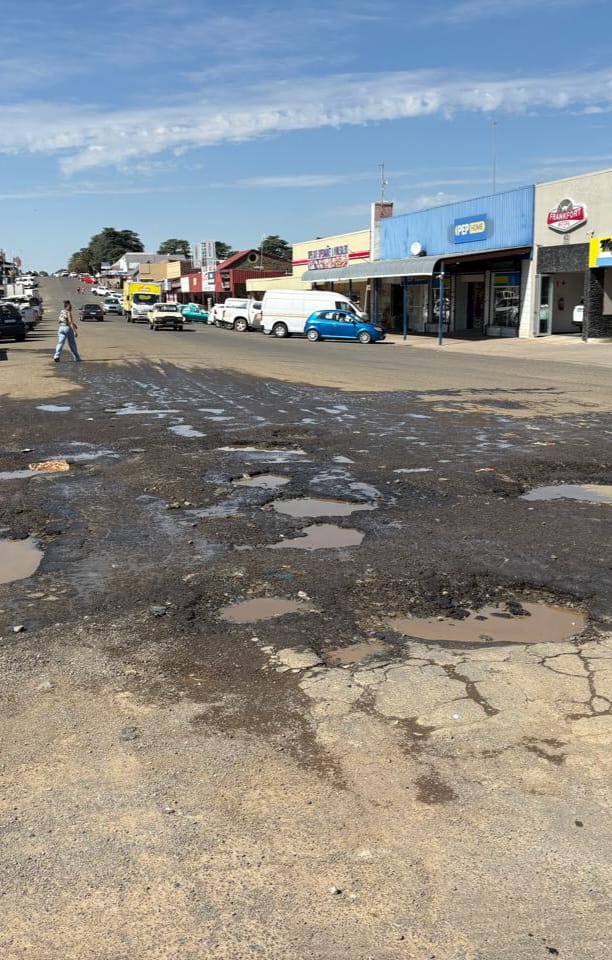
In this light, the case for consolidation is less a betrayal of local democracy than a defence of it. Insisting that every municipality must survive in the name of ‘local voice’ can become profoundly anti-democratic when these institutions cannot keep water clean, roads drivable, or streetlights working.
Local democracy without capabilities produces a paradoxical system where councils persist, but governance collapses.
Residents escape the system through nonpayment, migration, or private self-provision, while political incentives remain too weak to force reform.
Municipalities that are too small, too poor, and too administratively thin cannot discipline leaders, attract skilled professionals, or maintain basic services. The structure protects political office but abandons public service.
ALSO READ: Johannesburg’s terrible financial position
Some will read this as privileging efficiency over representation or as a technocratic narrowing of democratic space. Yet the more difficult question is whether representation without capability still constitutes meaningful democratic participation or whether it gradually erodes trust in democratic institutions themselves.
The Constitution protects effective, accountable, and development-oriented governance, not the preservation of institutional forms that can no longer achieve those ends. If the current structure blocks the achievement of constitutional purpose, then fidelity to the Constitution may require redesigning its architecture.
- Prof. Joseph Sekhampu is chief director of the North West University Business School.
ALSO READ: Major fraud investigation hits Moqhaka Municipality in Kroonstad




You must be logged in to post a comment.