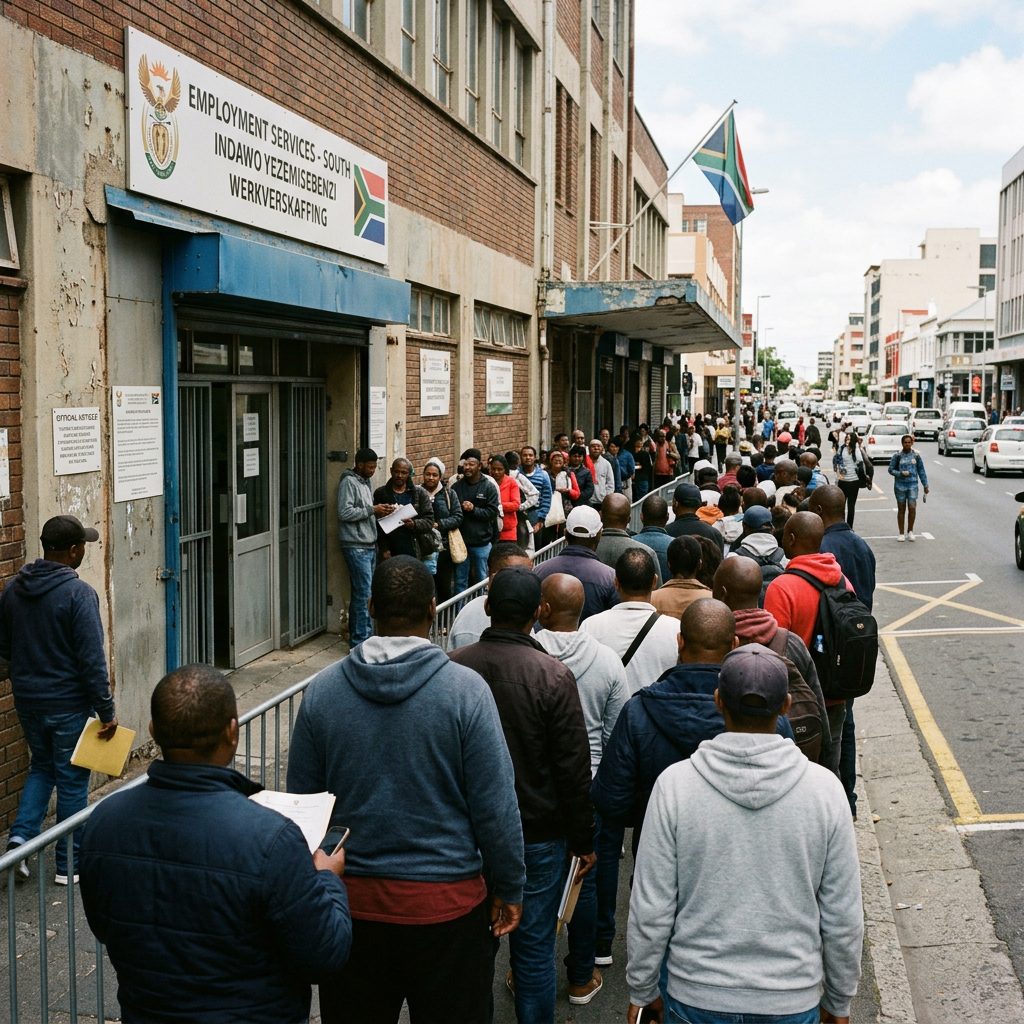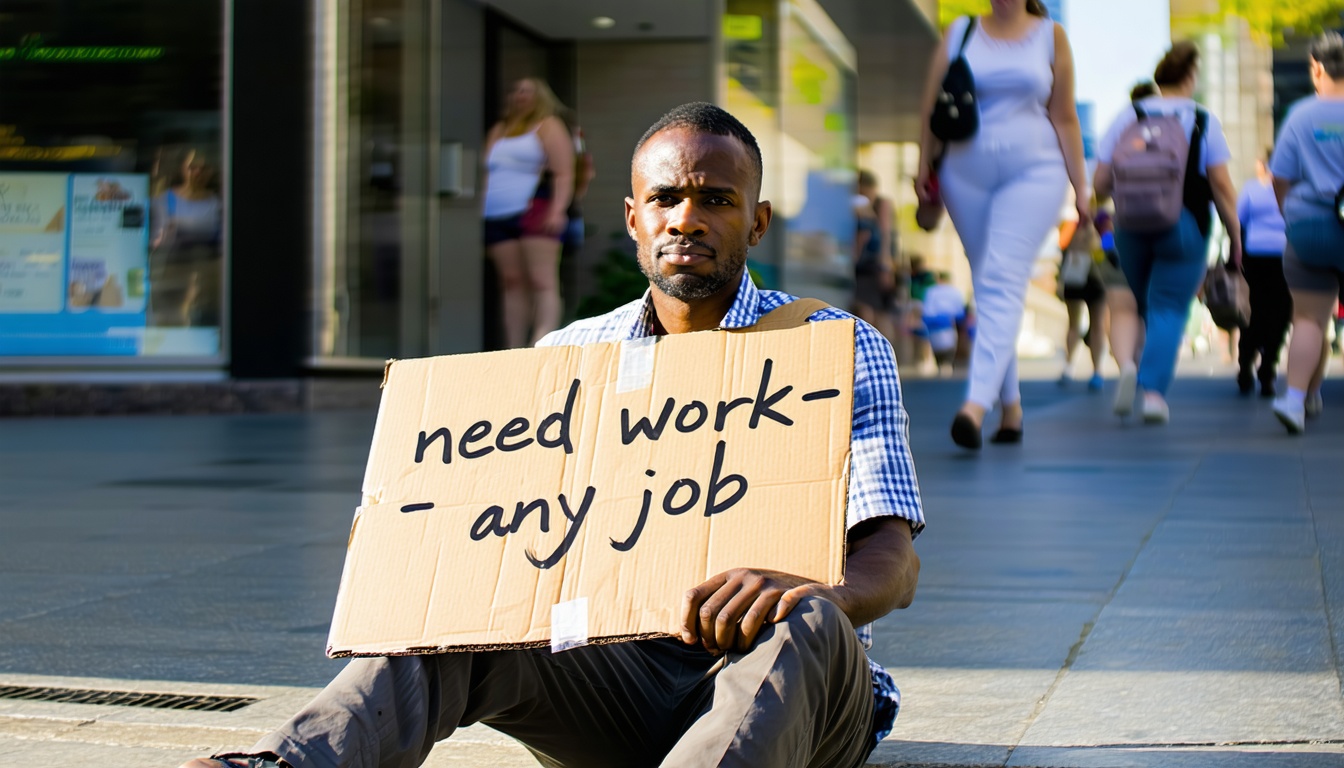
South Africa’s official unemployment rate has risen to 33.6% in the second quarter of 2026, marking the highest level in four years as the country grapples with a worsening jobs crisis.
The Quarterly Labour Force Survey released by StatsSA revealed that the number of unemployed people increased by 345 000 to 8.5 million, while the number of employed people decreased by 16 000 to 16.7 million compared with the first quarter of 2026.
The official unemployment rate increased by 0.9 percentage point from 32.7% in the first quarter. The combined rate of unemployment and the potential labour force now stands at 43.8%, the highest point in four years.
“There was an increase of 345 000 in the number of unemployed persons to 8.5 million, while there was a decrease of 16 000 in the number of employed persons to 16.7 million compared with the first quarter of 2026. This resulted in an increase of 329 000 (or 1.3%) in the labour force during the same period,” Stats SA said.
Economic reform too slow, warns DA leader
Democratic Alliance leader Geordin Hill-Lewis has condemned the pace of economic reform, stating that change is happening far too slowly to address the unemployment emergency.
“South Africa’s jobs crisis is worsening, not improving. Economic reform is happening far too slowly to spur growth at the pace required to create jobs. South Africa does not lack economic potential. It lacks urgency,” Hill-Lewis said.
The DA leader emphasised that businesses and investors remain constrained by red tape, unreliable basic services, failing ports and rail infrastructure, and crime that makes it harder and more expensive to build, invest and employ people.
“South Africa’s central national mission must be to get the economy growing at significantly faster pace to get people into work. Reform cannot continue at a pace completely disconnected from the scale of the unemployment crisis. Growth cannot be one priority among many. It must be the priority,” he said.
Winners and losers across sectors
The survey revealed mixed results across different economic sectors. The trade sector recorded the largest employment gain, adding 70 000 jobs, followed by construction with 39 000 new positions and finance with 11 000.
However, community and social services shed 57 000 jobs, the largest decrease of any sector. Mining lost 26 000 positions, while agriculture and manufacturing each recorded losses of 15 000 jobs.
Employment in the formal sector decreased by 41 000 and in the household sector by 9 000 in the second quarter of 2026, while the informal sector added 34 000 jobs.
Provincial picture shows stark contrasts
Mpumalanga led provincial employment gains with 41 000 new jobs, followed by the Eastern Cape with 13 000 and the Free State with 9 000.
The Western Cape recorded the steepest employment decline, losing 48 000 jobs, followed by Gauteng with 22 000 job losses and North West which shed 15 000 positions.
Youth unemployment hits 47.4%
Young people bore the brunt of the employment crisis, with the total number of unemployed youth aged 15 to 34 increasing by 264 000 to 5.0 million compared with the first quarter of 2026.
Employed youth recorded a decrease of 40 000 to 5.6 million, resulting in the youth unemployment rate increasing by 1.5 percentage points to 47.4% in the second quarter of 2026.
Approximately 36.4% of youth aged 15 to 24 were not in employment, education or training in the second quarter, an increase of 1.2 percentage points compared to the same period in 2025.
The survey also showed that discouraged job-seekers decreased by 227 000 to 3.7 million, while other available job-seekers decreased by 49 000 to 861 000. This resulted in a net decrease of 280 000 to 4.6 million in the potential labour force.
Hill-Lewis warned that the DA will continue to push for greater urgency and ambition in the economic reform agenda of the Government of National Unity. “South Africa cannot afford to lose another quarter to slow reform. We need urgency, clear priorities and a relentless focus on growth and jobs,” he said.
ALSO READ: Western Cape records lowest unemployment rate in South Africa