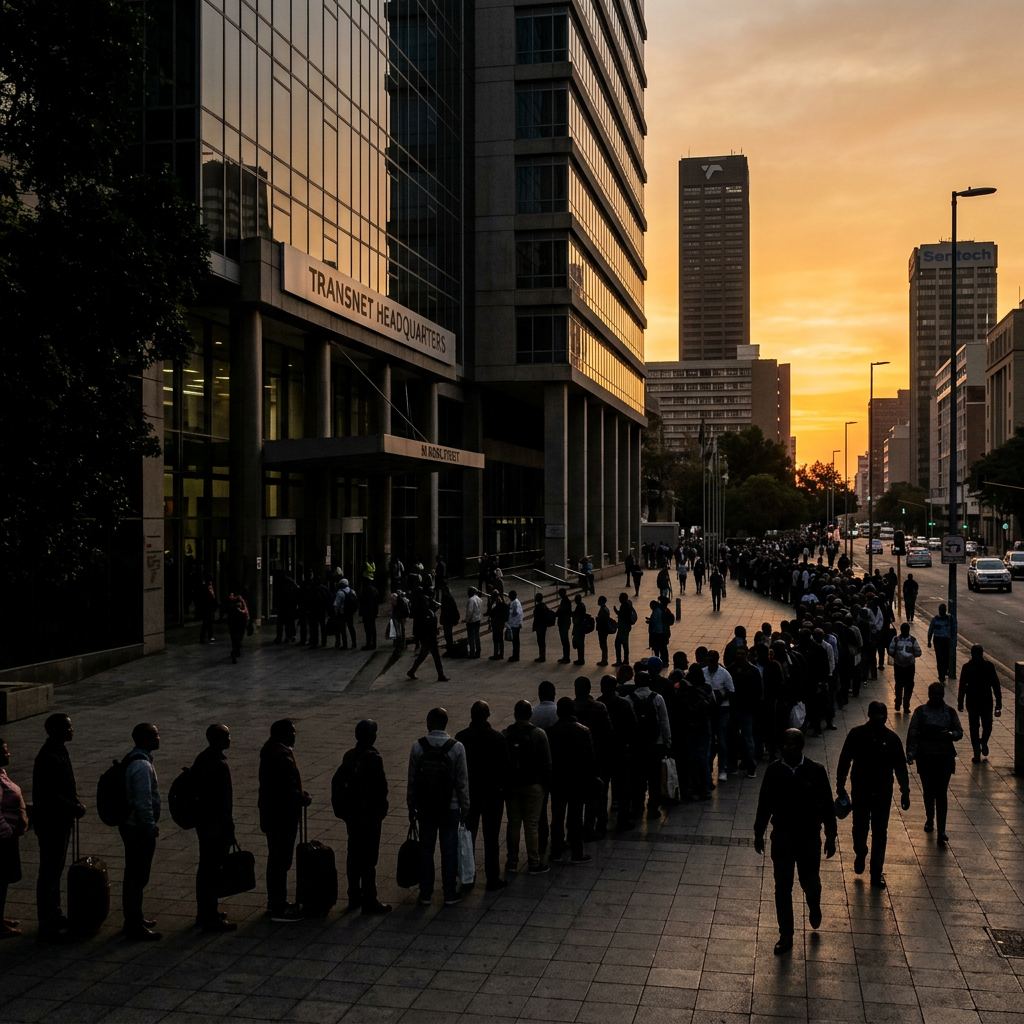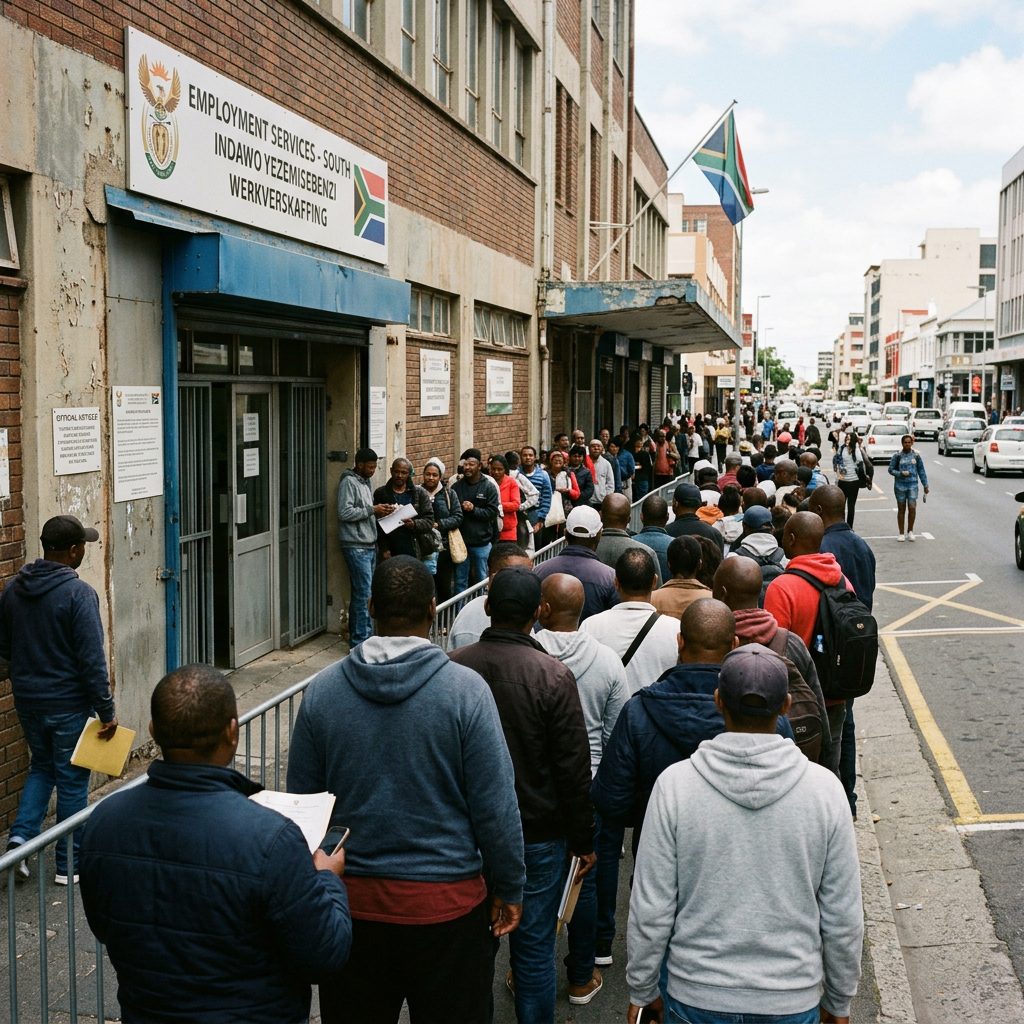
South Africa’s unemployment rate has climbed to 32.7% in the first quarter of 2026, representing a 1.3 percentage point increase from the previous quarter’s 31.4%, according to new data released by Statistics South Africa.
The Quarterly Labour Force Survey revealed that 345 000 people lost their jobs between the fourth quarter of 2025 and the first quarter of 2026, bringing total employment down to 16.8 million. Simultaneously, the number of unemployed individuals rose by 301 000 to 8.1 million.
These shifts resulted in a net decrease of 44 000 people in the labour force, representing a 0.2% decline during the three-month period.
Youth unemployment soars to alarming levels
Young South Africans aged between 15 and 34 years bore the heaviest burden, with youth unemployment jumping by 2.0 percentage points to reach 45.8%. The number of unemployed youth increased by 181 000 to 4.7 million, while employed youth decreased by 258 000 to 5.6 million.
This means that nearly half of all young South Africans seeking work cannot find employment, highlighting the country’s ongoing struggle to create opportunities for its emerging workforce.
Formal and informal sectors both contract
Both formal and informal employment sectors experienced significant contractions. The formal sector shed 189 000 jobs while the informal sector lost 127 000 positions during the quarter.
Despite the overall decline, some industries managed to create jobs. Manufacturing led the gains with 38 000 new positions, followed by mining with 32 000 additional jobs and agriculture with 10 000 new roles.
However, these increases were overshadowed by substantial job losses in other sectors. Community and social services suffered the largest decline, shedding 206 000 positions. Construction lost 110 000 jobs, while the transport sector cut 30 000 positions.
Regional variations paint mixed picture
Provincial employment figures revealed stark regional differences across South Africa’s economic landscape. KwaZulu-Natal stood alone as the only province to record employment growth, adding 6 000 jobs during the quarter.
The biggest job losses occurred in North West province, which shed 80 000 positions. Gauteng, the country’s economic hub, lost 67 000 jobs, while Mpumalanga recorded a decline of 54 000 positions. Both Eastern Cape and Limpopo provinces each lost 43 000 jobs.
Discouraged job seekers on the rise
The statistics also revealed a troubling trend in job-seeking behaviour. Discouraged job seekers – those who have given up looking for work – increased by 178 000 to reach 3.9 million people. Available job seekers rose by 55 000 to 910 000, while unavailable job seekers grew by 6 000 to 49 000.
The potential labour force population, which includes people available but not seeking work or those unavailable but seeking employment, increased by 240 000 to 4.9 million. Meanwhile, those outside the labour force for other reasons decreased by 75 000 to 12.4 million.
ALSO READ: Western Cape records lowest unemployment rate in South Africa
The total number of people outside the labour force reached 17.3 million in the first quarter of 2026, representing an increase of 164 000 from the previous quarter.
These figures underscore the persistent challenges facing South Africa’s economy as it struggles to generate sufficient employment opportunities for its growing population. The rising unemployment rate, particularly among youth, continues to pose significant socio-economic risks for the country’s stability and long-term development prospects.
ALSO READ: OPINION | Ramaphosa’s sleepless nights come decades too late – IRR