

South Africa has retained its position as the highest-ranking country in Africa and the seventh-leading country globally for the effectiveness of its civil aviation safety system.
This is according to Transport Minister Barbara Creecy, who received confirmation from the International Civil Aviation Organization (ICAO) last month that the country had achieved a final safety rating of 94.99%.
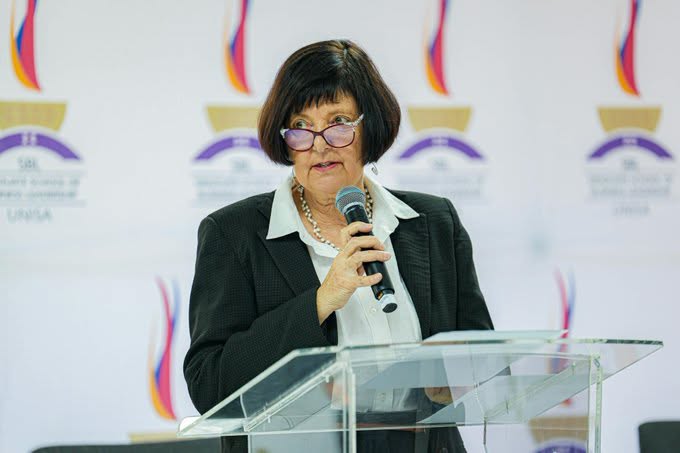
“This outcome from the United Nations’ specialised agency for international aviation safety and security affirms once again the strength and maturity of the country’s aviation safety oversight system,” said Creecy on Thursday, 1 October, in Midrand.
She was speaking at the launch of Transport Month, held under the theme “Building a safe, sustainable, reliable and affordable transport system”. This year marks 21 years since the inaugural Transport Month in October 2005.
Establishment of a Transport Digital Authority
To keep pace with rapid developments in digital technology and artificial intelligence, which are changing transport ecosystems and regulatory processes, the government will establish a Transport Digital Authority (TDT).
Immediate priorities include launching online registration for e-hailing vehicle owners and drivers from November this year, digitising Flight Operator Permits by December, and accelerating the implementation of a new online licensing system to clear renewal backlogs for taxi operators and support provincial regulatory authorities.
“Across the world, the rapid development of digital technology and artificial intelligence is changing transport ecosystems and regulatory processes.
“To catch up with the times, the Department of Transport and its entities have taken a decision to establish a TDT with the aim of developing an integrated digital transport platform for all online permitting services through one citizen interface,” said Creecy.
Investment in public infrastructure projects
Creecy outlined the South African National Roads Agency (SANRAL)’s investment in public infrastructure projects, highlighting their role as catalysts for job creation and economic development.
Through SANRAL, the government will undertake several large-scale projects to improve safety, shorten travel distances, create more than 35,000 job opportunities and support more than 2,000 small enterprises.
SANRAL projects connect communities. Major projects include:
- The upgrading of the 160km Moloto Road corridor linking Gauteng, Mpumalanga and Limpopo.
- Upgrades to the N2 at Piet Retief in Mpumalanga, improving links with northern KwaZulu-Natal and Richards Bay.
- Resurfacing, drainage improvements and road widening on the R52 from Koster to the N4 near Rustenburg in North West.
- A new northbound carriageway and upgrades to Section 16 of the N1 from Zandkraal to Scottland in the Free State, increasing capacity and reducing delays.
- Ongoing improvements to the N2 in the Eastern Cape.
- Improving flood resilience on the R37 and R40 between Mpumalanga and Limpopo through stabilised embankments, reinforced drainage and flood-resistant resurfacing.
SANRAL has committed more than R260 million to repairing and climate-proofing roads damaged in this year’s Mpumalanga floods.
“In response to recent court cases, SANRAL will end pre-selected panels for routine road-maintenance tenders and return to open, route-by-route tendering to widen participation and competition.
“Open tendering will be supported by procurement reforms, revised supply-chain procedures, updated committee terms of reference, and mandatory templates and checklists.
“SANRAL has strengthened governance by adding independent specialists to its Audit and Risk, Loss Control, and Road Infrastructure and Projects committees,” Creecy said.
ALSO READ: Cape Town Airport claims top spot in Africa for 11th consecutive year


