


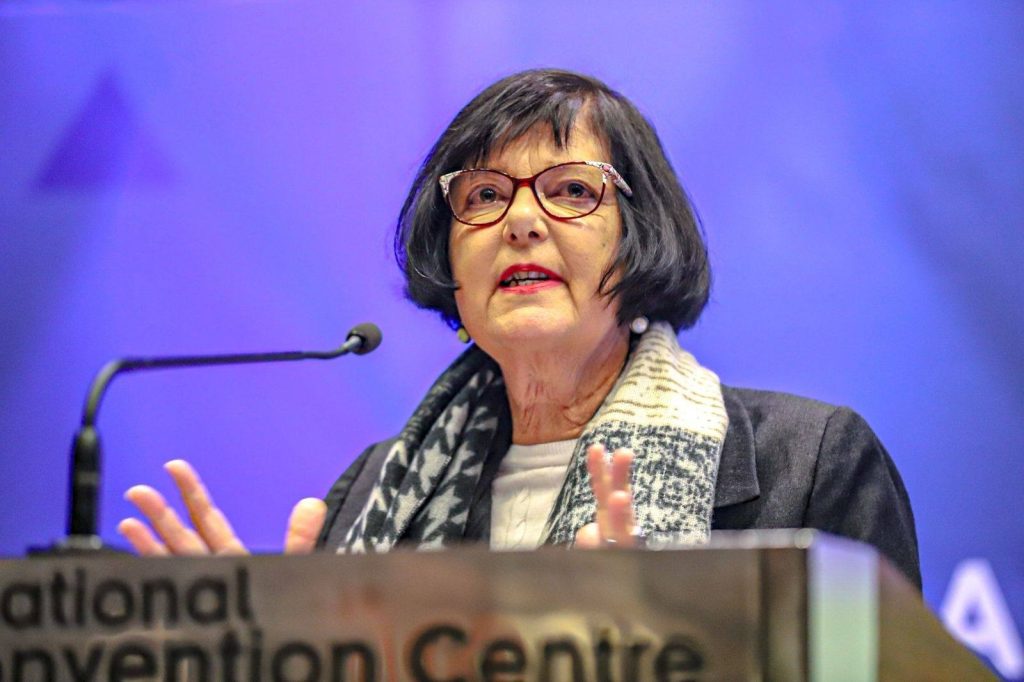
Minister of Transport Barbara Creecy announced a sweeping initiative to bring private-sector investment and innovation into South Africa’s passenger rail system, aiming to set rail as the cornerstone of the national transport and logistics system.
The announcement came during a media statement in Pretoria, where the minister unveiled a series of Requests for Information (RFIs) for potential private partners to modernise and grow the nation’s passenger rail infrastructure and services.
Setting a bold new target
Creecy acknowledged the significant progress made by passenger rail authority Prasa, which has successfully commissioned 35 out of 40 passenger corridors and achieved 77 million annual passenger journeys by May 2025. However, to sustain this recovery and achieve a new target of 600 million rail passenger journeys per annum by 2030, the rail network requires investment that the national budget cannot bear alone.
“Participation in the RFI process will assist the organisation to gather information, innovative ideas and solutions,” she said, “which will guide future Requests for Proposals for private sector investment in the passenger rail sector.”
Five key areas for private partnership
The RFIs are an invitation for the market to help “design the future of rail,” covering a broad spectrum of projects designed to improve efficiency, reliability and connectivity.
- Smart ticketing for seamless travel: The government is seeking partners to develop a “single, tap-and-go ticket” system usable across trains, buses, and taxis. This account-based system will replace paper tickets and queues, enhancing revenue management and ease of travel.
- Upgrading Prasa’s train depots: Private sector involvement is sought to modernise major maintenance depots at Braamfontein and Wolmerton. The goal is faster train repairs, better reliability and new investment that will create jobs and boost local development.
- Commercialising Prasa’s fibre-optic network: As Prasa rolls out thousands of kilometres of fibre for its new signalling system, it is inviting partners to commercialise the network by offering broadband and digital services. This dual-purpose strategy aims to generate income while strengthening safety and real-time communication.
- Introducing regional rapid trains: This ambitious project envisions a new generation of regional trains. The plans include using existing lines to connect cities like Pretoria, Johannesburg, Polokwane and Durban at up to 120 km/h, building new lines for speeds up to 200 km/h, and even “testing the water for a new 300 km/ high-speed railway between Johannesburg and Durban.
- Fleet management and manufacturing: The RFIs invite skilled private operators to lease and manage Prasa’s new blue trains and re-purpose the older yellow trains under clear performance standards. Furthermore, the government aims to position South Africa as Africa’s leading train builder, creating an export hub in line with the African Union’s resolution.
Freight rail progress and next steps
The minister also provided an update on the recently closed RFI for the rail and port freight logistics sector, a component of the broader Freight Logistics Roadmap. The initial phase, which closed on 30 May 2025, drew significant international interest, receiving 162 formal responses, with 52 respondents from 12 external countries.
“The rail and port freight RFI process is part of our broader Freight Logistics Roadmap, which seeks to restore efficiency, reliability and competitiveness in the movement of goods,” Creecy noted.
Following this, Transnet is scheduled to issue the first Request for Proposal (RFP) before the end of 2025, with three more RFPs planned for the first half of 2026.The Passenger Rail RFI is now open online from 26 October 2025, to 15 December 2025, and is accessible on the Department of Transport and DBSA websites, or directly at www.psp-rfi.co.za.
The minister concluded with a clear message: “These RFIs are not tenders; they are an invitation for the market to help us design the future of rail… Together, we can rebuild confidence in public transport, open up investment opportunities and connect South Africans to the growth we all deserve.”




You must be logged in to post a comment.