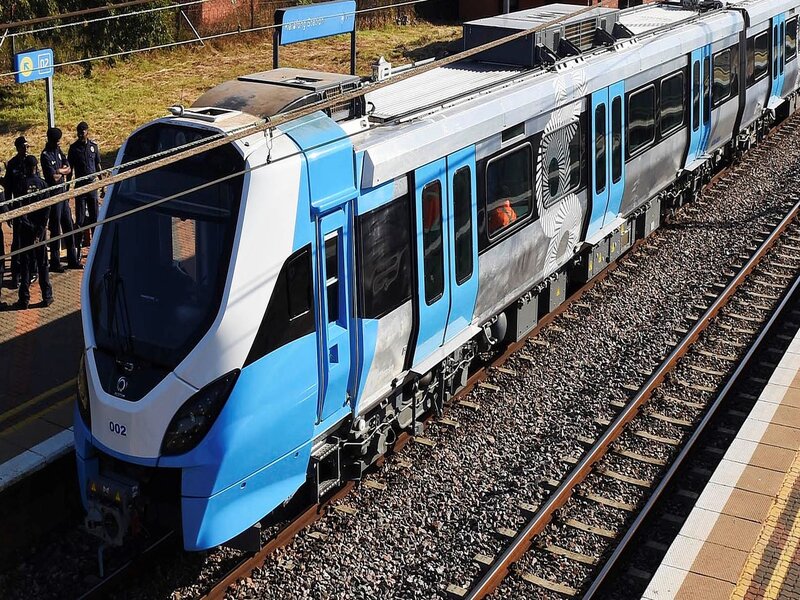


Cape Town Mayor Geordin Hill-Lewis has welcomed renewed rail devolution commitments in the draft National Rail Master Plan released for public comment by Transport Minister Barbara Creecy.
Deadlines
He also calls for clear deadlines on such devolution, given the urgent need for affordable, integrated public transport for residents, especially lower-income households.
The Master Plan reaffirms “the future devolution of urban rail to municipalities, guided by a National Devolution Strategy” as an important development in national rail policy (section 3.10). There are also plans for a national Rail Planning Unit to oversee the devolution (section 13.4).
The plan further praises Cape Town’s proactive station-precinct planning, an “aspect [that] needs to be driven by the metros and local authorities working with [the rail agency] Prasa as is now done by Cape Town.”
This is part of the metro’s long-term vision for upgraded station precincts, including affordable housing, over the next two decades.
Finalise devolution strategy
“We welcome government’s renewed commitment to rail devolution in this National Master Plan. The next crucial step is for Minister Creecy to finalise the draft National Rail Bill and Devolution Strategy as soon as possible. The draft Master Plan is silent on devolution time frames, and our City’s submission will call for clear and urgent deadlines. Cape Town stands ready to be the first metro to run its local trains, and we are encouraged that the Master Plan acknowledges our City’s Rail Business Plan and proactive planning.
“In time we want to see Capetonians using just one ticket to hop from train to MyCiti bus and other forms of public transport. Only capable metros can deliver a safe, reliable and affordable one-ticket system in line with our constitutional mandate for integrated public transport.”
Research
The National Master Plan cites research from Cape Town’s Rail Business Plan, which found that lower-income households would save an estimated R932m a year if trains were working as they should in a devolved, integrated transport system. City feasibility studies into a viable devolution handover found that Prasa and national government first needed to restore Cape Town’s rail network operations to 620 000 daily passenger trips, which existed prior to the steady collapse of rail over the last decade.
“The City’s Rail Business Plan explored nine devolution scenarios, identifying the three most viable options,” said Mayco member for Urban Mobility Rob Quintas. “All viable options involve the devolution of rail services, associated assets and infrastructure to the City with the participation of the private sector operating services on a contractual or comprehensive concession basis. The Business Plan also rules out less viable devolution scenarios where infrastructure remains owned and managed by Prasa, and where the City operates the rail service rather than the private sector.
Funding
“Crucially, the plan concludes that devolution is possible only with funding from the national fiscus, with no room within the rates base of the City to cross-subsidise rail. The City also needs to have authority over fare setting, access to long-term national grant funding and to generate local revenue through public-private partnerships and commercialisation. This is in line with the City’s constitutional mandate for integrated transport planning across different public-transport modes.”
Under the Cape Town Long-Term Plan, which sets out the City’s overall strategic goals until 2050, 75% of passenger trips are to be made with public transport, with rail as the backbone of an integrated system under City control.
READ ALSO: Cape Town’s congestion crisis: Transport expert warns of ‘complete failure’