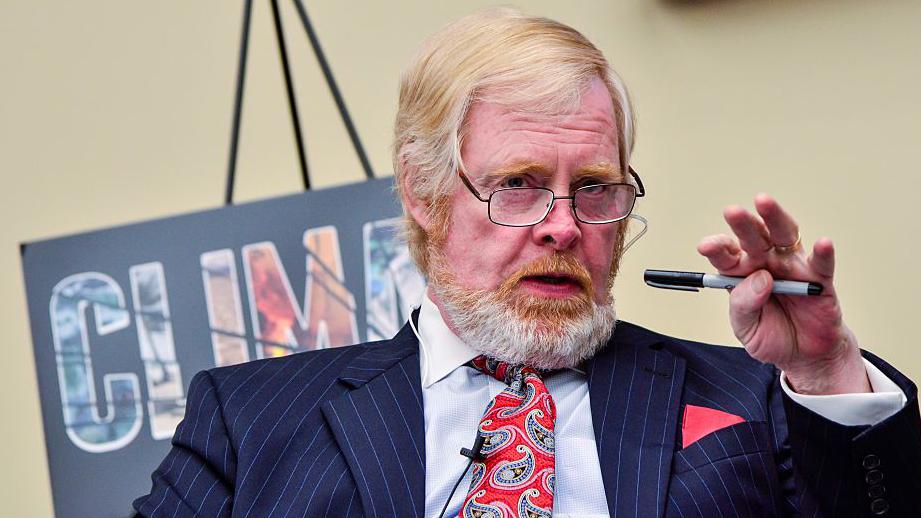
South Africa’s foreign ministry has summoned US Ambassador L. Brent Bozell III to explain what it called his “undiplomatic conduct,” marking the third such reprimand since the conservative envoy took up his post nine months ago – a record for any US ambassador to the country.
A senior official at the Department of International Relations and Cooperation (Dirco) confirmed the démarche was delivered on Tuesday following a series of interviews Bozell gave to South African media in which he sharply criticised the government’s handling of bilateral demands from Washington. “He was called in to explain his undiplomatic conduct,” the official said. “It was the third démarche since he started his duties nine months ago. This is a record.”
The official did not specify which remarks prompted the latest reprimand, but South African media reported that Bozell had in recent interviews lambasted Pretoria’s response to US demands on rural safety, investment security and broader strategic issues. He reportedly expressed “disappointment” in President Cyril Ramaphosa’s handling of relations, saying Washington had “run out of patience.”
Despite the escalating friction, the official said differences between the two nations remain “a subject of ongoing discussions” and that “there is commitment from both sides to resolve the outstanding matters.”
A troubled posting from the start
Bozell (70), a conservative activist, syndicated columnist and longtime ally of President Donald Trump, was confirmed as ambassador on 18 December 2025 and arrived in Pretoria in February. Within weeks – on 11 March – he was summoned for the first time after telling a business conference in Hermanus that the apartheid-era liberation chant “Kill the Boer, kill the farmer” constituted hate speech, adding: “I don’t care what your courts say.” A South African court had previously ruled the chant was not hate speech. Bozell also compared the country’s Black Economic Empowerment policies to apartheid-era racial discrimination, prompting Foreign Minister Ronald Lamola to reject the analogy as “regrettably insinuated” and to declare the policies “not reverse racism.”
Bozell partially walked back his remarks the following day, posting on social media platform X that while the chant was his “personal view” of hate speech, “the US government respects the independence and findings of South Africa’s judiciary.” Dirco director-general Zane Dangor said Bozell had expressed regret that his comments detracted from constructive engagement.
A second démarche followed in subsequent months and now a third – each one deepening the fissure between Pretoria and Washington.
ALSO READ: South Africa accepts controversial US ambassador amid strained relations
Deep-rooted bilateral strains
The ICJ genocide case
In December 2023, South Africa filed a case at the International Court of Justice accusing Israel – a key US ally – of genocide against Palestinians in Gaza. The Biden administration called the suit “meritless,” and the case became a flashpoint when Trump returned to office, explicitly citing it as grounds for punishing South Africa. Pretoria has refused to withdraw the case, with Lamola telling parliament in April 2025 that it “will continue until the court makes a finding.”
Aid cuts and executive orders
On 7 February 2025, Trump signed Executive Order 14204, halting all US foreign assistance to South Africa – which totalled roughly $440 million (about R7.2 billion) in 2023 – and citing disapproval of both the land reform policy and the ICJ case. The order also directed the secretaries of state and homeland security to prioritise refugee resettlement for Afrikaners claiming to be victims of “unjust racial discrimination.”
Land reform and Black Economic Empowerment
South Africa’s Expropriation Act, signed into law in 2025, permits state expropriation of private land without compensation in limited circumstances, as part of efforts to redress the legacy of apartheid-era land dispossession. Roughly 72% of privately held agricultural land remained in white hands as of 2015, despite white South Africans comprising about 7% of the population. Trump has characterised these policies as “egregious actions” amounting to racial discrimination, while Pretoria insists they are necessary instruments of restorative justice.
Visa restrictions
On 16 September, Washington announced restrictions on US visas for South Africans who “promote race-based discrimination, incite violence, or enable land confiscation without compensation” – issues directly contested between the two governments.
Diplomatic expulsions and Oval Office clash
Bilateral ties nosedived after Trump took office. He expelled South Africa’s previous ambassador to Washington, cut aid and berated President Ramaphosa in the Oval Office over discredited claims of a “white genocide” targeting Afrikaner farmers. The US also launched a special refugee programme to admit thousands of white South Africans who claim persecution – a programme Pretoria has dismissed as based on fabricated narratives.
A long and complicated history
The current rupture is the most severe in a relationship that has long oscillated between cooperation and tension. During the apartheid era, US policy was divided: the Reagan administration pursued “Constructive Engagement,” maintaining ties with the apartheid government as a Cold War ally while facing domestic pressure to impose sanctions. Congress ultimately overrode Reagan’s veto to pass the Comprehensive Anti-Apartheid Act of 1986.
ALSO READ: South Africa slams Trump’s G20 2026 ban as ‘punitive’ retaliation
The African National Congress (ANC), now South Africa’s ruling party, was classified as a terrorist organisation by the US during the Cold War and its leader Nelson Mandela remained on a US terrorism watchlist until 2008 – 14 years after he became South Africa’s first post-apartheid president.
Since the end of apartheid in 1994, relations have generally been cordial but punctuated by disagreements over foreign policy. South Africa’s close ties with Russia, China and Iran, its leadership in the Brics bloc, and its consistently pro-Palestinian stance have repeatedly put it at odds with Washington. The accession of Trump – whose America First posture has amplified each of these points of friction – has pushed the relationship to its lowest point since the democratic transition.
Whether the third démarche of Bozell’s tenure marks a new low or a prelude to resolution remains to be seen. Both sides say they remain committed to dialogue. But with a record number of formal reprimands in just nine months, the trajectory of the Pretoria-Washington relationship appears to be heading in the wrong direction.
ALSO READ: South Africa rejects US visa restrictions over racial equity policies