
In most instances, translating may simply be about switching words from one language to another, but where sacred texts are concerned this becomes far more complex.
Accuracy
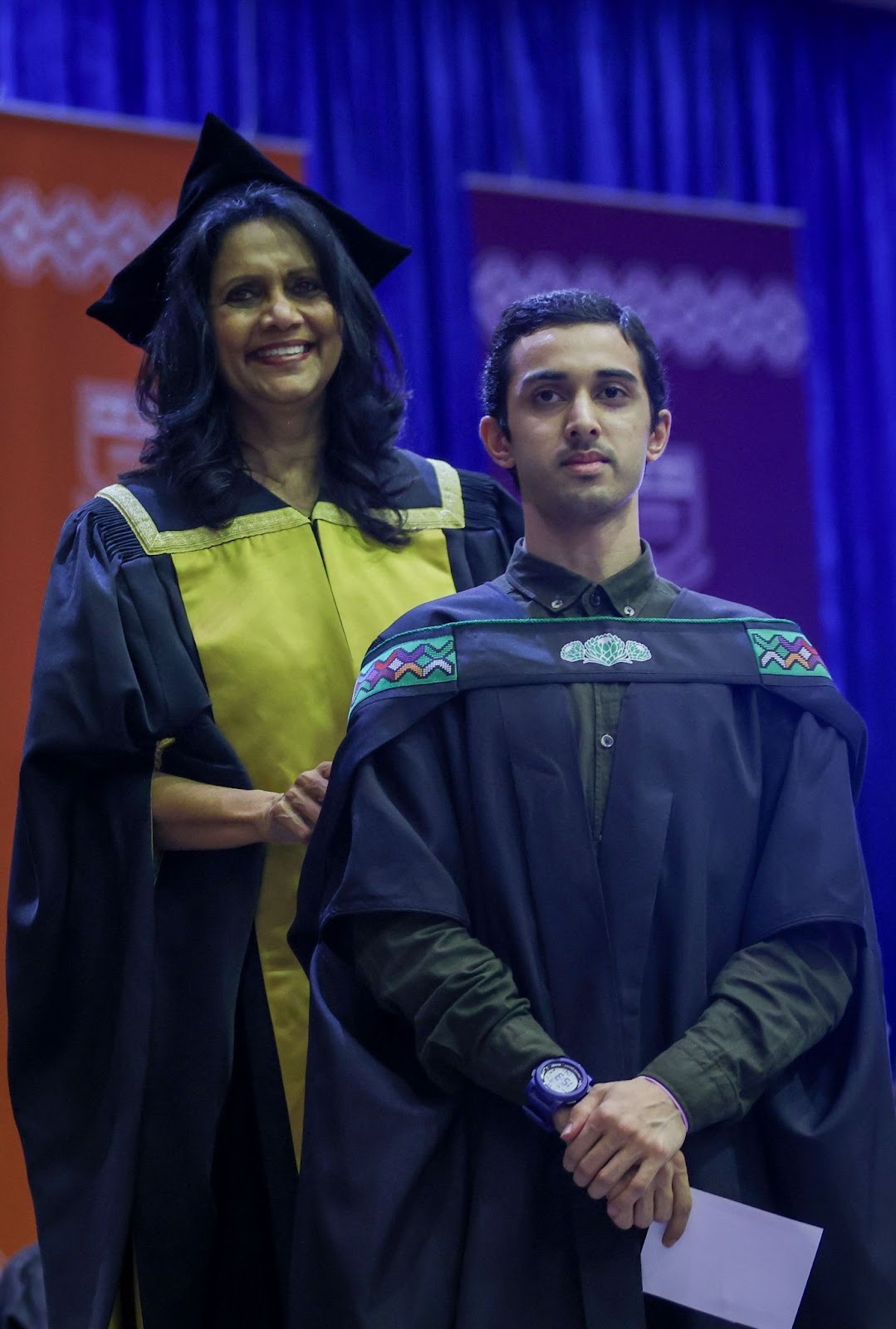
At the University of the Western Cape (UWC), newly-completed postgraduate research has examined what it really means to translate Islamic texts from Arabic into English with accuracy, sensitivity and care. For his master of arts in foreign languages at UWC’s Faculty of Arts and Humanities Muzzammil Ahmad Farooki, who has just graduated, examined the linguistic, cultural and religious challenges faced by translators working across these two languages. His research was supervised by Prof Tawffeek Mohammed, with Dr Mustapha Saidi as co-supervisor.
In his thesis Farooki emphasised the demanding nature of this work, noting that “translating Islamic texts and genres, including litanies, supplications and poetry is undoubtedly a rigorous task.” He explained this difficulty stemmed not only from language differences but from the sacred and ideological weight of the texts themselves, many of which are derived directly from the Qur’ān.
The study analysed a diverse corpus of Islamic texts, including devotional writings, Qur’ānic exegesis (tafsīr), prophetic traditions (ḥadīth), sermons, Islamic literature, legal documents and economic and media texts. Using a qualitative, corpus-based methodology, the research assessed both the translation product and process, drawing on theories of equivalence, text linguistics and cognitive translation studies.
Central argument
A central argument of the thesis is that translators cannot rely on a single method when rendering Islamic texts. As Farooki stated: “For the source text to be rendered in the target text successfully the translator must not only be restricted to the use of a single translation strategy, but rather to skilfully employ various translation strategies in a balanced manner so that equivalence may be achieved.”
The research also demonstrated that translation challenges extend beyond grammar and vocabulary. Farooki highlighted that “the underlying dimensions are not only lexicogrammatical, but also ideological, cultural, and religious.” This complexity requires translators to make careful decisions about when to preserve cultural specificity and when to adapt texts for clarity and comprehension.
By combining textual analysis with process-oriented tools that capture pauses, revisions and decision making during translation the thesis offers valuable practical insights for scholars and language practitioners.
The study makes a meaningful contribution to translation studies and Arabic-Islamic studies, underscoring UWC’s commitment to research that bridges languages, cultures and faith traditions through rigorous, context-aware scholarship.
READ ALSO: Research Examines Urban Food Waste And Inequality In Cape Town