

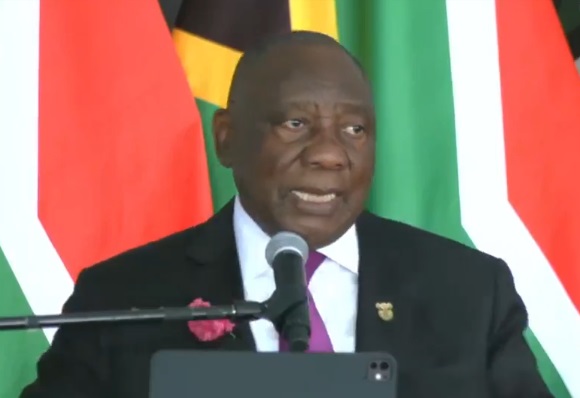
PRETORIA – President Cyril Ramaphosa delivered his keynote address at the Union Buildings in Pretoria on National Women’s Day, Sunday 9 August, marking 70 years since the historic 1956 women’s march.
He vowed to step up the fight against gender-based violence and economic inequality.
The president stood on the very grounds where at least 20 000 women gathered on 9 August 1956 to oppose the apartheid government’s extension of pass laws to women, delivering their petitions to a prime minister who chose not to receive them.
“Prime Minister JG Strijdom chose not to receive them, did not even meet them. He literally ran away as he saw them coming. I have not run away, I am here,” Ramaphosa said.
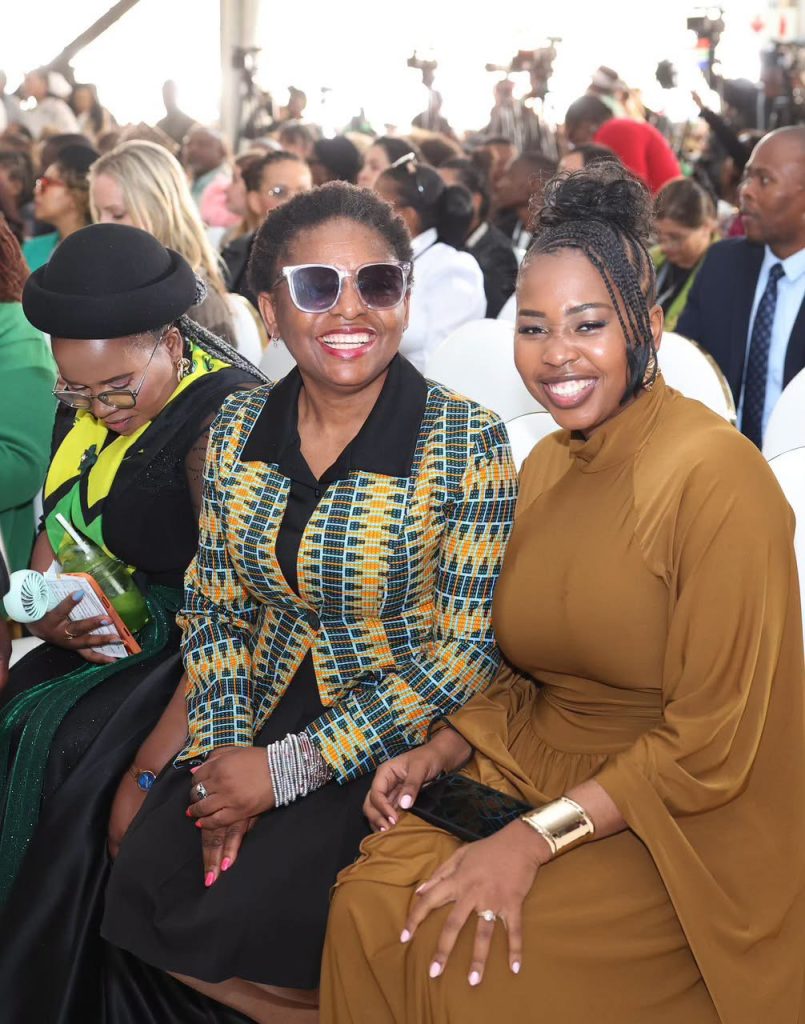
He paid tribute to the leaders of the 1956 march, Lilian Ngoyi, Helen Joseph, Rahima Moosa and Sophia Williams-De Bruyn, noting that Williams-De Bruyn, who was just 18 at the time, was present at the commemoration.
“Their 30 minutes of silence was not an act of submission. It was an act of courage. That silence was louder than any command that could have been issued by the apartheid state,” the president said.
GBV declared a national disaster
Ramaphosa reiterated that the South African government has classified gender-based violence and femicide as a national disaster, a move he said would ensure all resources and capabilities of the state are deployed to end these crimes.
“Classifying gender-based violence and femicide as a national disaster means that we will deploy more resources, means that government departments must come on board focused on fighting gender-based violence. This we shall do without fail,” he said.
He called on men and boys to be part of the solution through the “Not in My Name” movement, saying men must step forward and declare they will not lift a hand against any woman.
“There is no justification whatsoever for sexual harassment, for physical or mental abuse, for rape or for murder. Not how women dress, how they behave. Violence against women and children is not a private matter. It is a crime,” Ramaphosa said.
Economic empowerment promises
The president acknowledged that women make up more than half the population but do not yet hold an equal share of the country’s wealth, land or enterprises. He said too many women are without work or paid less than men for doing the same work.
He outlined several commitments, including opening public procurement to women-owned businesses so that government spends more money empowering women, drawing women-owned businesses into the supply chain of major industries, widening access to finance and credit, and ensuring women hold title to the land they work on.
“It has given me great joy to go around the country handing out title deeds to women, something that did not happen in the past,” Ramaphosa said.
He highlighted that more women than men are now enrolled in universities and colleges, and said government wants to see more young women entering engineering, science and technology fields that were once closed to them.
Healthcare for women
Ramaphosa said this year’s commemoration places particular emphasis on women’s access to quality healthcare, which he described as fundamental to dignity.
He committed to ensuring pregnancy and childbirth are dignified, improving access to family planning and reproductive health, and bringing healthcare closer to women in rural areas, on farms and in villages.
“A healthy woman, who is educated and who is economically independent, is better able to determine the course of her own life. By investing in women’s health, we are investing in the productivity and growth of our economy as well,” he said.
The president also expressed solidarity with women beyond South Africa’s borders, noting the presence of Nobel laureate Malala Yousafzai at the event and pledging continued support for women in Gaza and Sudan who are victims of war.
This year’s National Women’s Day commemoration takes place under the theme “Empowered Women, Empower Nations”.



You must be logged in to post a comment.