

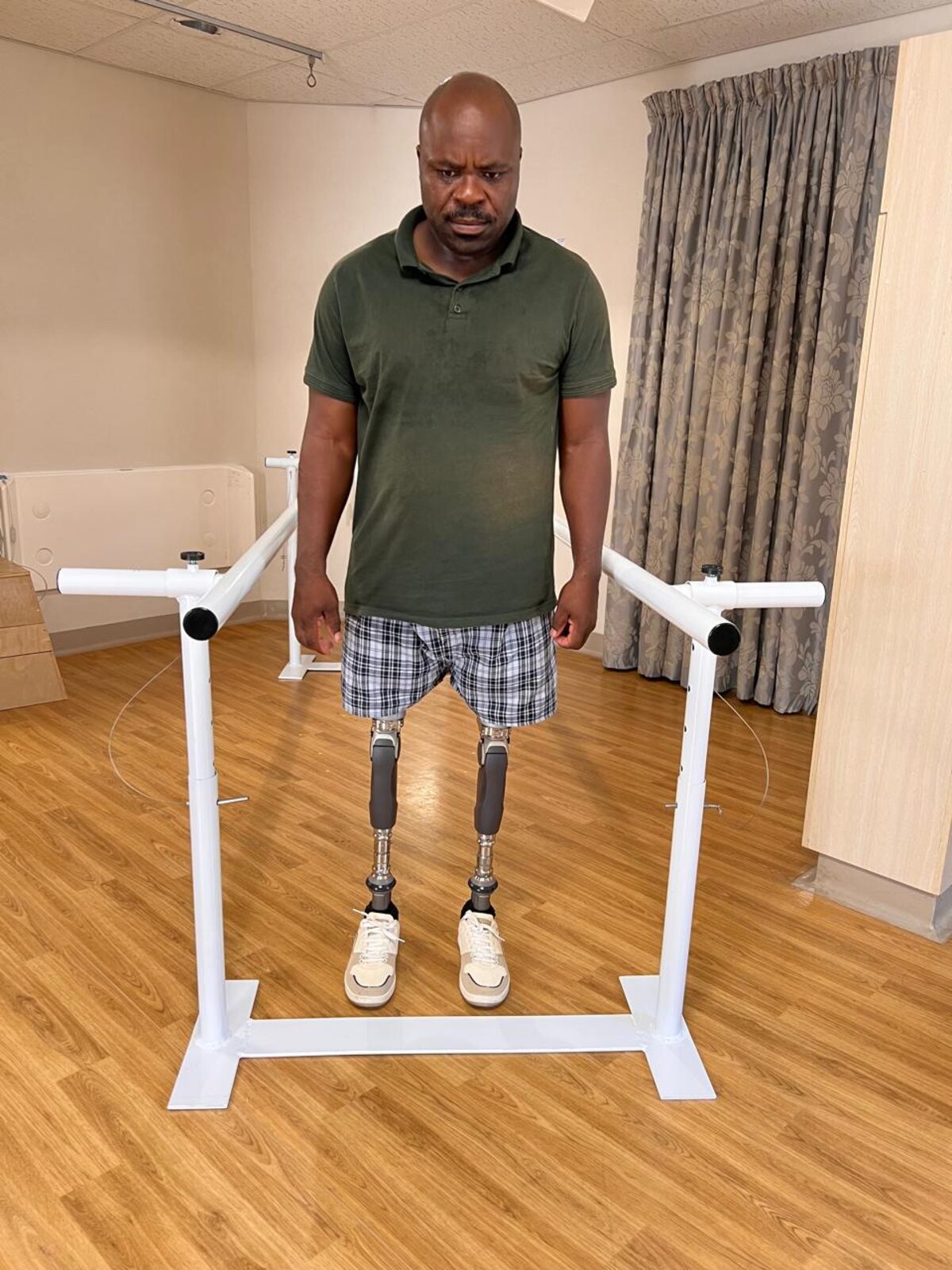
For Tashinga Skipa, a 46-year-old resident of Strand, walking without crutches is about far more than a medical milestone. It is a return to independence, dignity and the everyday freedoms that a devastating road accident stripped away from him seven years ago.
Following a high-impact motor vehicle collision in 2018, Skipa sustained severe injuries to both legs. Despite multiple attempts to save his limbs, the extent of the damage and compromised blood supply left surgeons with no option but to amputate both legs above the knee.
He was subsequently fitted with conventional socket-based prosthetic limbs, but for someone living with bilateral above-knee amputations, the physical demands were immense. Despite considerable determination and extensive rehabilitation, Skipa remained dependent on two crutches and required assistance with many routine daily activities.
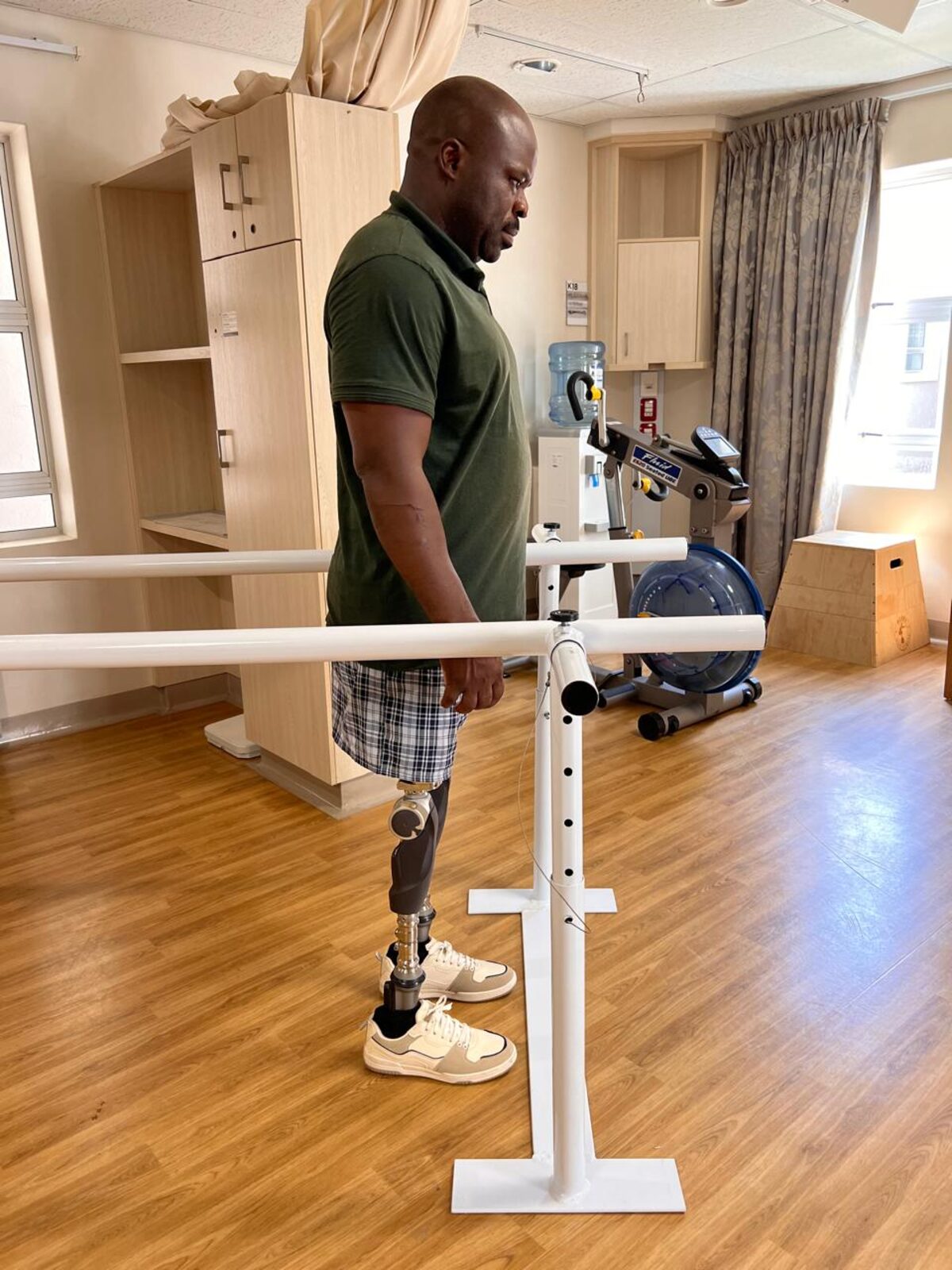
That has now changed. Following a pioneering bilateral osseointegration procedure at Tygerberg Hospital, Skipa is walking independently, without crutches, for the first time since his accident.
What is osseointegration?
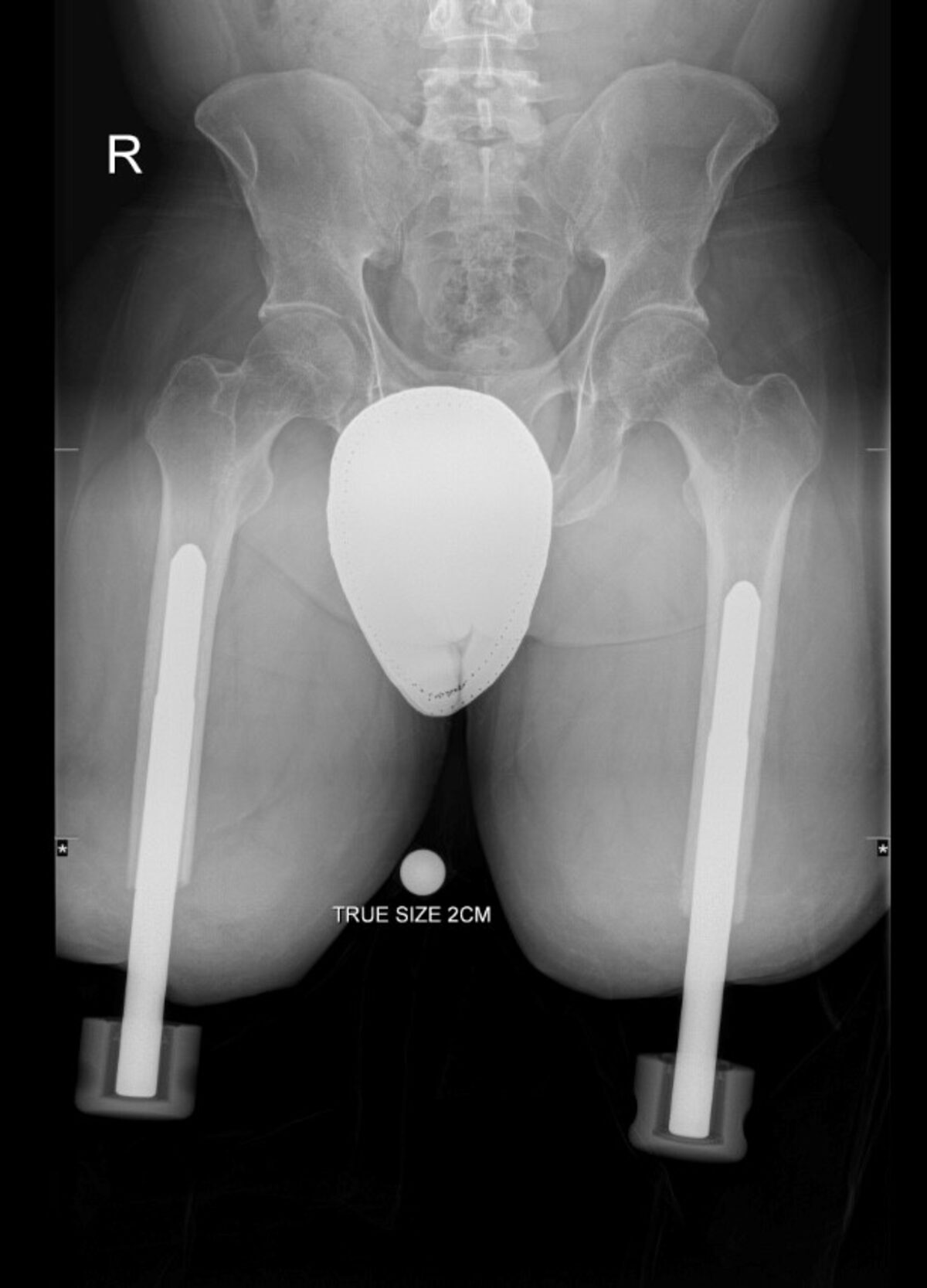
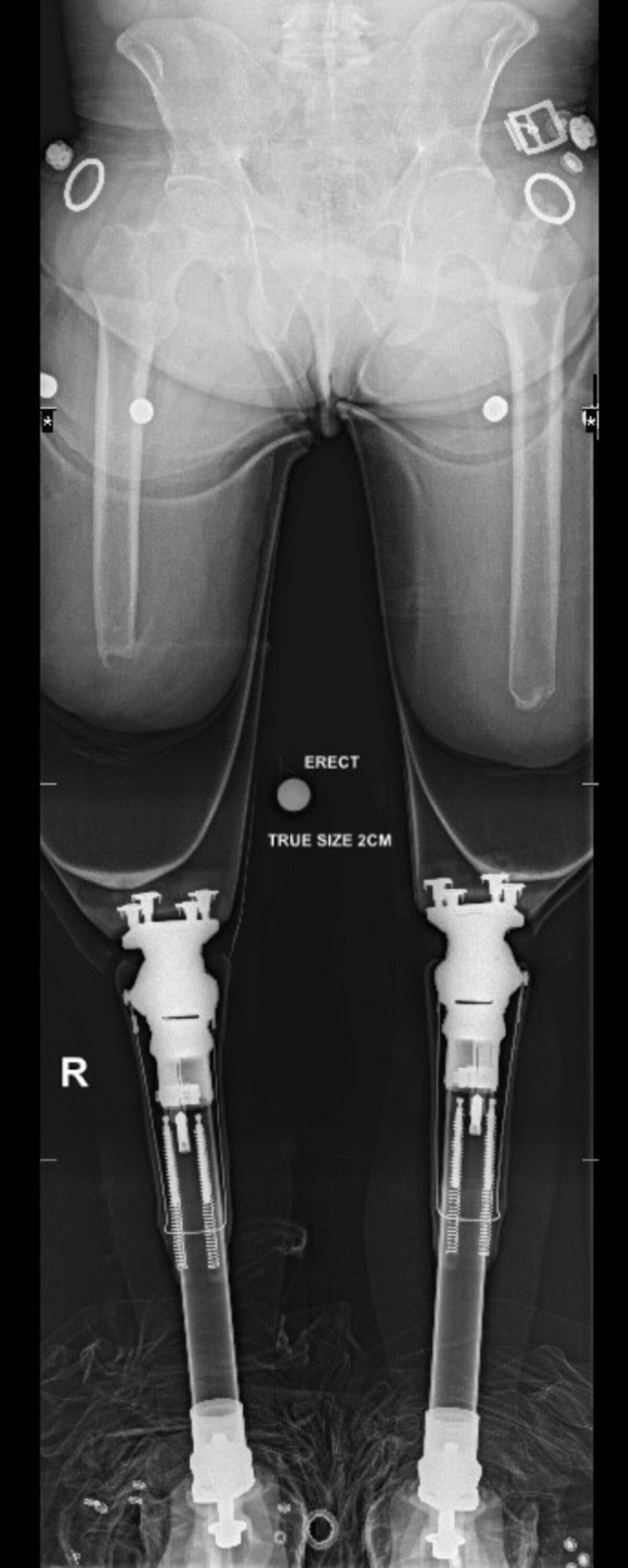
Osseointegration is an advanced surgical technique in which a titanium implant is anchored directly into the femur, allowing a prosthetic limb to attach to the skeleton rather than through a conventional socket system. The approach can significantly improve balance, reduce the energy required for walking,and eliminate the discomfort that socket-based systems often cause.
In Skipa’s case, surgeons performed the procedure on both legs simultaneously – implanting custom-designed, single-unit osseointegrated titanium stems into each femur in a single operation. The procedure required meticulous planning, precise alignment and close collaboration between surgical teams, with additional mentorship support provided by an international team from Erasmus University Medical Center in the Netherlands.
The surgery was performed at Tygerberg Hospital by Dr Franz Birkholtz, an orthopaedic limb reconstruction specialist at Mediclinic Winelands Orthopaedic Hospital and the Institute of Orthopaedics and Rheumatology, and Professor Nando Ferreira, head of the Limb Reconstruction Unit in the Division of Orthopaedic Surgery at Stellenbosch University (SU) and Tygerberg Hospital. The procedure was successfully completed and Skipa’s post-operative recovery was described as uneventful.
A landmark in medical history
The case represents a significant milestone in the development of osseointegration in South Africa. Ferreira previously performed the country’s first osseointegration procedure, while Birkholtz subsequently established SA’s first dedicated osseointegration service – Team Osseo Stellies, also known as the Stellenbosch Osseointegration Centre – which has since evolved into a structured, multidisciplinary service with defined clinical pathways and a comprehensive rehabilitation programme.
Skipa was referred from Mediclinic Stellenbosch to Tygerberg Hospital as part of a collaborative limb reconstruction and rehabilitation programme involving Tygerberg Hospital, SU, and the Institute of Orthopaedics and Rheumatology. The Western Cape Department of Health and Wellness supports such partnerships to expand access to highly specialised care for public sector patients.
“Partnerships such as this allow us to responsibly expand access to highly specialised procedures within the public health system, while ensuring strong clinical governance and careful patient selection,” said Ferreira.
Rehabilitation and recovery
Following discharge, Skipa entered a structured rehabilitation programme led by Birkholtz and the multidisciplinary Team Osseo Stellies at the Institute of Orthopaedics and Rheumatology. The programme includes progressive loading, advanced gait training and functional conditioning, with a focus on restoring confidence, mobility and independence alongside physical recovery.
“Access to a structured rehabilitation pathway is essential to achieving good outcomes in these complex cases,” said Birkholtz. “This case demonstrates what can be achieved when expertise is shared across sectors in a structured and responsible manner.”
Skipa himself expressed deep appreciation for the public and private healthcare teams involved in his care, saying the procedure had made a profound difference to his daily life.
For a man who once needed two crutches simply to move through his own home, the ability to walk freely and independently is, in his own words, a restoration of dignity – and proof of what collaboration across SA’s public, private, academic and rehabilitation sectors can achieve.


You must be logged in to post a comment.