
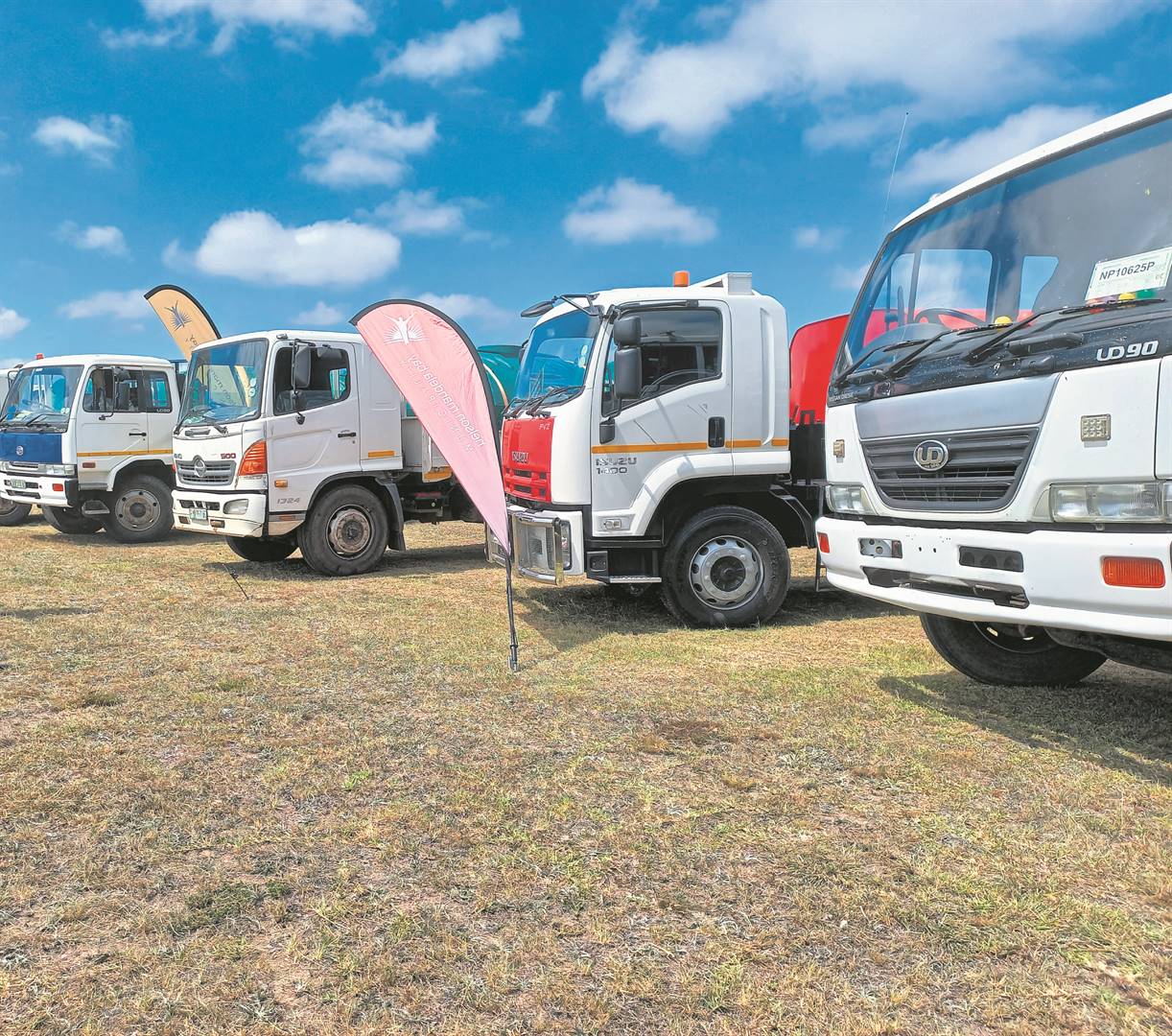
WITH approximately 175 days of water left for Nelson Mandela Bay, unless there is sufficient rainfall, the municipality has once again increased efforts to mitigate the drought by securing an additional 20 water tankers for the metro.
This is due to the inter-governmental collaboration between the municipality, the Department of Water and Sanitation and the Amatola Water Board.
The trucks will be used to augment water supply resources as communities continue to experience water cuts due to the drought. The 20 water tankers will be added to the existing fleet of the metro’s 23 water trucks that are already on the ground, delivering water to affected areas.
During the launch of the arrival of the water tankers at the Linton Grange Treatment Works recently, Eastern Cape head of Department of Water and Sanitation, Portia Makhanya, inspected each water tanker to ensure that they complied with the terms and conditions to make them roadworthy.
Makhanya emphasised that the metro’s Central Business District and western side is most affected by the water crisis, and even if the metro has a reliable source from the eastern side of the metro, the western side is in trouble. This is because the eastern side of the metro is supplied by a reliable water source, the Orange-Fish River System. The western side, however, relies heavily on local sources.
She said that with the metro’s population and the water being produced daily, it should be enough, but demand is still too high and a major red flag is excessive water leaks, which is non-revenue water and actual losses.
“We know that there have been some efforts made in that regard but it is still a challenge that the metro is dealing with. The current challenge is that when it comes to moving water across the city to the areas most affected, there is a need for upgrading pump stations and pipelines, but we are running out of water while those processes are unfolding,” she said.
“We are running out of water from our local sources and we cannot allow those systems to collapse and completely fail, and that is why there has been an erection of emergency collection points so that we can stretch the little bit of resources that are there,” she added.
“We know that not everyone can reach the collection points, so rainwater tanks will be installed across affected areas, hence we have the additional 20 water tankers. Through the intervention of Water and Sanitation Minister, Senzo Mchunu, we have appointed Amatola Water Board to procure the 20 tankers as a support to the metro. The tankers will then fill those rainwater tanks at those strategic points.”
Nelson Mandela Bay deputy mayor, Mkhuseli Jack, said that these tankers are a visible reminder of the dire situation in which the metro finds itself and will also serve as a reassuring sight to communities that the government is committed and working together to provide them with a sustainable water supply.
“If we don’t reduce our consumption, this could soon be our norm. I request members of the public who will, or are being served by water tankers, to be patient.
“When queueing, abide by the rules and use our precious commodity, water, with respect,” he said.
The municipality is once again reminding consumers to boil tap water before ingestion.
With the addition of unblended groundwater into the metro’s reticulation system, low dam levels and fluctuating reservoir levels, the quality of the water is constantly changing and cannot be 100% guaranteed.
Through a system of blending water from different water sources, a blending ratio is used to meet SANS241:2015 water quality standards.
Due to the current decline of the water supply sources such as the Churchill Dam that is currently vulnerable and unstable, and has dropped below abstraction rates, it has resulted in the blending ratio not being met and therefore the water needs to be boiled as a precautionary measure.
Residents are urged to adopt water saving systems including the following:
. No baths. Shower where possible or use a basin.
. Showers should last two minutes.
. Adults can use the same water as small children to wash before, or after, them.
. Place a cistern brick or two litre bottle in your toilet tank.