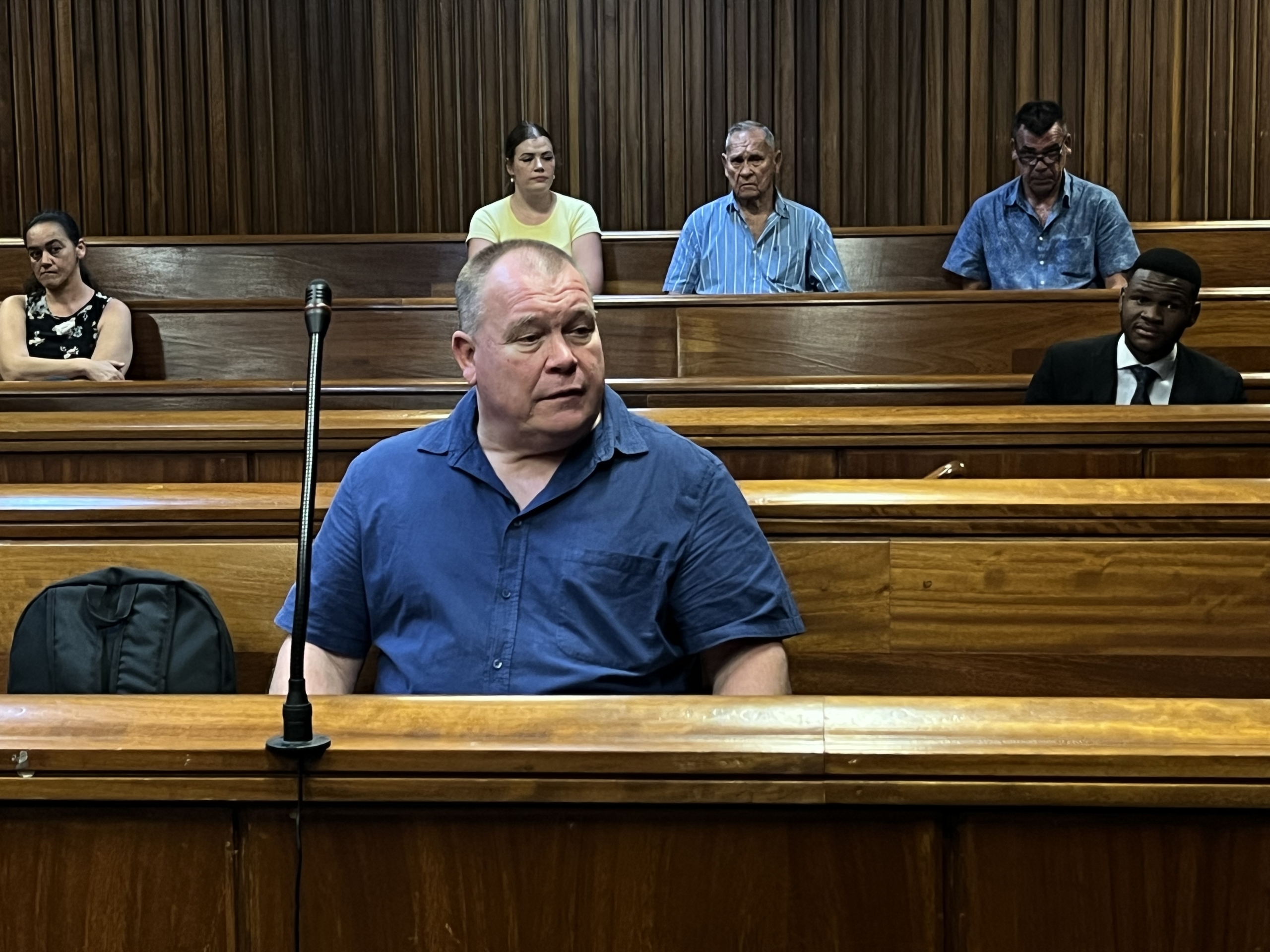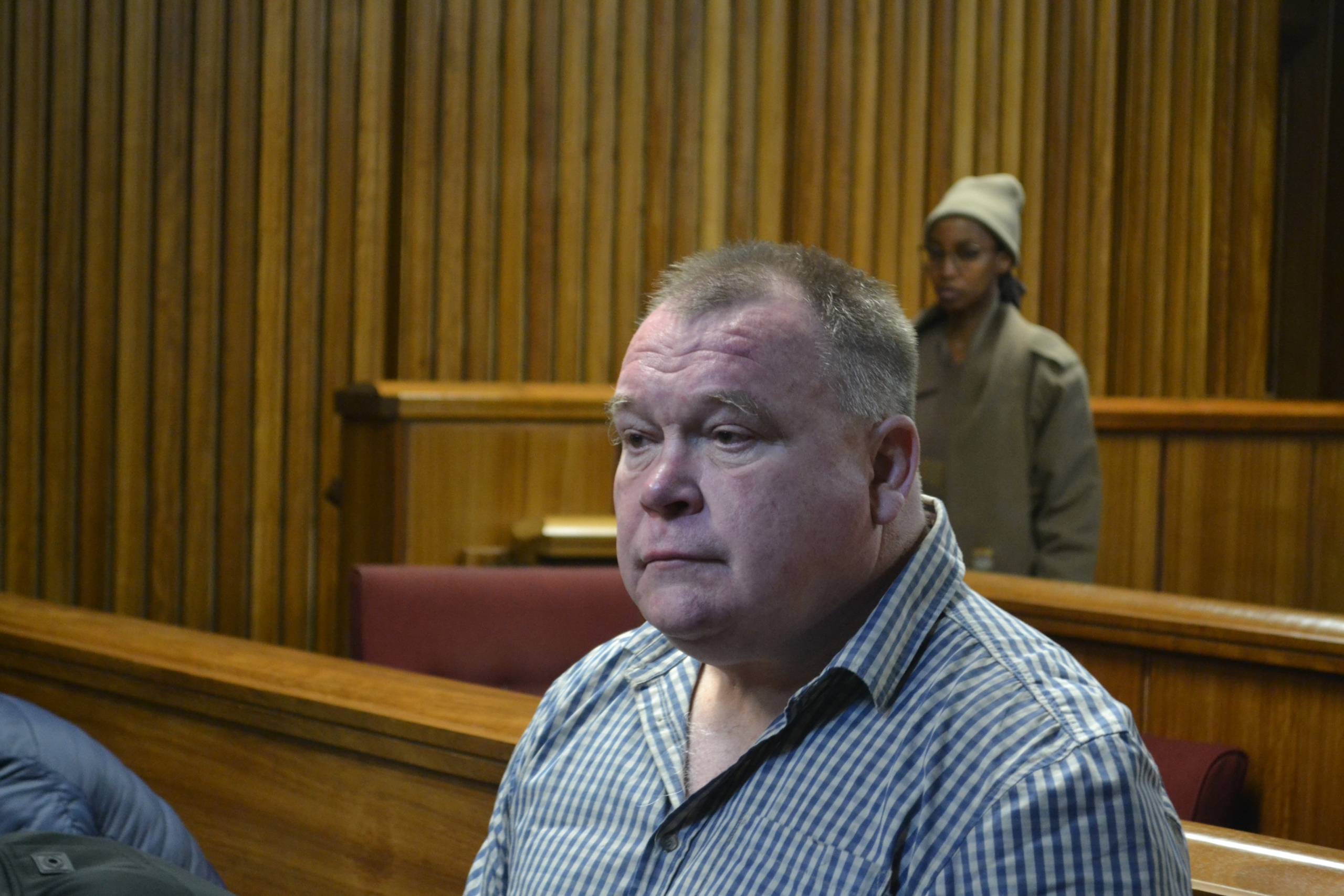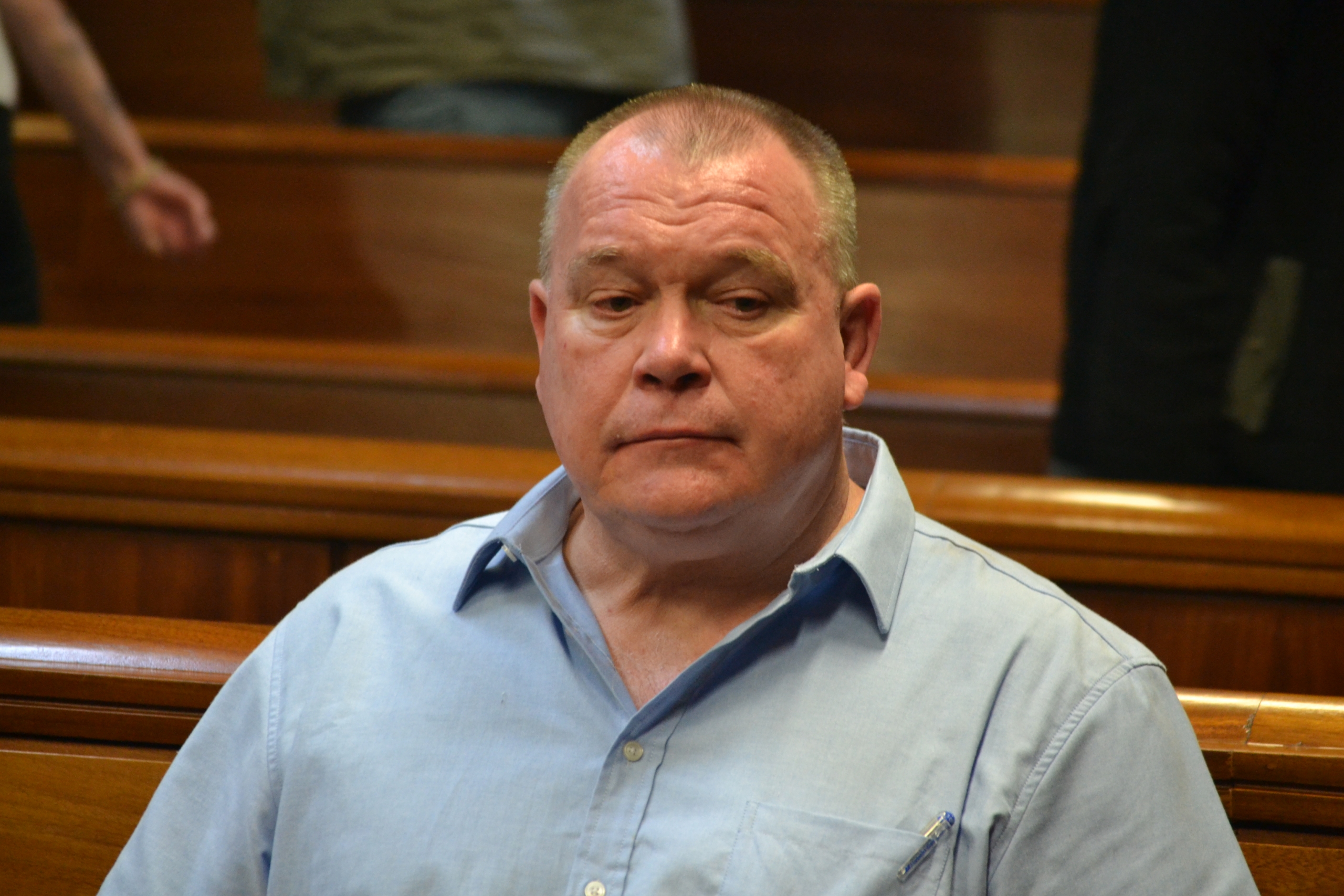

GQEBERHA – The State has placed a provision of the Criminal Law Amendment Act 1 of 1988 on record during the trial of Rob Evans, as the Gqeberha High Court heard further testimony from the investigating officer about his observations at the scene where Vanessa van Rensburg was found dead.
The provision, which deals with offences committed by people whose mental faculties are impaired by the consumption of substances, was raised as the defence continued its cross-examination of Captain Xolile Kato, the investigating officer in the matter.
Section 1(1) of the Act provides for criminal liability where a person knowingly consumes a substance that impairs their ability to appreciate the wrongfulness of their actions, or to act in accordance with that appreciation, and commits an act prohibited by law while in that state. It also creates a separate offence where the person is not criminally liable for the underlying act because of the impairment.
The State’s decision to place the provision on record comes after the court heard that Evans previously told police he was too intoxicated to remember certain details surrounding the events leading to van Rensburg’s death.
Express previously reported that Gqeberha businessman Robert “Rob” Evans (59) was arrested at his business premises in Newton Park on 9 May 2025, in connection with the alleged murder of his girlfriend, Vanessa van Rensburg (36). Her body was found at his holiday home in Oyster Bay on 20 April 2025. Evans is standing trial on charges of premeditated murder, attempted murder, kidnapping and defeating or obstructing the ends of justice.
The State alleges that van Rensburg was killed after being struck with a bottle or another blunt object and/or strangled, and that Evans subsequently disturbed the crime scene, delayed seeking medical assistance and provided false information about her death.
Defence probes investigating officer’s observations
Kato, who was the duty officer and a management member standing in for the station commander at the time, testified that he received a telephone call shortly after 03:00 and arrived at the property at approximately 04:15.
He said Constable Sibeko was the first SAPS responder and had informed him that someone had died. According to Kato, the first responders were outside the yard when he arrived, while Sibeko and Evans were the only people inside the house. He also testified that there was no ambulance at the scene.
During cross-examination by defence counsel Paul Roelofse, Kato was asked to explain the sequence of events after his arrival and detail the observations he made during his initial investigation.
He said he first examined the body, explaining that when someone is found dead without an immediate explanation, investigators examine it for indications of what crime may have been committed. Kato testified that van Rensburg was properly dressed and still had her necklace and bracelet on. He believed she was also wearing a ring. He recalled seeing a scar on her chin and marks on the lower part of her neck.
Roelofse repeatedly questioned him about the appearance, colour and precise positioning of the marks, seeking a more detailed description. Kato said he could not establish their exact colour but maintained that they were darker than her skin. The defence pressed him for a clearer explanation of what he had observed.
Kato also testified that he noticed bloodstains on van Rensburg’s shirt. After lifting the shirt during his initial inspection, he saw what he initially believed could be bite marks around her chest and shoulder area.
Broken glass and the J&B bottle
The court also heard further evidence about broken glass scattered throughout the property. Kato maintained that he had observed glass shards in several areas, including the kitchen, dining area and toilet near the braai area.
He said he followed the trail of broken glass to a bin, where he found a black shopping bag covering a J&B whisky bottle. Kato testified that he lifted the bag after noticing glass near the bin and saw the bottle underneath.
He previously described the bottle as appearing unopened, saying it had a label and a sealed lid. However, under cross-examination, he clarified that he had not lifted the bottle cap and had only inspected it visually. He also acknowledged that the cap had a small dent, prompting the defence to question whether he could conclusively describe the bottle as unopened.
Kato said he was not particularly good at identifying the smell of alcohol, but nothing at the scene had drawn his attention in that regard. He also maintained that he had not seen any preparations for a braai, such as meat or salads. When asked whether he had checked inside the refrigerator, he confirmed that he had not.
Roelofse explained that his questions were intended to test the witness’s observations and the assumptions he had made during the investigation.
The defence also questioned the extent of Kato’s inspection of the property. He testified that he went upstairs, checked the rooms and windows before proceeding downstairs to inspect the other rooms. He said he found no signs of forced entry but confirmed that he had not inspected the garage. Roelofse put it to him that he could therefore not rule out signs of forced entry in that part of the property.
Evidence collection and investigation
Kato further testified about the role played by the Local Criminal Record Centre (LCRC) officer, Warrant Officer Ngcaku, during the investigation. He said he showed her the areas and evidence he wanted her to examine before stepping back to allow her to conduct her work.
He testified that he had expected a photographic album and had also requested touch DNA testing on the J&B bottle, but Ngcaku did not have the necessary kit with her at the time. Kato maintained that he was present while evidence was collected, although he did not watch the LCRC officer throughout the process.
He told the court that after the body was collected, police sought to establish how they could contact Mike, who had allegedly been at the property earlier. According to Kato, Evans took him to the area where Mike lived, pointed out his house and immediately left.
Kato said he subsequently located Mike, obtained a statement from him and allowed him to read through it to check for mistakes before confirming that he was satisfied with its contents.
The testimony follows Kato’s earlier evidence about Evans’s account of the events before van Rensburg was found dead, including their movements between locations, their consumption of alcohol and Evans’s reported difficulty recalling the timeline of what had happened.
The court previously heard that Kato obtained Evans’s cellphone to assist investigators in establishing a timeline after Evans allegedly told him that he could not remember certain details because he had been too intoxicated.
Evans remains in custody after his bail application was refused. The matter was adjourned and is expected to continue today at the Gqeberha High Court.
ALSO READ: Witness questions Evans’ account of finding girlfriend unresponsive