
DECEMBER 2019 will always be remembered as the month Covid-19 started its worldwide spread.
The SARS-CoV-2 infection continues to claim lives with the numbers of infections continuing to increase exponentially on a daily basis.
Within the South African context, swift responses have allowed the country to contain a rapid spread of the virus. The roll-out of a proactive diagnostic programme, isolation and quarantine have all proved effective supportive measures to limit the spread, yet there remains no cure for Covid-19.
There is an international rush to develop vaccines and treatment options for the illness and effective treatments are crucial for curing patients.
As cornerstones of the healthcare fraternity in South Africa, the South African National Blood Service (SANBS) and the Western Cape Blood Service are exploring ways of using blood plasma for the treatment of Covid-19 patients locally.
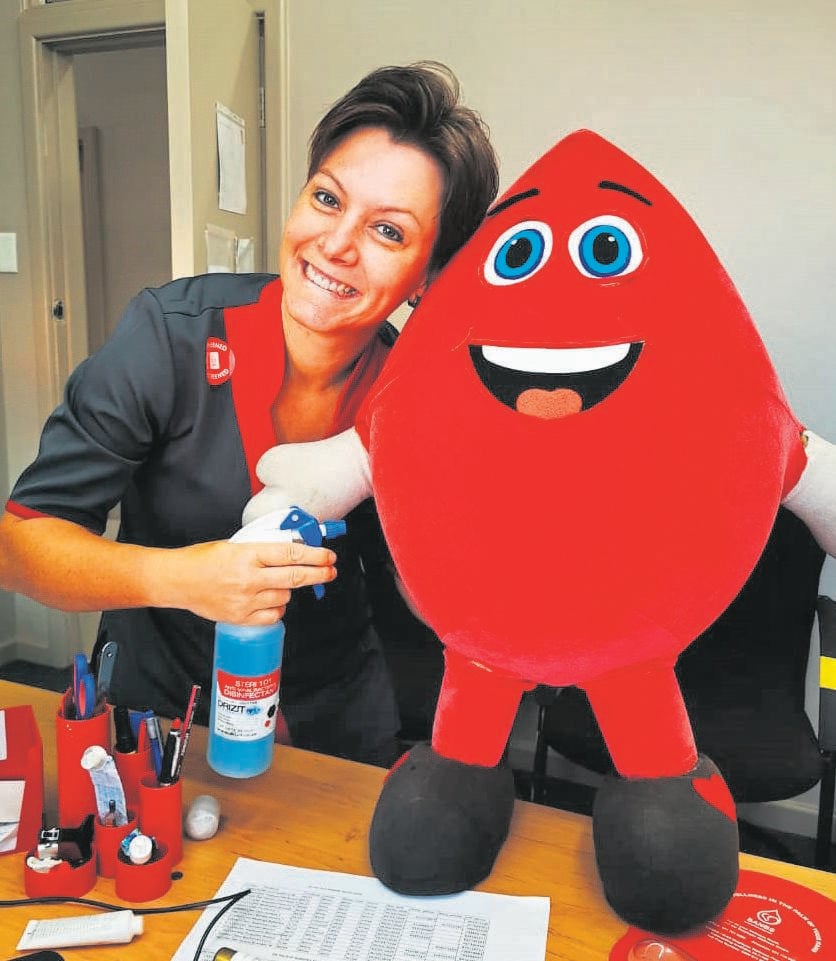
“Research forms a large part of our operations and following the recent approval from our Human Research Ethics Committee we will, in the next few weeks, start collecting convalescent plasma from patients who have recovered from Covid-19,” said Maryke Harris, Donor Relations Practitioner, SANBS PE East Branch.
This convalescent plasma will be used in phase two clinical trials to confirm whether this therapy will be of benefit to patients admitted to hospitals with pneumonia caused by the virus.
“It is noteworthy that the treatment will primarily be in the experimental phase, with the roll-out being a priority,” Harris added.
Convalescent plasma – plasma collected from patients who have recovered from a viral infection – has long been used as a way of treating patients still critically ill from the same viral infection.
This plasma, which contains neutralising antibodies, provides passive immunity to an infected patient, significantly improving their clinical status and often helping them to recover quicker. “It has not yet been widely used in the South African context,” Harris said.
“Such therapy was explored for patients in West Africa for the treatment of the Ebola virus and before that it was successfully used to treat SARS-CoV and MERS-CoV.
“The development of Covid-19 antibody treatments will, however, take several months to complete.”
The SANBS intends starting to collect convalescent plasma from donors who have fully recovered from Covid-19.
To be eligible to donate, 28 days must have elapsed since the patients last exhibited symptoms of infection. This gives the patient time to develop sufficient antibodies to be therapeutic and to have fully recovered from the disease, which minimises the risk of such patients still being able to transmit the virus.
Initially, these plasma products will only be issued in patients participating in SAHPRA-approved phase two clinical trials.
“While there are still no specific medications approved for treating Covid-19, work has commenced worldwide on convalescent plasma.
“The SANBS is uniquely positioned to both collect and collaborate in clinical trials of convalescent plasma that will subsequently be used in patients hospitalised with Covid-19, in the hope that it will reduce mortality and result in quicker recovery.”