
It is a place like the Nelson Mandela Metropolitan Art Museum that preserves, treasures, and unlocks the rich heritage of our city’s people and its history.
The museum is situated beside the entrance of St George’s Park. After years of neglect, a concerted and collaborative effort is being made by Nelson Mandela Bay residents to restore this 160-year-old park to its former beauty.
Safeguarding and ensuring that the historical places and the cultural artefacts of a city are made accessible to its people, have been a constant challenge in Gqeberha in previous years.
With vandalism being an increasing threat to not only the city’s infrastructure but also to the metro’s heritage assets in Central, concerted efforts are being made by various stakeholders and organisations to save and preserve what they can.
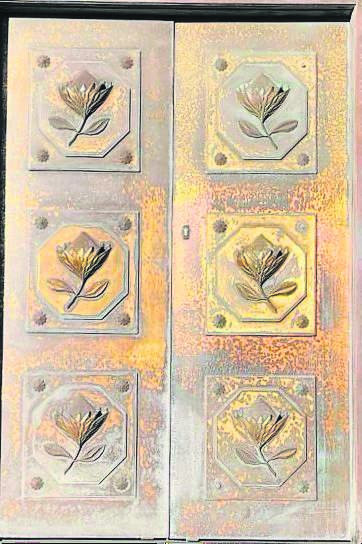
One such success story includes the safe and timely removal of historical brass panels that covered the doors of the SARS Revenue Office building in St Mary’s Terrace.
These brass panels and inlays, belonging to the Public Works Department, are now located at the Nelson Mandela Metropolitan Art Museum.
Jenny Bennie, former Consultant Historian, and Maritime Archaeologist at Bayworld, and currently working as an independent consultant, gave more information on the event.
“Three attempts were originally made to remove the brass within a couple of days, so haste was of the essence. We managed to act faster than the thieves at removing them. The ECPHRA (Eastern Cape Provincial Heritage Resource Agency) was absolutely outstanding in giving speedy permission to remove the panels legally, as it was a matter of great urgency.”
It is people and organisations like the aforementioned that work towards securing our sense of historical, social, and artistic significance, as a collective culture. Throughout the centuries, cultural heritage professionals have always been at the forefront of caring for items of great significance during challenging times.
The wooden core doors were repaired, and the panels were replaced by Perspex panels. Hope is expressed that this will deter further theft and the attraction of negative elements to the area.
Replacing bronze plaques in the city has become a necessity and a security measure for many years. Naturally, this would not have been the preferred choice of historians under normal circumstances.
“We are living in a different era, and if a few items from our heritage can be saved that is what we must do to the best of our ability,” stated Bennie,
Alternative measures are called for during desperate times, and moving with the times, we all must.
“When I was a Historian at Bayworld, I saved and stored a number of original plaques at the museum. Fibreglass replicas were produced and reinstated at some sites. Often these were so realistic that attempts were made to steal them again. We have subsequently tried using blue plaques instead,” Bennie commented.
The panels, reminiscent of the Art Nouveau era dating from the 1920s, feature an elegant design of the indigenous protea flower. This flower, with its amazing regenerative ability, represents change and hope in ou a local tradition.
The combination of this symbol of diversity and resilience appearing on a door, a gateway, and an entrance, is quite significant. Our hope resides in the people and the places that work towards creating a portal through which to preserve our local history and it presents us with other ways to look at the world. It’s a passage that gives its people a sense of place and identity.