

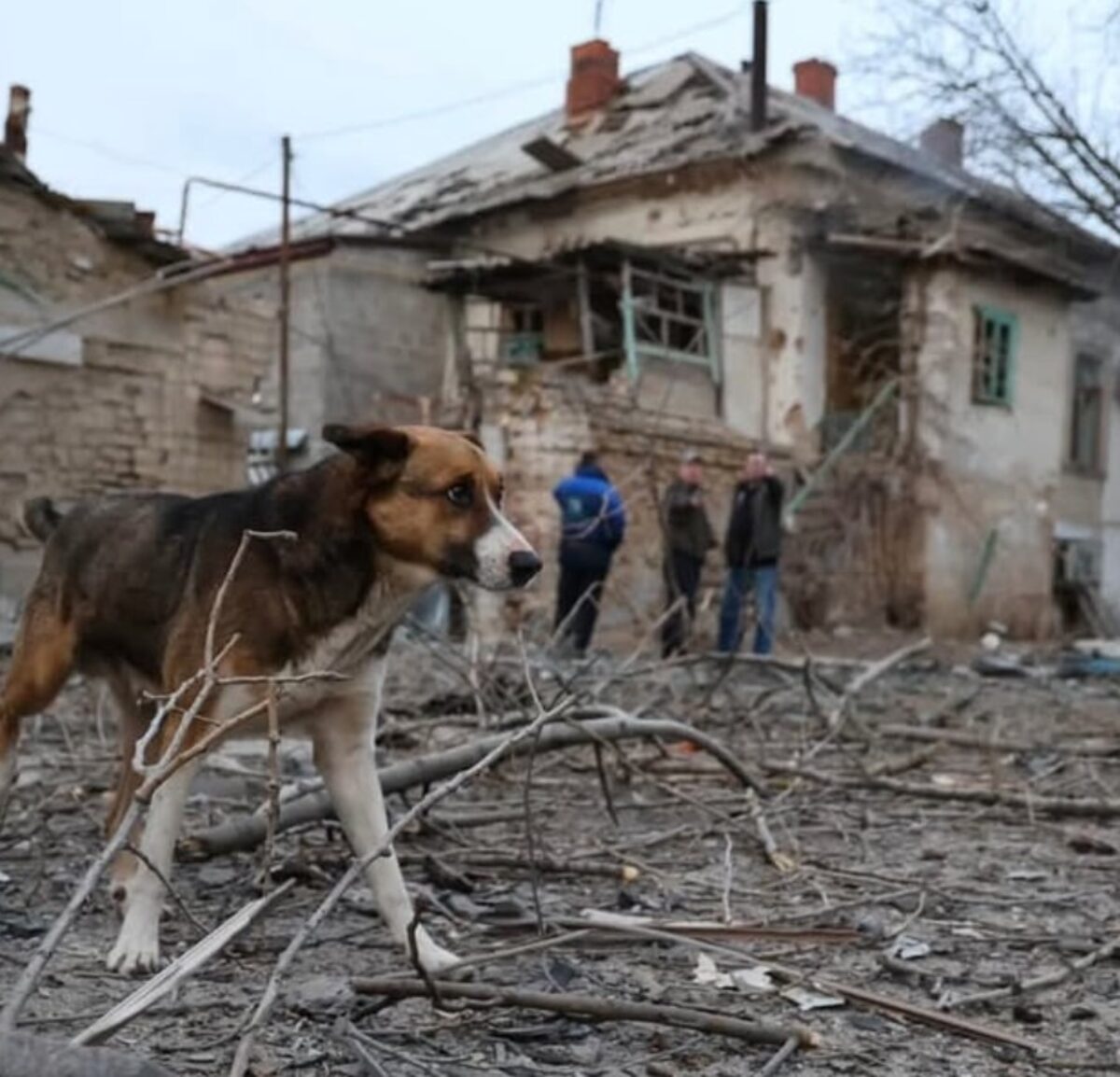
For most people, living in a war zone is almost unimaginable. For Lionel de Lange, however, the constant threat of drones, missiles and artillery has become part of everyday life in the Ukrainian city of Kherson.
“At night, we don’t even go to the bunkers anymore. You will never sleep,” he said when talking about the relentless frequency of air-raid warnings throughout the night.
Having met Lionel recently in Gqeberha, I came to understand the incredible work he does, which made his story even more remarkable.
Lionel moved to Ukraine in 2010. He’s always had a love for animals, but seeing first-hand the plight of abused animals and those left behind in war-torn areas sparked a movement that can only be described as revolutionary.
Although the full-scale Russian invasion of Ukraine started in 2022, the broader Russian-Ukrainian conflict had already begun in 2014, which led to severe funding cuts, leaving many zoos and animal sanctuaries struggling to care for their animals.
Lionel de Lange’s wildlife rescue work began during this period.
He managed to raise $26 000 for the local zoo in the Ukrainian city of Mykolaiv and founded The Lawrence Anthony Earth Organisation (LAEO) Ukraine to help neglected zoo animals. From then onwards, the inspiring story of ordinary people achieving extraordinary things continued to unfold.
Rescuing wildlife from the front line
In 2016, Lionel and Anya Masyach founded the organisation Warriors of Wildlife (WOW). The organisation focuses on rescuing, relocating and providing lifelong care for abused and neglected captive wildlife, particularly lions, tigers and bears. To date, they have successfully rescued and relocated 41 lions, 1 tiger and 17 brown bears.
In 2021, WOW opened the Simbonga Game Farm and Sanctuary in South Africa, which provides a safe and tranquil home for many rescued animals from Ukraine and elsewhere.
Removing and rehoming wild animals from perilous front-line regions is no small feat, and Lionel has no shortage of stories to tell.
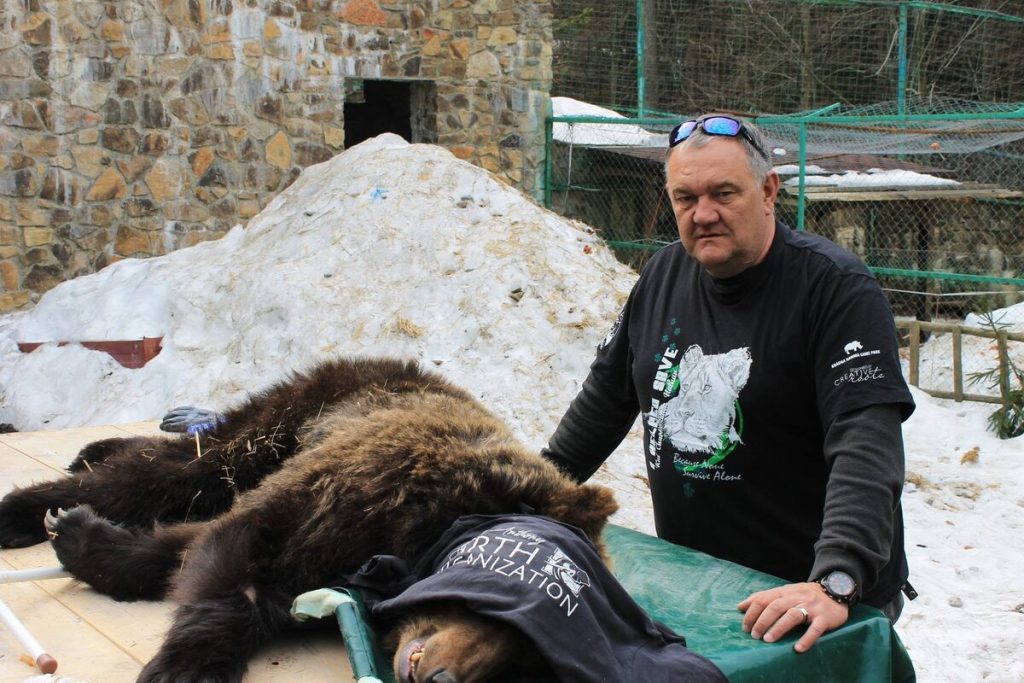
notorious Pokrovsk Zoo in Ukraine. Here he is standing next to one of the bears after it had been sedated for examination, vaccination and dental work. Photo: Supplied
With the support of a dedicated network of Ukrainian volunteers, veterinarians, international animal welfare organisations and logistics specialists, every rescue presents its own unique set of nail-biting challenges: the unpredictable behaviour of wild animals; the ever-present risk of becoming trapped in a missile strike; the complex coordination of armed security personnel, military veterans and veterinarians and wildlife specialists needed to safely sedate and transport dangerous animals; and the need to find secure temporary sanctuaries at times.
But it is not only wildlife that Lionel is passionate about. While running a shelter for 67 dogs and 18 cats in the city of Vinnytsia, he and his team also feed 450 stray dogs and 180 stray cats daily. A new animal shelter is currently being built closer to the front line.
Situated on the western bank of the Dnipro River, with Russian forces positioned on the eastern bank, Kherson remains one of the most dangerous cities in Ukraine. Moreover, apart from living in cities under siege and in communities at constant risk of attack, the animals have to contend with many other hardships.
“With a small team, we recently performed 1100 sterilisations in our town and surrounding villages. The war led to many people leaving their animals behind. With fewer people, the animals have to fend for themselves. They have no refuge, and because they have been abandoned, no sterilisations are being done. We take care of them, but needless to say, this is an ongoing problem,” Lionel explained.
“During the winter, the animals face temperatures as low as -26°. We try our best to keep the animals sheltered and warm. Water freezes within minutes, and keeping dozens of animals warm through Ukrainian winters comes at an enormous cost. You can imagine the huge electricity bill.”
A long road to safety
Lionel and his team also transport dogs and cats to safety, to South Africa, Europe, the USA and other countries around the world. Before they can travel, the animals must be microchipped and vaccinated against rabies. After waiting 21 days, they undergo a rabies antibody test, followed by a 90-day waiting period before they are eligible to travel. The entire process takes approximately four months in total.
“Here, nothing is safe. The number of stray cats and dogs is increasing. And, oneday, when the war is over, there will be even more to do.”
But Lionel and his team will soldier on regardless. Giving up has never been an option, and their work is far from over.
Those wishing to support Lionel de Lange and Warriors of Wildlife can learn more about the organisation’s work by visiting the Warriors of Wildlife website at www.warriorsofwildlife.org
ALSO READ: Dogs rescued from the Cambodian meat trade visits the beach for the first time




You must be logged in to post a comment.