

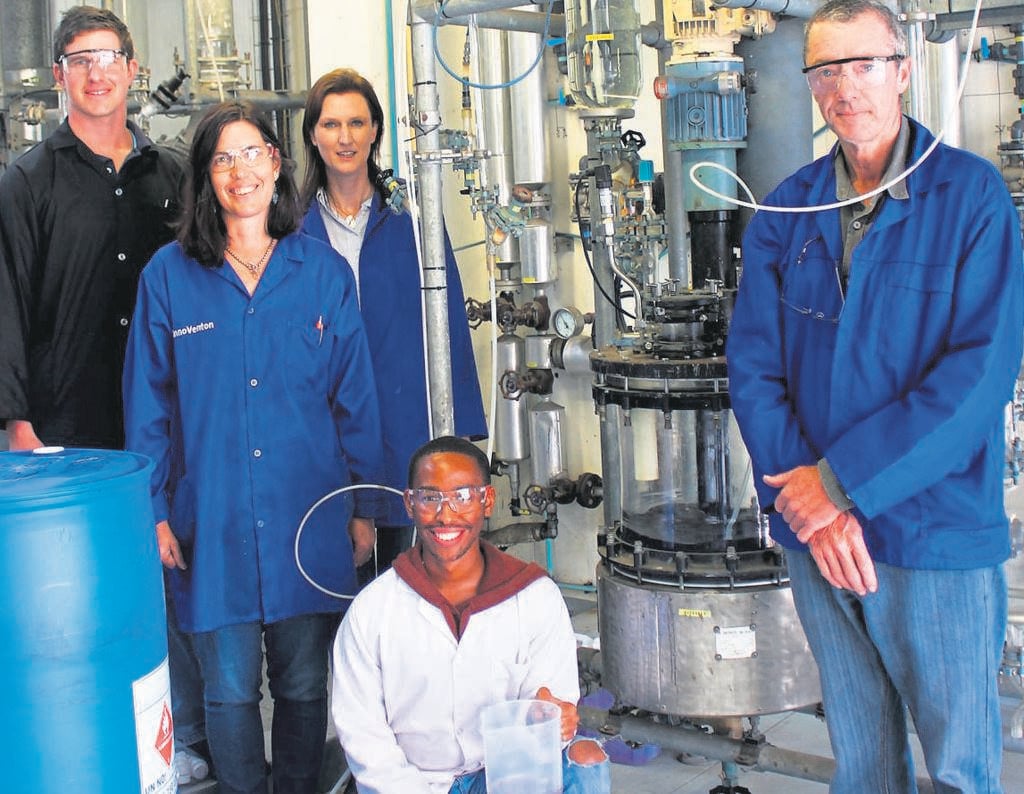
WITH the current scarcity of hand sanitiser, Nelson Mandela University’s own scientists are urgently producing hand sanitiser as part of its efforts in preventing the spread of the novel Coronavirus (COVID-19).
InnoVenton, the University’s Institute for Chemical Technology, produced it first batch of 200 litres of hand sanitiser within two working days.
“We had to make do with what we have, taking into account the urgency,” says InnoVenton’s Dr Nicole Vorster.
“First, we had to develop a recipe at laboratory scale and then source the ingredients.
“As there is currently a shortage of alcohol in the country, we could only source the last two 250-litre drums of ethanol internally. We are now searching countrywide for more.”
Fortunately, the other ingredients – glycerol, to soften the liquid’s effect on hands, water, colourant and perfume – are all still available at the university.
The sanitiser is being produced in InnoVenton’s pilot plant, which is already set up for the synthesis of chemicals as well as distillation of flammable solvents, such as alcohols.
The first batches of the hand sanitiser are presently being decanted so that staff who man key entrances can spray the hands of staff, students and visitors using the university.
The team jumped to action when it was learnt that hand sanitiser supplies were out of stock and would be unavailable for two weeks.
“We recognised the urgency and immediately got to work.” Dr Vorster said alcohol is produced from fermentation of grains and fruit and breaks down the cell walls of viruses, causing them to dehydrate and die.
InnoVenton does applied research mainly into algae cultivation and chemical product and process development. It is also a technology station supporting local industries and SMMEs with chemical product formulation and technical support. In addition, InnoVenton has a well-equipped analytical laboratory which does chemical analysis and physical properties testing for local industries for example, automotive industry. The institute also does teaching and training with two formal programmes, namely the three-year Chemical Process Technician Diploma and the BSc Honours degree in Formulation Science.
The diploma, with 51 students this year, trains technicians, for example, for the petroleum sector whereas the honours programme currently has 12 part-time and full-time students developing their own products, such as cosmetics and cleaning materials.