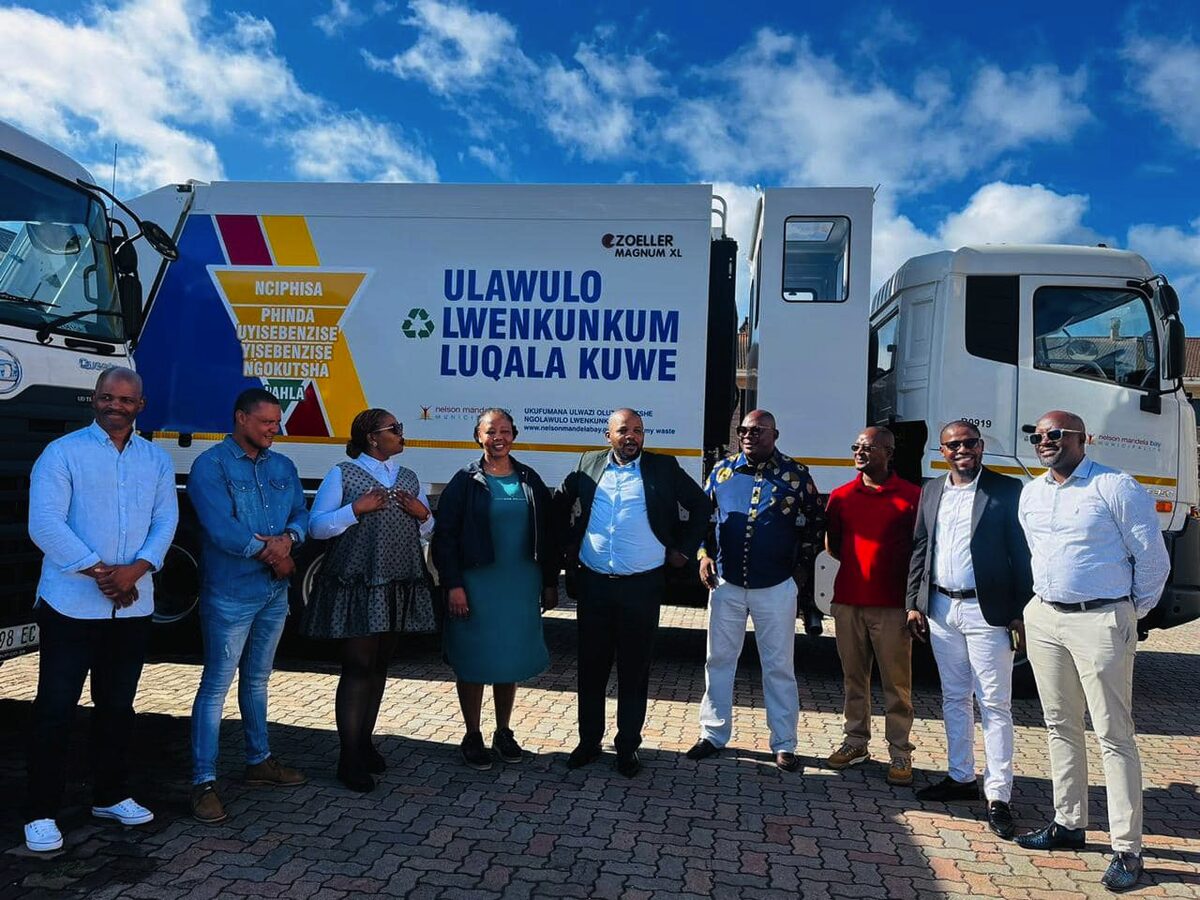

THE Nelson Mandela Bay Municipality (NMBM) has urged residents and businesses to exercise caution and adhere to safe handling and disposal practices for all types of waste, particularly hazardous waste, as failure to do so poses serious health risks.
This appeal follows the tragic death of a 13-year-old child, suspected to have ingested a poisonous substance from a refuse bag in Bluewater Bay recently.
In response to this incident, the Waste Management Sub-directorate under the Public Health Directorate has launched an intensive stakeholder awareness and engagement programme. This initiative aims to educate the public and businesses on the safe management of hazardous waste.
The awareness and engagement programme is part of the ongoing Separation at Source Programme (SSP). Separation at Source involves sorting waste materials into different categories (such as paper, plastic, glass, etc.) at the point of generation, whether in households or factories, to prevent recyclable materials from ending up in landfills. The programme will include public education meetings and door-to-door registration in Bluewater Bay, where the second phase of the SSP will be introduced.
During a public engagement meeting in Bluewater Bay on Wednesday, 5th February, the Member of the Mayoral Committee for Public Health, Councillor Thsonono Buyeye, emphasised the focus on hazardous waste handling and disposal. “We will be working in partnership with waste pickers, households, businesses, and Nelson Mandela University (NMU) to improve in this area. It is unfortunate that the child’s death occurred just as the Directorate was about to launch the SSP in Bluewater Bay and surrounding areas,” said MMC Buyeye.
The first phase of the SSP, introduced in Ward 9, has been highly successful, with many residents participating.
Engagements with businesses will include educating them on the segregation of recyclable and non-recyclable materials. This aims to reduce the risk of waste reclaimers accessing dangerous waste items and ensure the safe disposal of hazardous substances.
The Directorate is also collaborating with NMU to leverage its expertise in environmental science, waste management, and chemical safety. The NMBM hopes to benefit from the university’s research to enhance its waste management practices, particularly in the safe handling and disposal of chemicals.