


Nelson Mandela Bay is losing millions of litres of water daily as ageing infrastructure and widespread leaks place severe pressure on an already water-scarce system.
The metro is currently consuming about 331 million litres of water per day, well above its 280 million-litre target. Effective dam levels have dropped to 37.64%, leaving the city with an estimated 246 days of water supply remaining.
At the same time, the municipality is battling a significant backlog of water leaks.
Municipal data released on 20 January shows that between 1 July 2025 and 19 January 2026, the city received 21,868 water leak complaints. Of these, 15,933 have been resolved, leaving 5,935 outstanding leaks across the metro’s six main clusters.
The Lillian Diedericks cluster has the highest number of outstanding leaks, with 2,262 unresolved cases from 8,689 complaints. This is followed by Zola Nqini with 1,783 outstanding from 4,443 complaints. Alex Matikinca has 607 outstanding leaks, Molly Blackburn 591, Champion Galela 370 and Govan Mbeki 321.
Municipal spokesperson, Sithembiso Soyaya, acknowledged that infrastructure failures are placing additional strain on the water system.
“Water losses through leaks do place pressure on an already constrained system,” he said. “The current reported backlog is approximately 2,000 minor leaks. While internal capacity exists to address these daily, additional augmentation will assist in reducing turnaround times.”
Soyaya also clarified the distinction between drought and infrastructure challenges.
“Droughts are caused by prolonged periods of below-average rainfall and higher temperatures. Water leaks or ageing infrastructure do not cause droughts; they affect the efficiency with which available water is distributed,” he said.
Efforts to improve infrastructure have faced delays. Soyaya confirmed that the previous water leaks tender expired at the end of September 2025, and a new tender has been awarded but is currently in the objection stage, expected to conclude within four weeks.
In the interim, municipal teams continue daily repairs using internal resources.
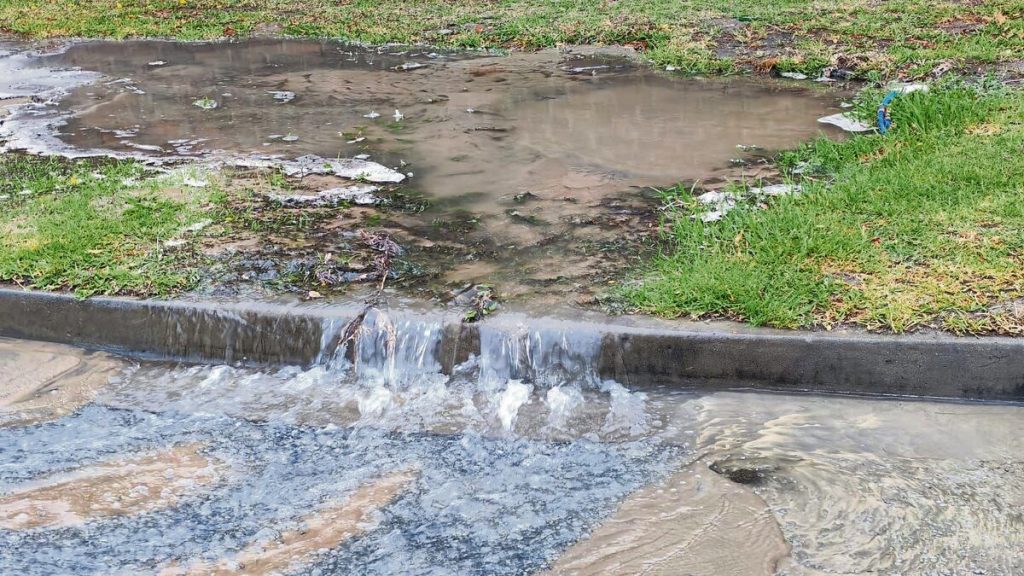
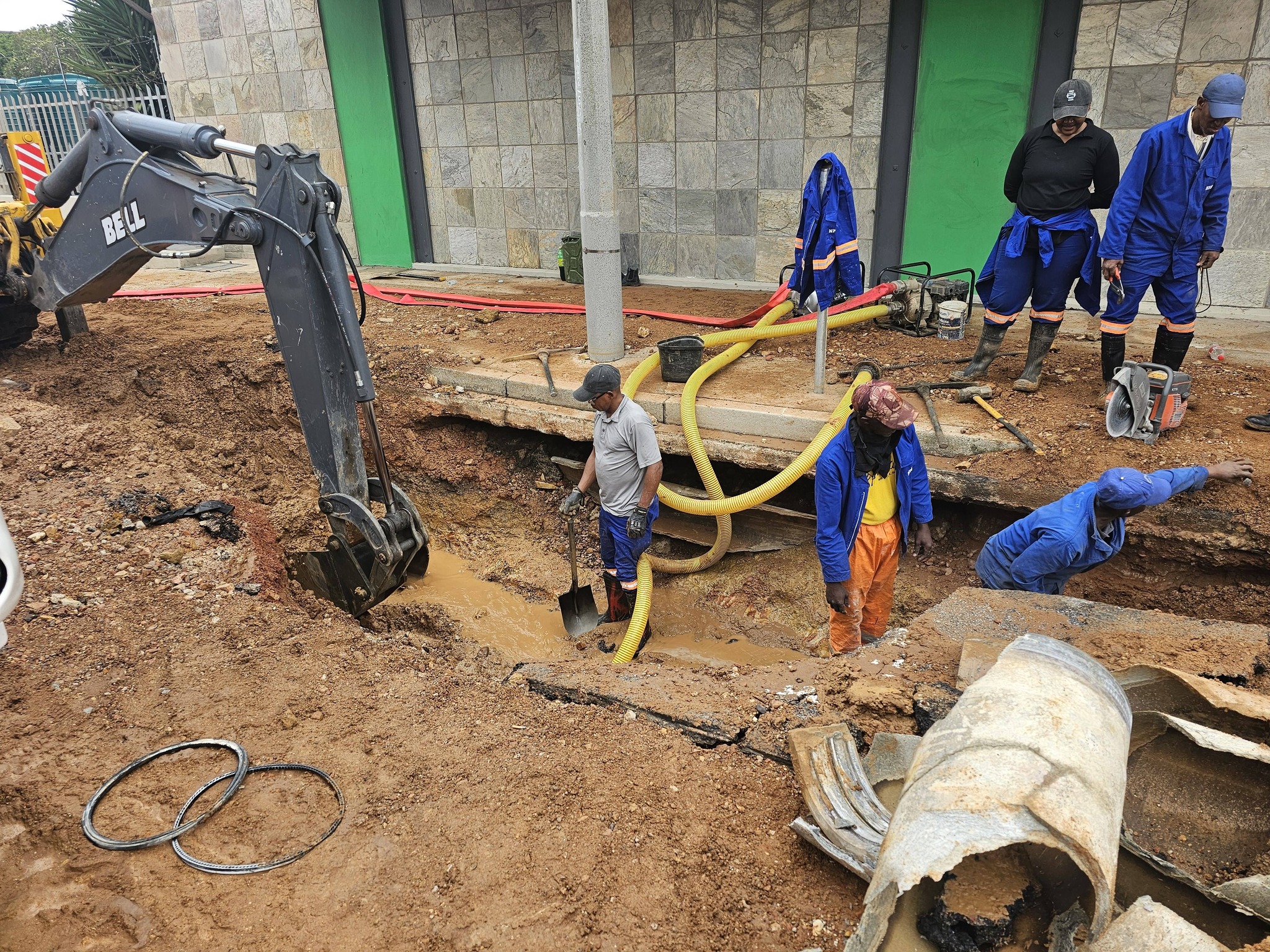
Recent pipe bursts have highlighted the scale of the problem. Ward 2 councillor, Sean Tappan, reported a major burst at the intersection of Brighton Road and 5th Avenue last week, which flooded streets and sent water into stormwater drains and out to sea. Similar incidents were reported in Newton Park, where burst mains caused extensive flooding.
“When there are big bursts, the turnaround time is about 12 hours, but water is still wasted,” Tappan said, criticising what he described as a reactive approach to maintenance.
“The infrastructure is extremely old. Under R1 billion was returned to Treasury unspent in the last financial year — money that could have been used to upgrade infrastructure,” he said.
Tappan warned that deteriorating drought conditions are being worsened by infrastructure neglect.
“We tell residents to use water sparingly and warn that drought is coming again, but if the municipality upgraded the infrastructure, it could fix 30 to 40 per cent of the problem,” he said.
Ward 7 councillor, Brendon Pegram, said water leaks remain a serious concern, particularly in high-traffic areas such as North End and Newton Park.
“The main issue is failing infrastructure. The administration has sent back R1.2 billion to Treasury over the past two financial years — money that could have been used to address these problems.”
Pegram said Ward 7 currently has 38 water leaks, including one outstanding since July last year.
“There is a massive delay in water leak repairs across the metro and we are losing a lot of water as a result. If we reach Day Zero, it will be man-made due to these delays,” he said.
Following a site visit to Impofu Dam by senior officials last week, the municipality reaffirmed water security as a strategic priority. Impofu Dam is currently at 42.21% with only 25.71% usable water and 16.5% dead storage.
Residents and businesses have been urged to reduce water usage to 50 litres per person per day, fix leaks promptly, avoid non-essential water use and comply with water-saving regulations.


You must be logged in to post a comment.