

GQEBERHA – Several political parties stayed away from Nelson Mandela Bay’s State of the Metro address last night, with the political boycott overshadowing Executive Mayor Babalwa Lobishe’s presentation of the metro’s plans.
The address and gala dinner came amid criticism over the cost of the event and ongoing water, electricity, roads, sanitation and other service-delivery challenges.
According to media reports, several political parties either stayed away from the event or opted to attend virtually.
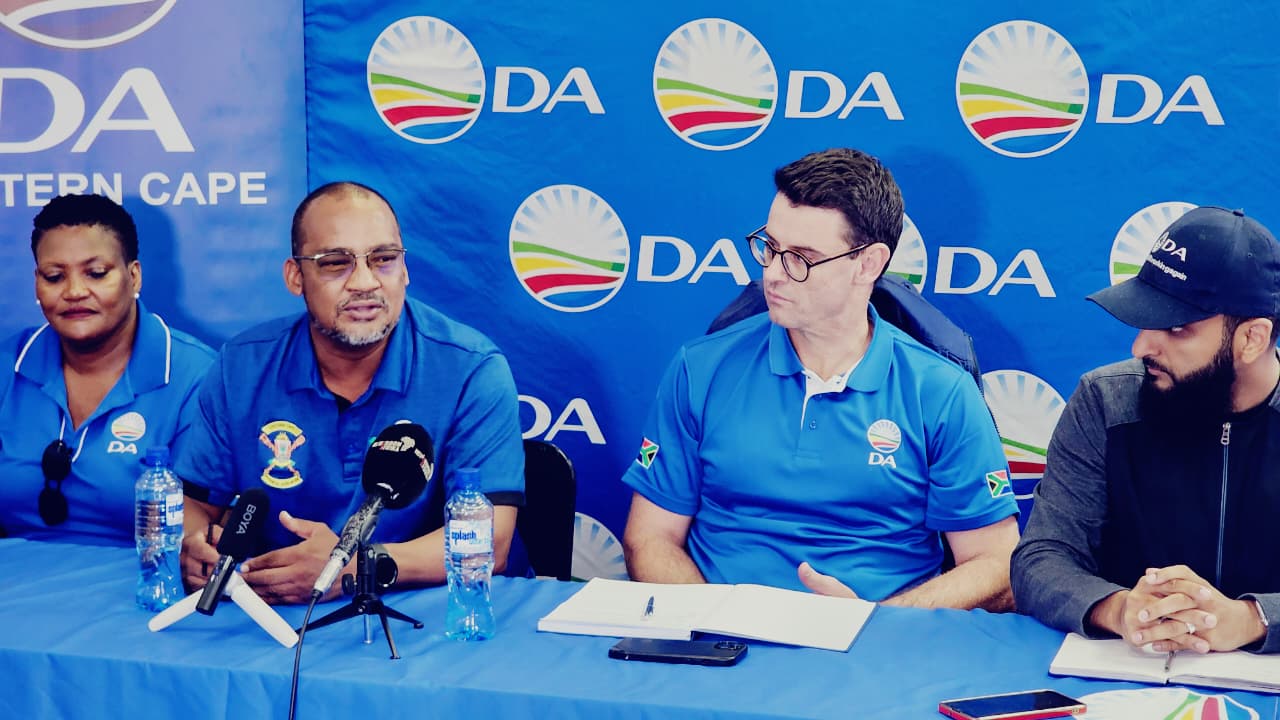
The Democratic Alliance (DA) had announced before the event that it would not attend, saying money spent on the occasion could instead be used to fix roads, restore streetlights, address water challenges and keep communities clean.
DA mayoral candidate Retief Odendaal subsequently delivered the party’s “True State of the Metro” in a social-media address.
DA challenges metro’s service delivery
He described Nelson Mandela Bay as a city with “enormous potential” but said it was struggling to perform basic local-government functions.
“Sadly, we are currently a broken City, but I want to say clearly that it does not have to be this way,” Odendaal said.
He raised concerns about the metro’s qualified audit opinion for 2024/25, irregular expenditure, water losses and electricity infrastructure.
Odendaal said non-revenue water had reached 60.39%, that about 7,000 leaks had been reported in July and that there was a 64% vacancy rate among plumbers, engineers and officers in water services.
He also claimed there were about 22,000 faulty streetlights and said electricity losses had reached about R1.48 billion in 2024/25.
“We need to invest in infrastructure before it fails, not after it collapses,” he said.
The Economic Freedom Fighters (EFF) separately explained its decision in a statement issued by the EFF Eastern Cape.
EFF defends decision to boycott SOMA
It said its caucus had decided not to attend the SOMA or gala dinner because communities continued to face unemployment, poverty and service-delivery problems, including water outages and leaks, sanitation and drain spillages, deteriorating roads and electricity challenges.
The EFF also said it accepted political responsibility for the Electricity & Energy and Budget & Treasury portfolios under its control, highlighting work including the Booysens Substation, expanded electrification and electricity infrastructure interventions.
Lobishe, meanwhile, presented a contrasting assessment of the metro.
“The State of Nelson Mandela Bay is therefore one of progress under pressure, opportunities amidst challenges and a city that refuses to stand still,” she said.
The municipality reported that 97.7% of households had access to water and 95.7% to improved sanitation. Lobishe said about R1.3 billion had been invested in drought mitigation projects aimed at preventing Day Zero.
The metro had replaced 23,570 water meters and repaired 1,186 indigent leaks.
Mayor highlights infrastructure and investment
On roads, Lobishe highlighted 17km of gravel roads tarred over two financial years and 23,565 potholes repaired. The current MTREF includes R1.7 billion for roads and stormwater.
Electricity interventions included 297 new public lights and 3,708 retrofitted lights, while the municipality is developing the 15MW Greenbushes Solar Farm and 25MW Parsons Power Park.
The municipality also reported R1.45 billion in investment facilitated, 1,240 permanent jobs created and 16,492 work opportunities through the EPWP and public employment programmes.
However, Lobishe acknowledged the metro’s 33.1% unemployment rate.
“The metro must be investment-ready, infrastructure-ready and skills-ready and we must ensure that local people benefit from the economic opportunities created in their own city, particularly women, youth and people with disabilities,” she said.
Lobishe also acknowledged that challenges remained.
“A credible State of the Metro Address cannot merely be a catalogue of achievements. We must also be honest about the challenges that remain and the work that still lies ahead,” she said.
ALSO READ: Nelson Mandela Bay Municipality under scrutiny over water, phone outages